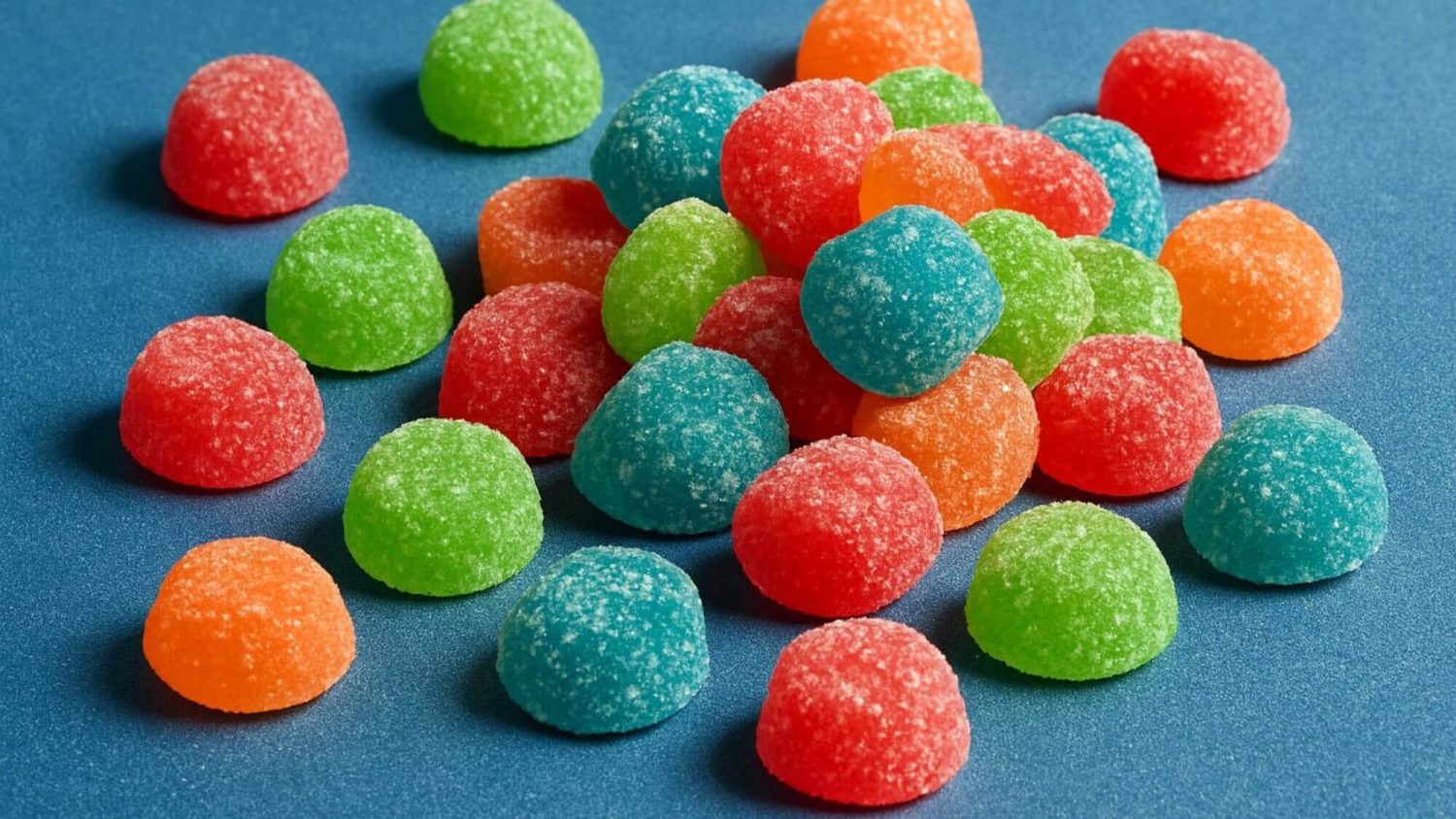
If you’re a gummy manufacturer or brand owner, I bet “sticky, sweaty, and slimy” are never the adjectives you want for your product. However, the viscous nature of ingredients like gelatin and glucose syrup makes gummies susceptible to sticking together.
Sticky gummies slow down production and can even force rework. They also increase waste and customer complaints. So, controlling stickiness is one of the biggest challenges in gummy manufacturing.
Fortunately, this “goopy gummy” fate is 100% avoidable. This guide walks you through why gummies stick, how to prevent gummies from sticking together, and what practical tips make your gummy line smoother and cleaner.
Why Do Gummies Stick During Manufacturing?
These are some of the usual sticky situations you may run into. Before we talk solutions, let’s find the reasons behind them.
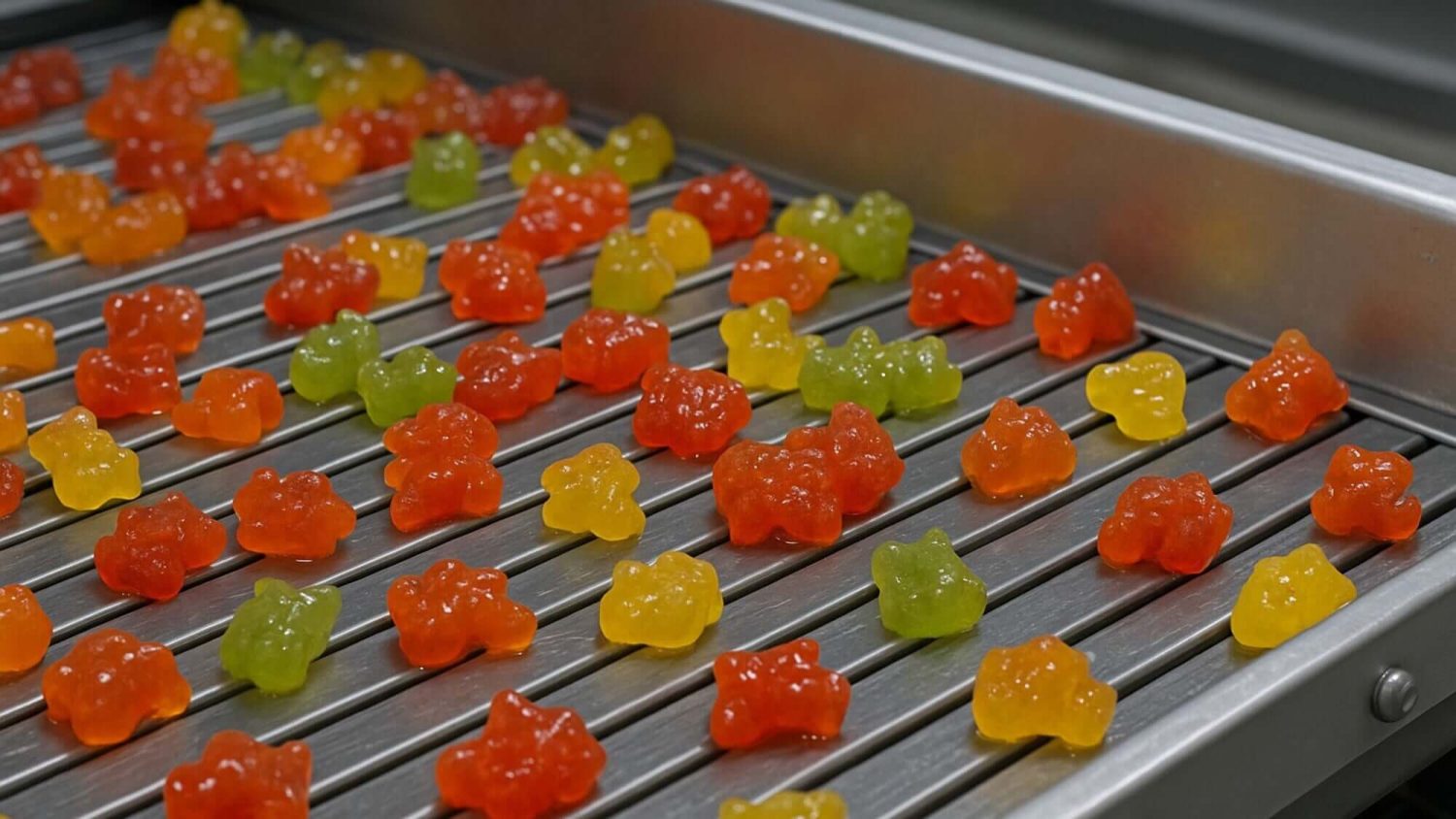
Sticky Moments in Gummy Production
- Sticking to silicone molds when demolding
- Being found welded on the trays after drying
- Clumping together during sugar or oil coating
- Sticking inside the downstream equipment like conveyors, weighers, funnels, and counters
- Turning sticky or sweaty after packaging or during storage
The Main Root Causes Behind Sticky Gummies
1. Unbalanced recipe
Too much sugar or glucose syrup makes the gummy surface tacky. Not enough gelatin means the mixture cannot set firmly, so the gummies end up soft and clingy.
2. Too much moisture
Excess water is enemy number one for gummies. Too much water inside the gummy slurry, not enough time for drying, or a humid environment can all make gummies turn sweaty or sticky.
3. Lack of proper coating
Incorrect sugar or acid coating can pull moisture out of the gummy and make it sweat. And if you overuse oil or wax for coating, the gummies feel greasy and still stick together.
4. Surface and mold issues
Rough or unpolished surfaces can grab onto gummy slurry. Worn molds or old trays can also make demolding or drying uneven. And if your conveyor belt isn’t designed to prevent sticking, gummies will cling to it.
5. Poor packaging and storage
Even if your gummies are perfectly made, they can still stick if not packaged or stored right. Bad seals, no desiccants, or storing them in a humid or overheated warehouse can all cause gummies to sweat and clump together.
Practical Tips to Prevent Gummies from Sticking
In this section, you’ll find real, factory-ready methods used by top gummy manufacturers around the world. These strategies help you make non-sticky gummies, from the production line all the way to the customer’s hands.
1. Fix your gummy recipe
If your gummies keep coming out tacky, try reducing the amount of sugar or syrup in the formula. Often, a small adjustment in the sweetener ratio helps. You can also swap in options like erythritol or stevia. They absorb less moisture than regular sugar.
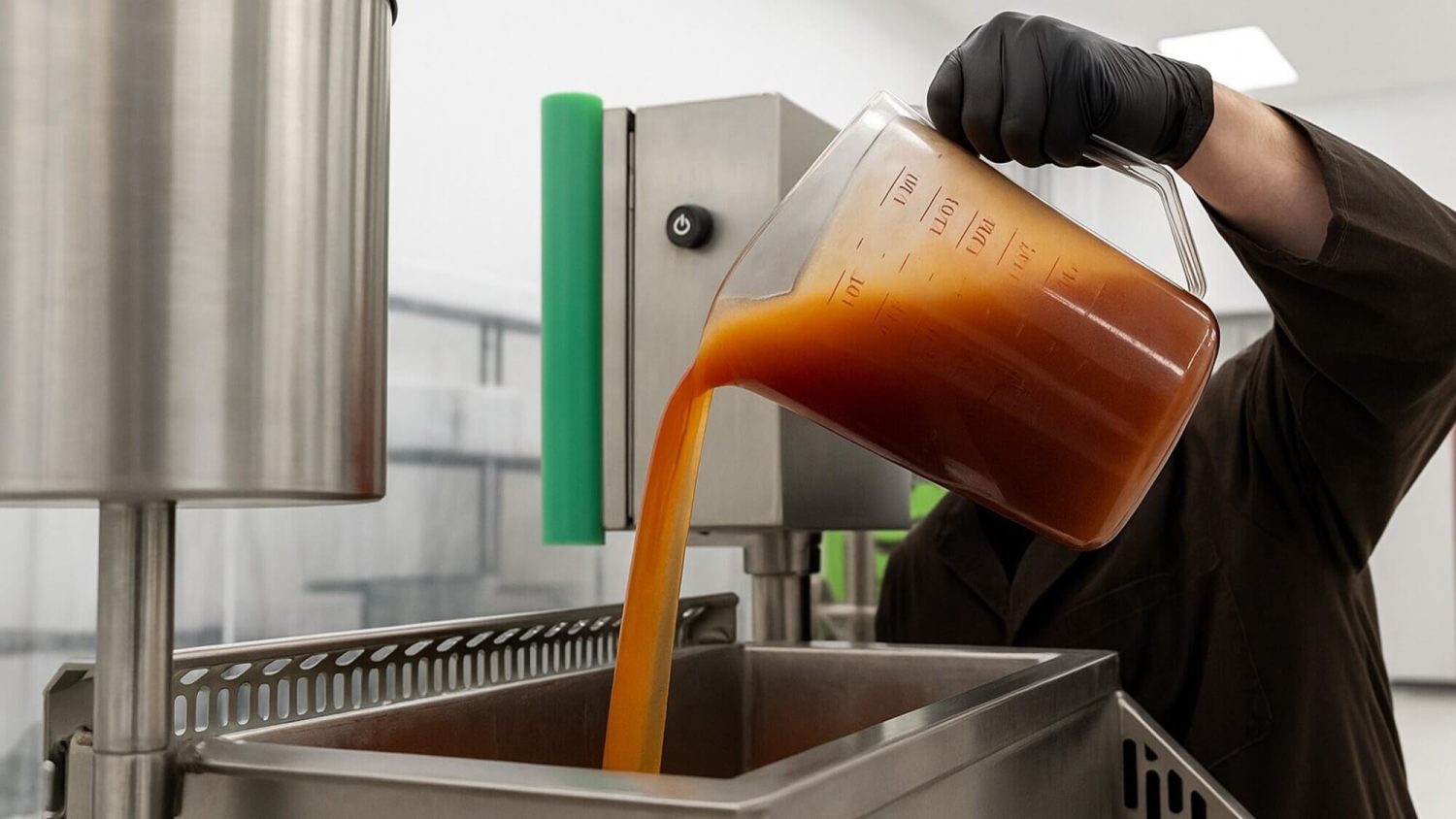
If sweeteners aren’t the issue, check your gelling agent. In most cases, people use gelatin to make gummies because it gives that classic chewy bite. But gelatin has one big weakness: heat. It starts to soften and feel slimy at around 99°F. If you plan to sell gummies in warm areas, a pectin formula is the better choice. Pectin handles heat well and keeps gummies from sticking.
Do you coat your gummies? Handle it carefully. Free citric acid can draw moisture out when used too early. Try using encapsulated acid to keep surfaces dry. A light layer of tapioca or corn starch, or a gentle wax or oil coat, also helps prevent sweating.
2. Control the gummy manufacturing process
Heat the syrup properly. If you make gelatin gummies, aim for 244-252°F. And for pectin gummies, keep the temperature between 223 and 234°F.
Adjust the water in your gummy mix if needed. Once the formula is stable, try reducing the water by about 5% to 10% and see how it affects the way the gelling agent sets.
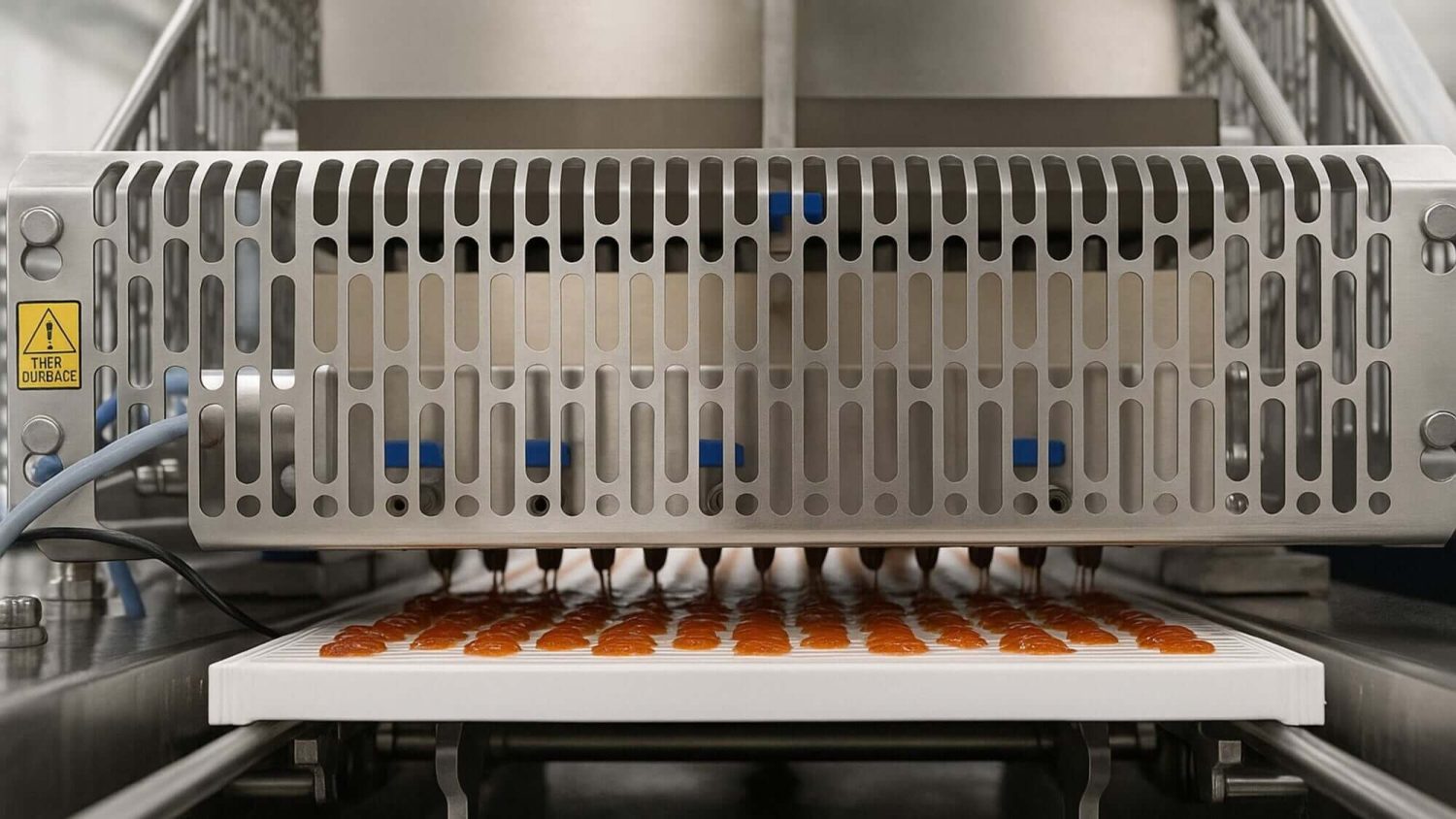
Let the gummies set completely before taking them out of the molds. Demolding too soon almost always leads to sticking.
If your gummies feel tacky, chances are they didn’t dry long enough or in the right conditions. Keep your curing room at 68-77°F with 20-35% relative humidity. Make sure air flows evenly around the drying trays.
3. Use well-made gummy molds and equipment
Food-grade silicone or Teflon-coated molds help gummies pop out smoothly and cool more evenly. If you still use starch molds, control the starch moisture carefully, or it will stick. No matter the mold choice, make sure they’re clean and dry each cycle.
A good gummy production line features precision depositing, cooling, demolding, drying, or coating systems. Each phase of production can be fine-tuned to ensure you won’t end up with soft, sticky gummies.
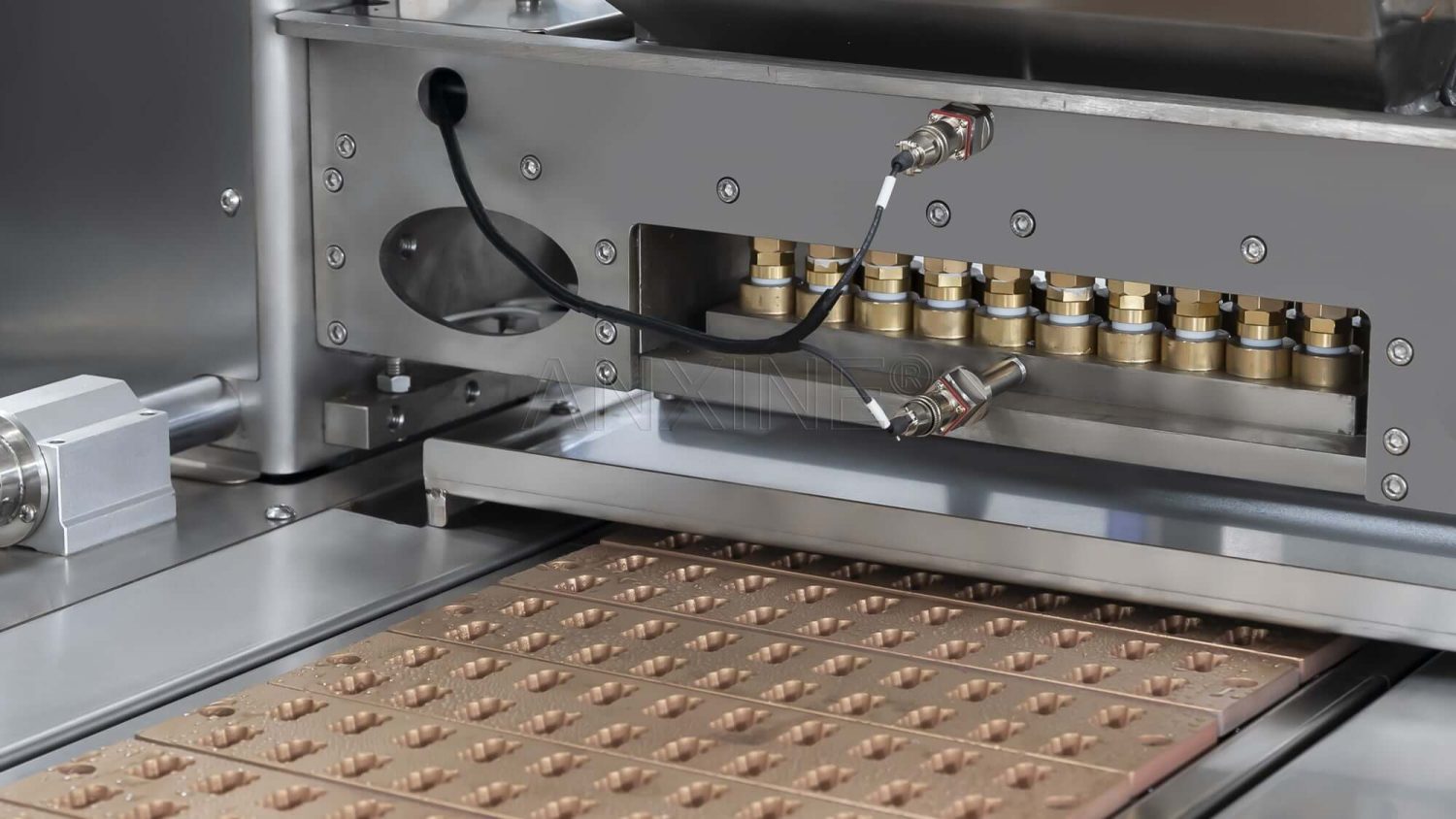
For your coating drums, conveyors, and trays, choose materials like polished stainless steel or Teflon-coated belts. They help prevent gummies from sticking together.
As a gummy equipment manufacturer, we see this every day. Even small upgrades like higher-quality molds, improved surfaces, and better airflow can greatly reduce gummy sticking issues.
4. Packaging and storage can also help
Heads up! Do not leave your gummies sitting out for too long, even in a well-controlled room. Pack them as soon as they’re ready.
Choose the right packaging material. If you use plastic bottles, make sure the cap has an induction seal to lock out moisture and air. If you go pouches, foil options with tight seals are preferable to thin poly bags in humid areas. Also, adding a desiccant packet to each bottle or package is an inexpensive way to absorb any residual moisture.
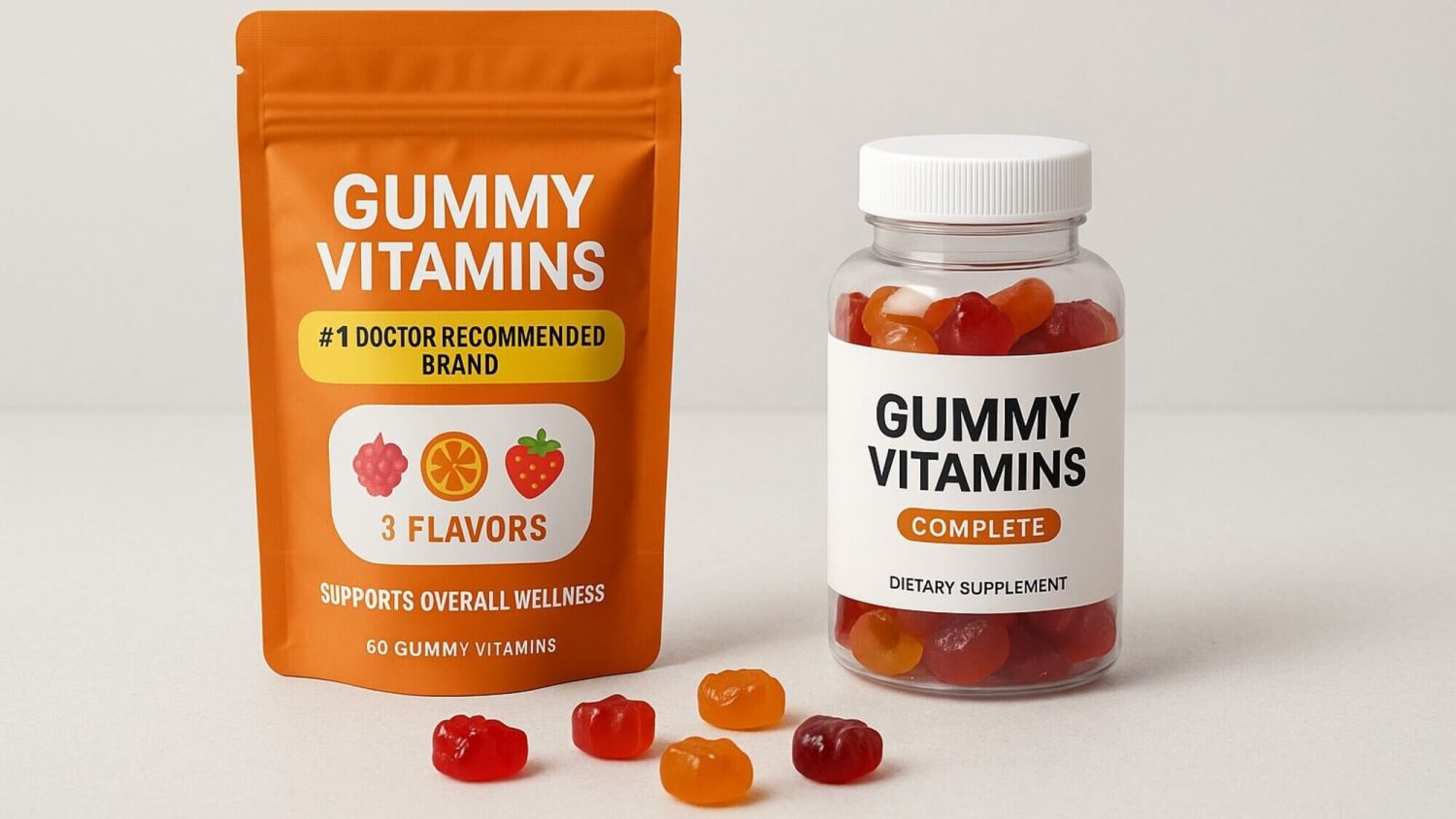
The pack size also matters. Don’t try to cut costs by stuffing your gummies all the way to the top of a container. This can cause them to clump together. Leave a bit of headspace. And if you use pouches, try not to stack their boxes on top of each other for long periods. The weight can mash them together.
For storage, keep your warehouse temperature below 72°F. Do not place them near the ceiling in a non-cooled area or in direct sunlight. If you hold gummies in totes or bins before packaging, make sure these containers are lined and kept in a dry room.
How to Fix Sticky Gummies
If your gummies start sticking, this quick reference table will help you diagnose and fix the problem.
| Symptom | Likely Causes | Immediate Fixes | Preventative Measures |
| Gummies stick to molds. | – Old or worn molds. – Molds are not coated. – Gummies are not fully set or cooled. | – Use a food-safe release spray lightly on molds. – Dust the surface or edges with cornstarch. – Chill the molds longer to firm up gummies. | – Regularly clean and replace molds. – Use high-quality, non-stick molds. – Lightly lubricate or corn-starch coat molds before depositing. – Give gummies more time to gel and cool before demolding. |
| Gummies sweat on their surface. | – The gummy recipe has too much water. – Non-encapsulated citric acid is used for flavor or coating. – Gummies are not fully dried when packed. – High humidity in the environment. – The packaging is not sealed correctly. | – Gently tumble gummies in dry sugar or starch. – Refrigerate the gummies for a while. – Open the package in a dry room to air out the gummies. | – Ensure the correct ratios of ingredients. – Coat with neutral oil and carnauba wax. – Use encapsulated acids for sour coatings. – Slow down the drying. – Use a dehumidifier to keep the environment cool and dry. – Consider induction sealing bottles. – Include desiccant packs in containers. |
| Gummies clumping in the bottle or bag | – Gummies were too wet when packaged. – The storage area is too hot. – Gummies have less anti-stick coating. – The bottle or bag is fully packed with gummies. | – Get the gummies to a cooler environment to solidify. – Shake the container to break clumps if possible. – Melt and reprocess if nothing helps. | – Dry gummies to the proper water activity before packaging. – Add an oil or starch coating to gummies. – Pack gummies in smaller formats or leave more headspace to reduce pressure on them. – Control the temperature in your warehouse. |
| Gummies still stick after coating | – The anti-sticking agent is not enough. – Coatings are not evenly distributed. – Gummies are too moist when coated. – The wrong type of coating is used for the climate. | – Run the gummies through the coating step again. – If urgent and small batch, toss gummies in a mild warm oil by hand to separate them. | – Keep anti-sticking oils well mixed. – Extend the coating time to get even coverage. – Pre-dry gummies a bit more before the coating step. – Choose the right coating depending on the climate. |
Final Word
Gummy sticking happens for a lot of reasons. Your recipe, process, equipment, and packaging all play a part. We hope this guide gives you clear direction on how to prevent gummies from sticking.
We’ve helped many manufacturers troubleshoot gummy sticking problems, and we can help you too. Whether you’re planning a new gummy line or looking to improve your current process, our team at Anxine is always ready to share practical solutions. Feel free to get in touch for any trouble with your gummy manufacturing.


