Softgel capsules are known for being flexible and smooth, but they are actually quite wet and delicate when first made. After the gelatin ribbons are filled and sealed around the liquid or semi-solid, the capsules are still soft, warm, and loaded with water. If you don’t want customers opening a bottle and finding a gooey mess, drying is a make-or-break step.
If your softgels are clumping, sticking, or cracking, this post can help. It covers the basic knowledge and practical skills you need to dry them the right way. By the end, you’ll know what to do, what to watch for, and how to handle softgel drying like a pro.
Key Parameters That Control the Softgel Drying Process
Drying softgel capsules isn’t as simple as just leaving them out to dry. It should be a controlled step. That means you need to know what to watch as you dry. Below are a few key process parameters that affect how fast your softgels dry and how well they turn out.
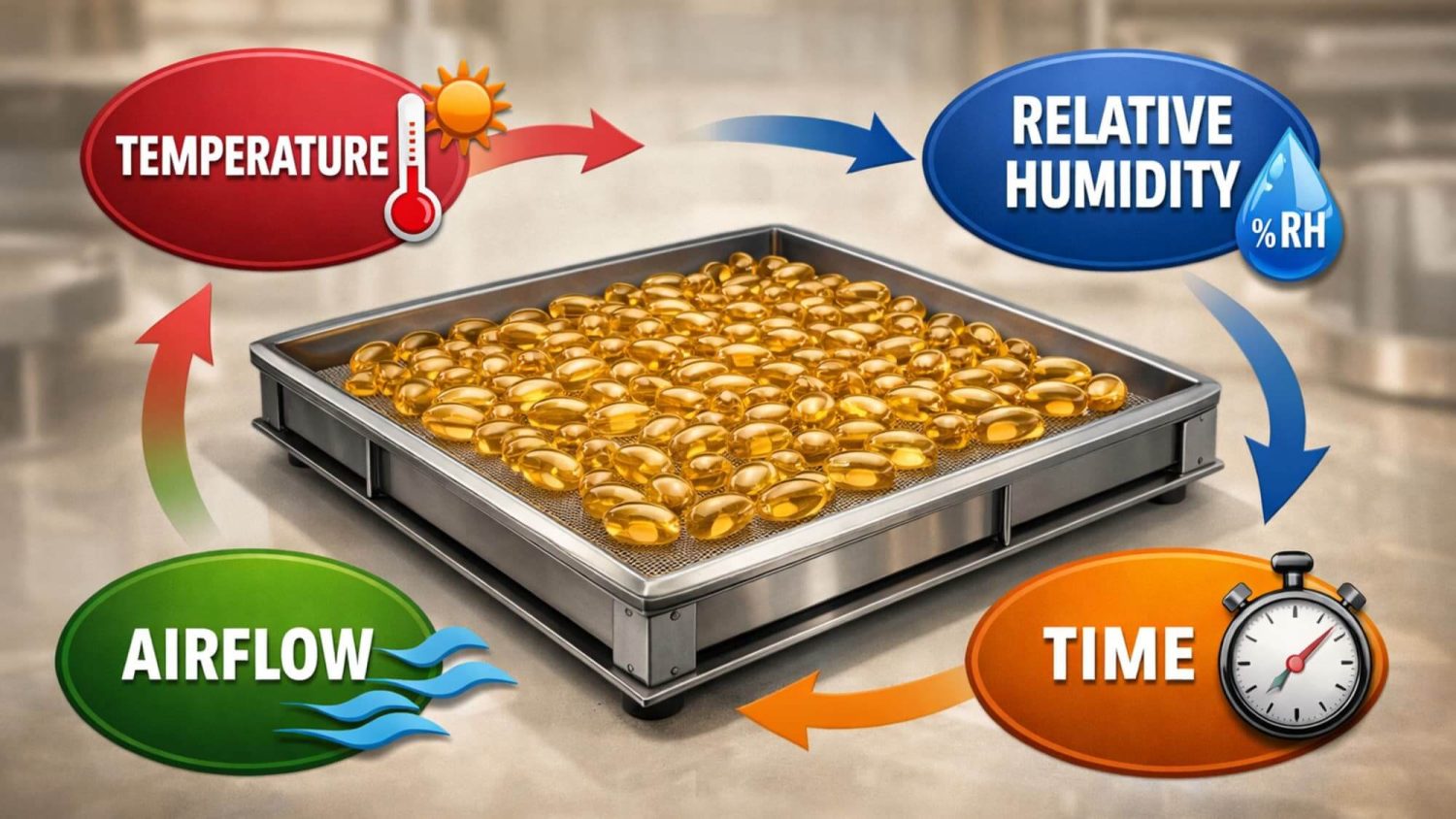
1. Temperature
Softgels are very sensitive to heat. Too much heat can make their gelatin shell soften, deform, and even crack later. But if the air is too cold, drying will be slow, and capsules may not set properly.
So, we recommend setting your drying temperatures this way:
- Tumble dryer: about 77-95 °F (25-35 °C). This helps pull out bulk moisture quickly when the capsules are still pliable.
- Drying tunnel or room: around 70-75 °F (21-24 °C). This helps reach even drying and a stable capsule finish.
2. Relative Humidity (RH)
Humidity tells you how much moisture is in the air. Learning how to control it is the heart of the softgel drying process.
If your softgels sit in a high-RH environment, moisture won’t leave efficiently. They’re also more likely to stick together, and you may even see a higher microbial risk. So should you just keep the RH low? Usually that’s fine, but extremely low humidity combined with high heat can make shells brittle.
Typical RH targets are:
- Tumble dryers: about 20-30% RH
- Drying tunnels/rooms: often as low as 20% RH
These ranges won’t dry the shell too aggressively. Modern softgel facilities try to keep RH swings within about ±5% of the target throughout encapsulation and drying.
3. Airflow
Drying softgels is not only about temperature and RH. You also need a steady blast of “breeze”. We call it airflow, technically. It’s the movement of air over and around the softgel capules to carry away moisture.
Stronger airflow can shorten drying time, but it needs to be even and gentle. Otherwise, it can damage capsules or dry some faster than others. Good airflow also helps keep temperature and humidity consistent across the room or tunnel, so every capsule dries properly.
4. Drying Time
Time is a key ingredient in the softgel drying process. It’s the end result of the first three factors and the nature of the softgel capsule itself.
So how long does softgel drying take? Common numbers you will see:
- Most standard softgel products: about 30-45 minutes in tumble dryers and then 24-48 hours in trays or tunnels
- Some special formulations: Just drying in tunnels can take up 1-2 weeks
Drying time isn’t about going as long as possible. The real goal is the equilibrium moisture content of about 13% to 16%. In that window, your softgels are firm enough to handle but still flexible and won’t crack.
Softgel Drying Process Step By Step
Most softgel lines today still follow a two-stage drying process:
Stage 1: Tumble drying right after softgel encapsulation
Stage 2: Tray drying in a tunnel or room.
Each stage plays a different role and comes with its own best practices.
Stage 1 Tumble Drying
This stage begins immediately after your softgel capsules come out of the encapsulation machine. You can think of it as an initial step of the softgel drying process. At this point, the softgels are water-rich, warm, and soft. If you set them aside, they would turn sticky or lose their shape. Sending them into a tumble dryer can quickly pull off bulk moisture.
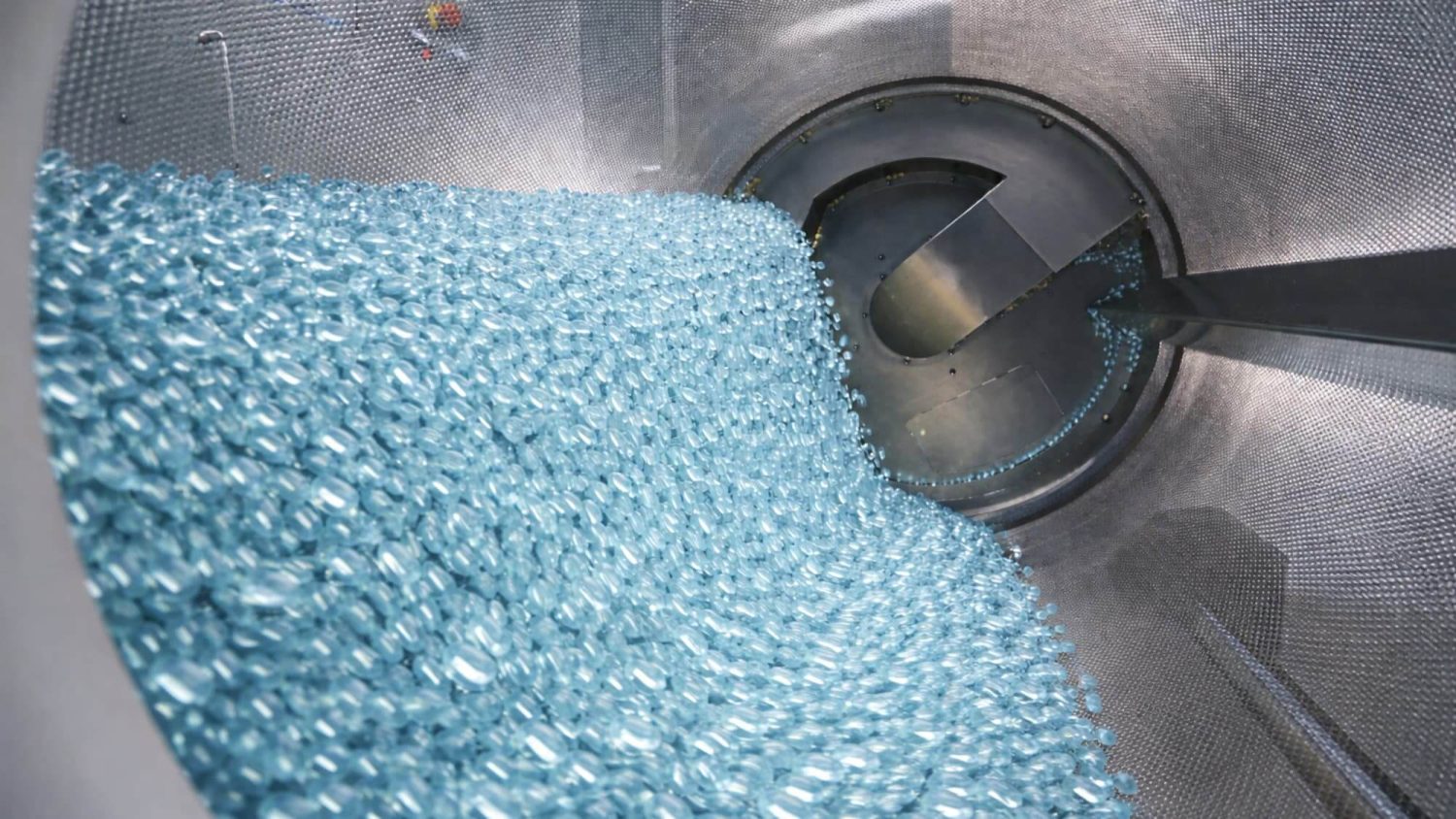
How tumble drying works
1. Fresh softgels are loaded into the tumble dryer drum with perforated walls. This can be done by an operator. And in an in-line drying setup, a conveyor belt can carry the softgels straight into the drum.
2. The drum then rotates slowly to toss the softgels around. At the same time, conditioned air, often around 30 °C, is blown through the rolling capsules to carry away heat and moisture.
3. The softgels keep tumbling while air is blown through the drum for about 30-45 minutes. During this period, the gelatin shell begins to harden just enough to hold the softgel’s shape.
Main objectives of tumble drying
- Reduce shell moisture so softgels don’t stick together before they reach the trays
- Cool the shell so it is firm and resilient enough for handling
- Set the capsule shape to avoid flat sides during tray drying
Best practices in the tumble dryer
- Don’t pack the drum too full. Softgels need room to tumble so they dry evenly.
- Rotate the drum gently to reduce softgels bumping into each other.
- Monitor the drying time and temperature.
- Check that the fans are working and not blocked. Poor airflow = ineffective drying.
- Keep the drum clean. Inspect for scratches, sharp spots, or nicks that could grab and tear softgels.
- Visually check softgels often. Or lightly touch them to make sure they’re dry on the surface, but still pliable.
- Transfer softgels to the next stage as soon as they’re ready. If not, they may trap moisture or flatten each other.
Stage 2 Tray Drying
After the initial tumble dry, we move into tray drying. This is where softgels spend most of their drying time. In Stage 2, slightly dried capsules are spread out flat on trays.
These trays are usually made of food-grade plastics or composite fiberglass. They are stacked on racks and placed in a drying tunnel or a walk-in drying room. Unlike the tumble dryer, softgels are stationary here, so this step is also called Static Drying.
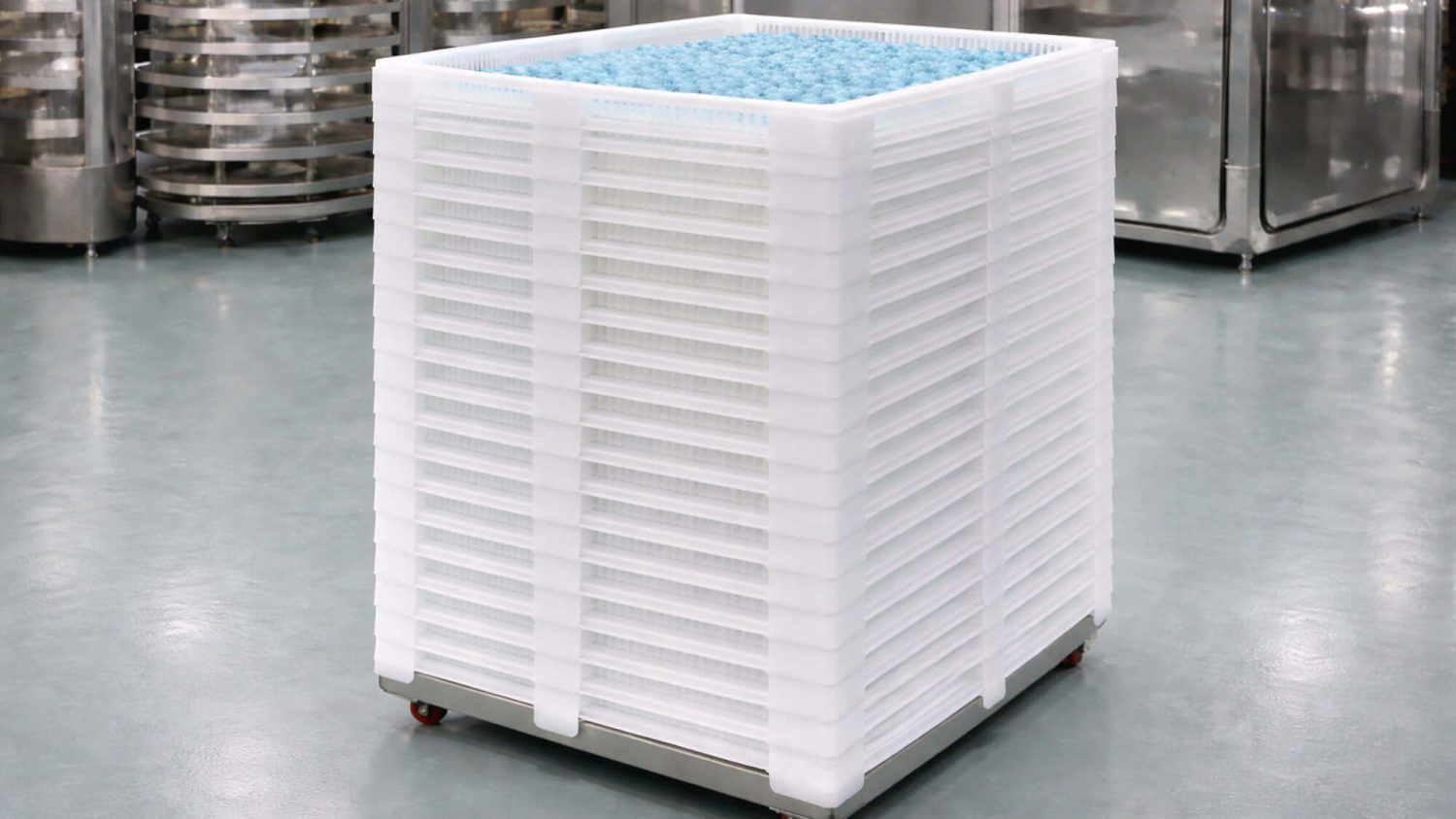
How tray or static drying works
1. The tumble dryer spins in reverse at a slow speed to discharge softgels onto trays.
2. The trays are then stacked and moved into a controlled environment, like a drying tunnel or a drying room. Tunnels feature fans to move air across the trays and an exhaust to pull moist air out. Drying rooms use conditioned air flows to slowly dry the softgels over time.
3. During this phase, moisture slowly migrates from the inside of the shell to the surface and then into the air.
4. Drying continues until the softgel capsules fully set and reach their equilibrium moisture level.
Best practices for the final drying
- Softgel must be spread out. If they’re piled up or overlapping, the contact points dry much slower.
- Rotating or shuffling tray positions on the rack helps the batch dry more evenly.
- Make sure the drying room or tunnel HVAC can hold steady temperature and humidity. Also, keep the shop floor clean to prevent contamination.
- Don’t leave softgels in the drying area longer than needed. Even though the tray drying stage takes time, over-drying can still make shells brittle.
Equipment Used in Softgel Drying
By now, you’ve probably noticed the same terms showing up again and again: tumble dryers, drying trays, drying tunnels, and drying rooms. Let’s take a closer look at these main pieces of equipment in the softgel drying process:
Softgel Tumble Dryer
The equipment is usually a rotating drum, sometimes several drums in a row. It gently tumbles the freshly formed softgels while blowing warm air over them. The tumble dryer can be used as a standalone unit or as part of an in-line setup.
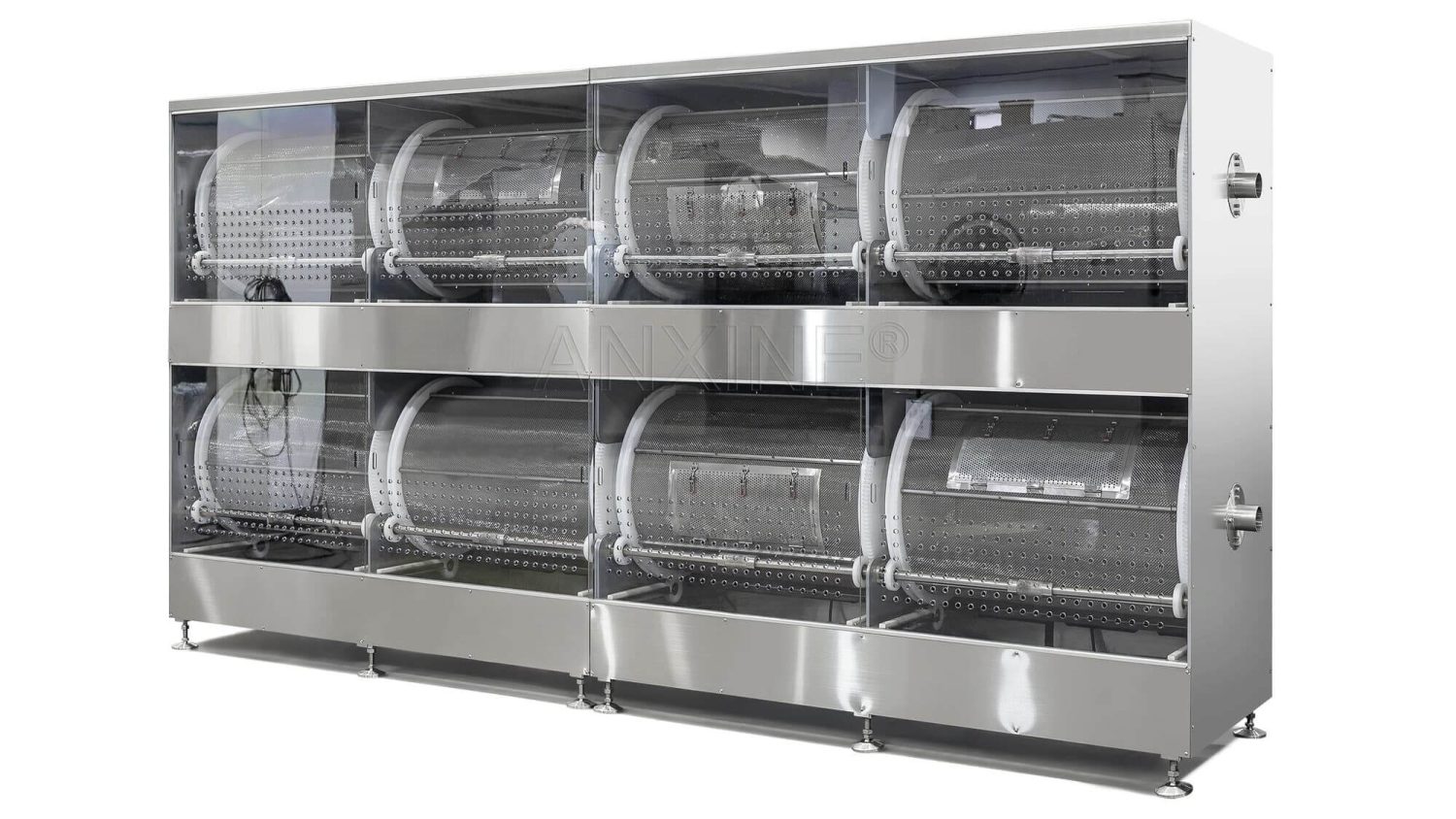
Tumble dryers often have perforated walls or mesh baskets so dry air can flow through. Most modern designs also offer adjustable speed and temperature controls. Some even come with automatic cleaning features.
Softgel Drying Trays
These are flat, stackable trays that hold softgels in a single layer for static drying. They’re often made from durable plastic composites like PC or PP, or from fiberglass (MFG). These materials are smooth, non-stick, and easy to clean. The drying trays also need to be strong enough to carry the weight of softgels.
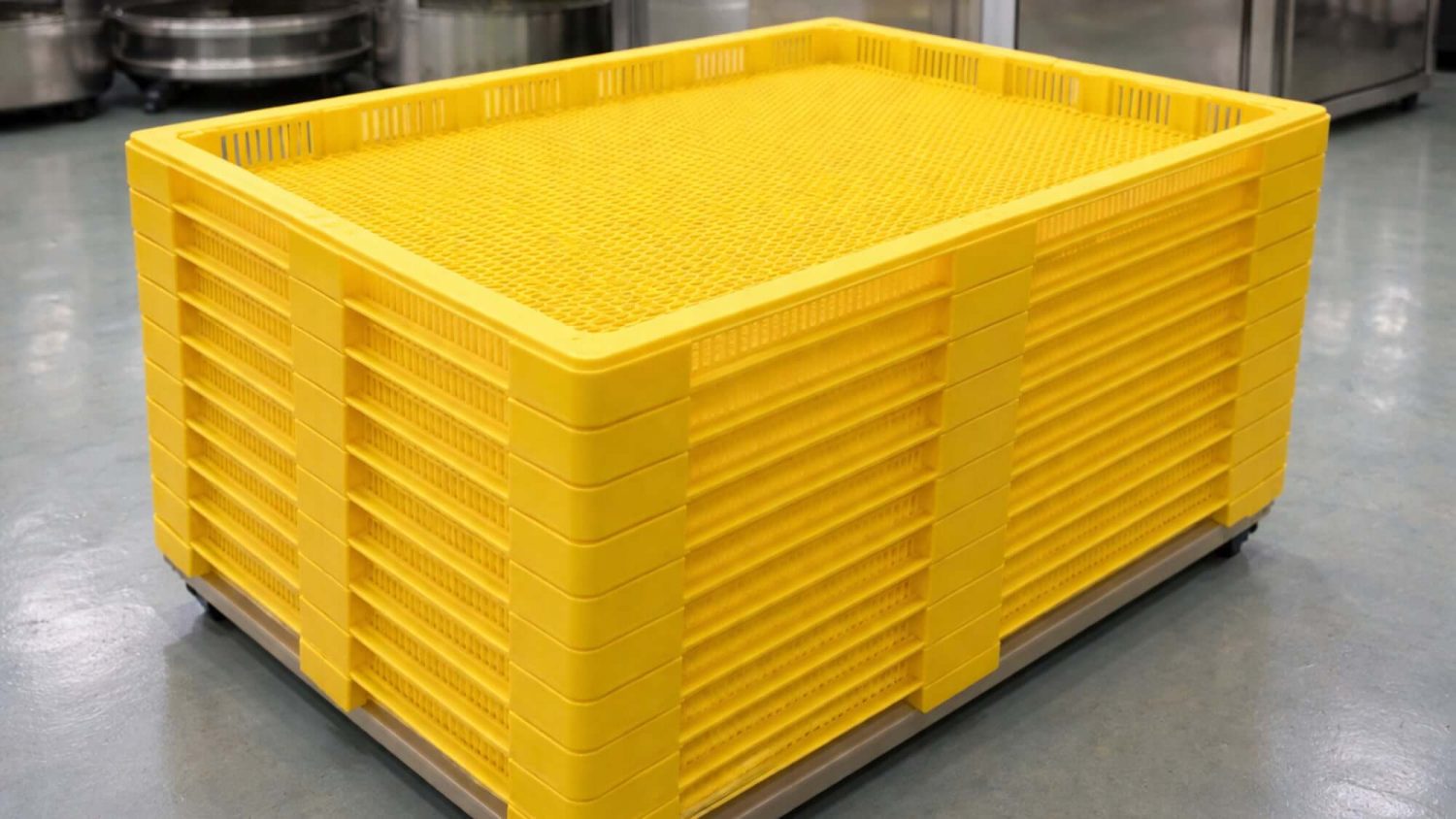
Many trays have perforations or slots on the bottom or sides to let air pass through and help softgels dry faster. Most are around an inch or two deep and are used by the dozens. A typical setup is to stack 15-20 loaded trays on a wheeled rack, leaving small gaps between trays for airflow.
Softgel Drying Tunnel
A drying tunnel is a large, controlled chamber used to dry softgels on trays. Tray racks can be wheeled in and out of these tunnels.
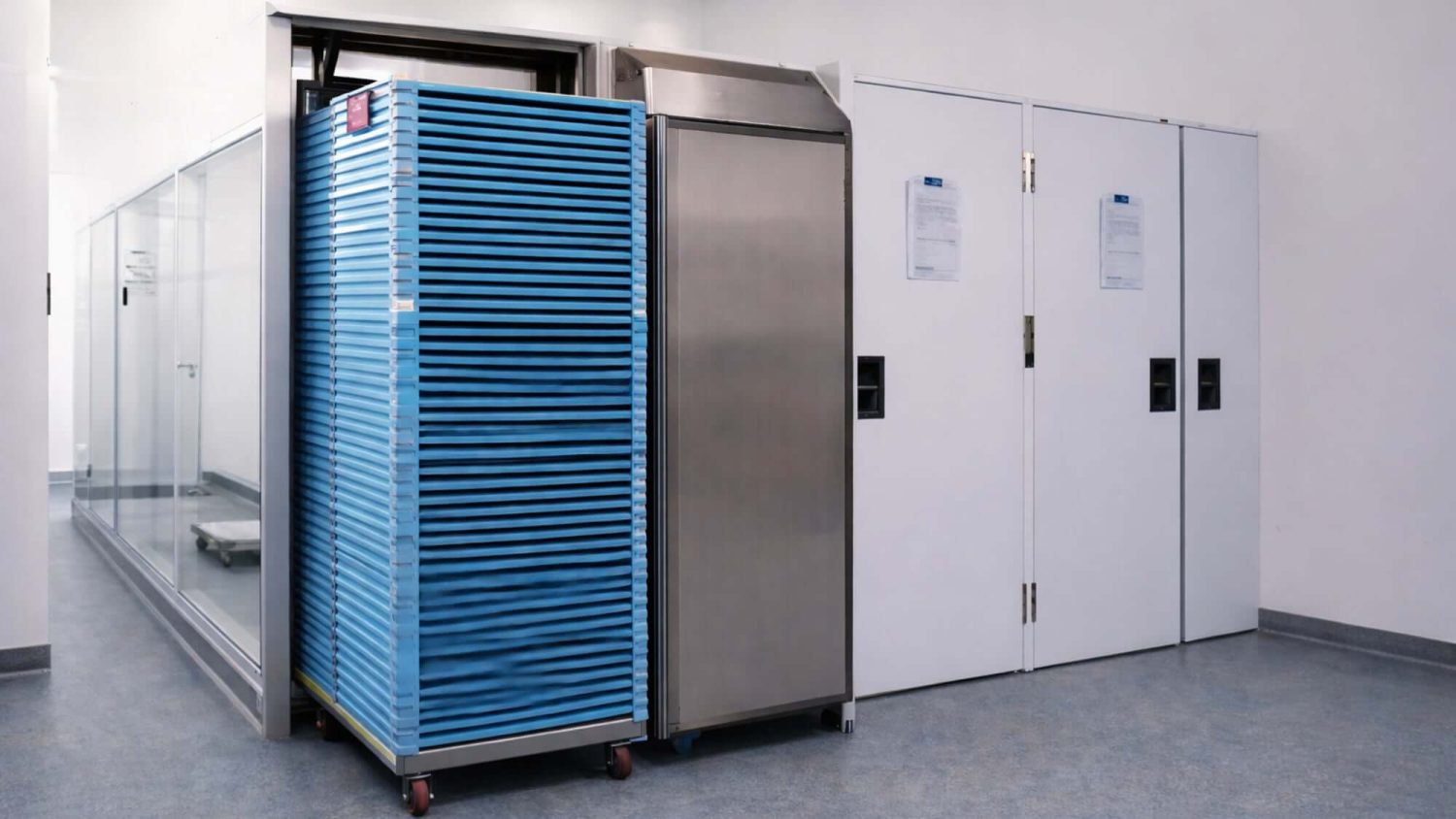
Inside the tunnel, temperature and humidity are carefully regulated. Air is usually circulated in a counter-current flow pattern. This helps prevent fresh softgels from being exposed to very dry air and hardening too quickly.
Tunnels can dry large numbers of softgel trays at a time. Compared with a simple walk-in drying room, they offer better automation and more precise control of temperature and humidity.
Common Softgel Drying Problems and How to Fix Them
If you’re new to softgel manufacturing, hopefully you haven’t run into these drying headaches yet. But if you have, it’s okay. Below are some practical tips to help you fix them.
| Problem | Likely Causes | Solutions |
| Softgels get sticky in the trays. | – RH is too high in the tunnel or room. – Softgels are not dried long enough. – Softgels are not entirely spread out flat. – Trays are not well ventilated. | – Lower RH into 20%. – Extend drying time and check weight loss over time. – Make sure softgels are laid in a single layer. – Use trays with perforations or ventilated slots. |
| Softgels flatten or get deformed. | – Capsules are too soft when they leave the tumble dryer. – Trays get overloaded so capsules are piled too deeply. – The tray surface is not even. | – Increase tumble drying time to let the shell firm up a bit. – Reduce tray load and do not overlap softgels. – Make sure the trays are smooth without dents. |
| Capsules leak or tear. | – Sticky softgels cling to each other and tear when separated. – Over-drying makes the shell brittle and prone to cracking under the stress of tumbling or handling. | – Stop drying once reaching the equilibrium moisture. – Handle softgels gently and don’t force apart sticky ones. |
| Some capsules are perfect but others are still moist. | – Airflow is poor in the tumbler or tunnel. – Softgels are stacked or piled on trays. | – Check fan function. – Rotate tray stacks or shuffle tray positions. – Use ventilated trays and don’t overfill them. |
| Softgels won’t release from the tray surface. | – Trays are rough, dirty, or damaged. – Tumble drying time is too short to take away enough moisture. | – Clean trays thoroughly. – Replace cracked or warped trays. – Run the tumble dryer a little longer. |
How to Clean and Maintain Softgel Drying Equipment
The softgel drying process also depends on how well your equipment runs, so regular care of your tumble dryers, drying trays, and drying tunnels is important. Use these tips to keep them in top condition:
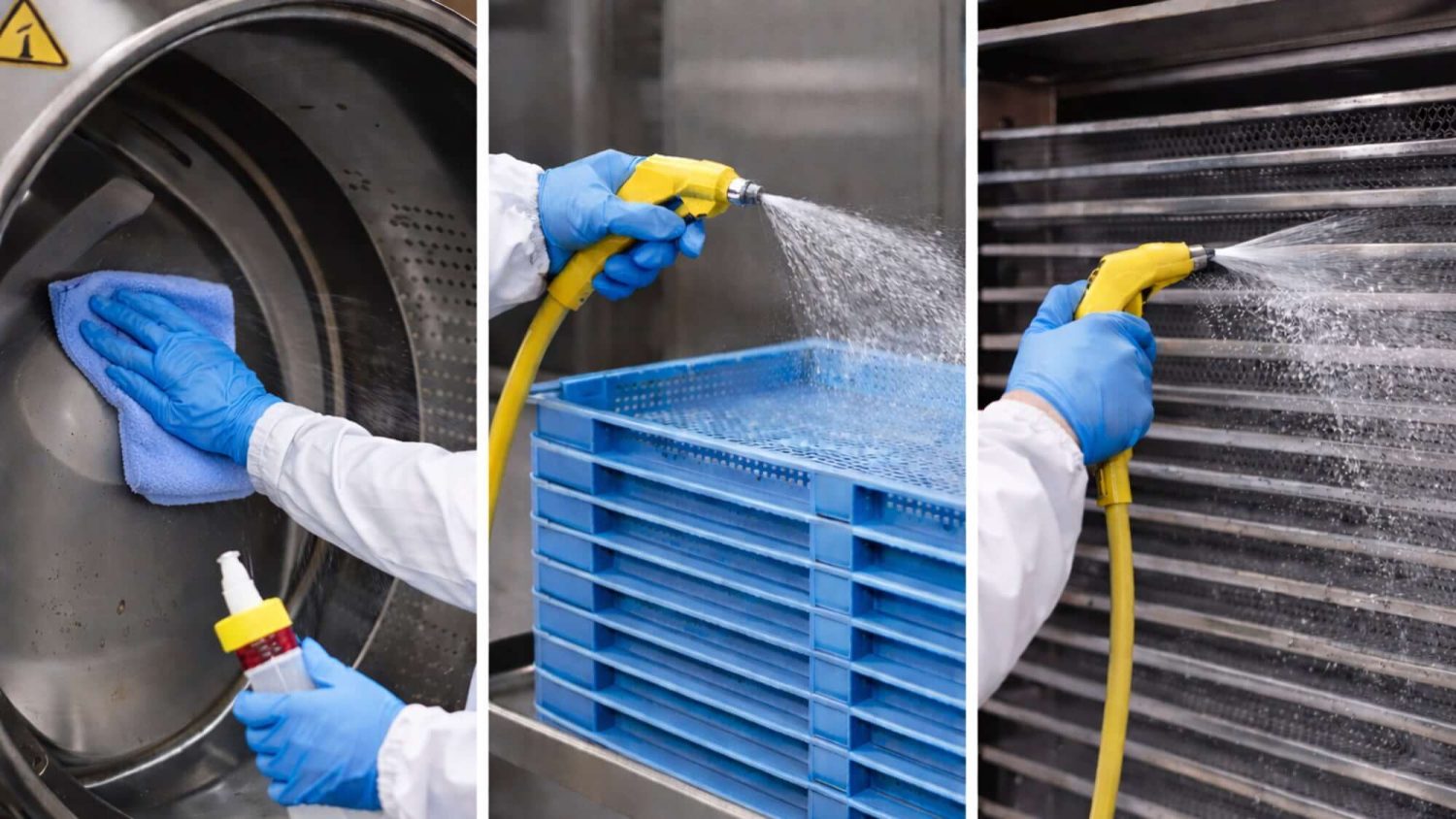
Cleaning tumble dryers: After each production run or at least daily
- Use warm water + mild detergent to clean the drum interior, perforations, and any internal parts.
- For the dryer with removable baskets, remove and wash them separately.
- For the dryer with CIP, close the drum and activate CIP to rinse automatically.
- Dry everything completely before the next run.
- Use food-grade lubricants on moving parts as scheduled.
Cleaning drying trays: After every batch
- Empty trays fully and check corners before washing.
- Wash plastic or fiberglass trays with warm, soapy water.
- For stuck-on gelatin, soak trays in warm water first.
- Don’t scrub too hard, or scratches can create sticking and hygiene issues.
- Rinse trays with clean water to remove soap, and then dry them thoroughly.
- Consider a final sanitation step using a diluted food-grade sanitizer.
- Inspect trays for cracks, chips, or warping, and replace the damaged ones.
Cleaning drying tunnels and rooms: Daily, weekly, and annually
Tunnels:
- Shut down the tunnel and clean the interior surfaces of the chamber.
Walk-in rooms:
- Wipe down walls, floors, and racks.
- Use appropriate cleaners.
- Clean fans and vents if you see buildup.
- Check filters often and clean or replace clogged ones.
- Keep dehumidifier coils clean.
- Ventilate the tunnel and room well before the next dry.
FAQs about the Softgel Drying Process
Q1: How long does it take to dry softgel capsules completely?
A: The process is usually split into about 30-45 minutes of tumble drying and then about 24-48 hours on drying trays. Certain formulations, like plant-based shells or hygroscopic fills, can take longer to dry. Still, don’t chase time alone. The real goal is reaching the target moisture content.
Q2: What’s the ideal temperature and humidity for softgel drying?
A: Softgels are often tumble-dried at about 25-35 °C with around 20-30% RH. In the final drying stage, the setpoints typically drop to about 21-24 °C with around 20% RH.
Q3: How can I tell if my softgels are dried enough?
A: Here are a few easy ways to tell. Touch is the first clue: dry softgels feel firm and non-sticky. For a more objective check, you can use a moisture analyzer: the shell should be around 13-16% equilibrium moisture. A quick squeeze or short drop test also helps: no cracking, no leakage, and a slight bounce usually mean your softgels are properly dried.
Q4: Do I really need a tumble dryer, or can I just put the softgels directly on trays?
A: Using a tumble dryer is highly recommended. Static drying without tumbling is possible, but you’ll usually see more flat spots and capsules sticking together in the early stage. The tumbler pulls off surface moisture quickly and gives the softgel its shape.