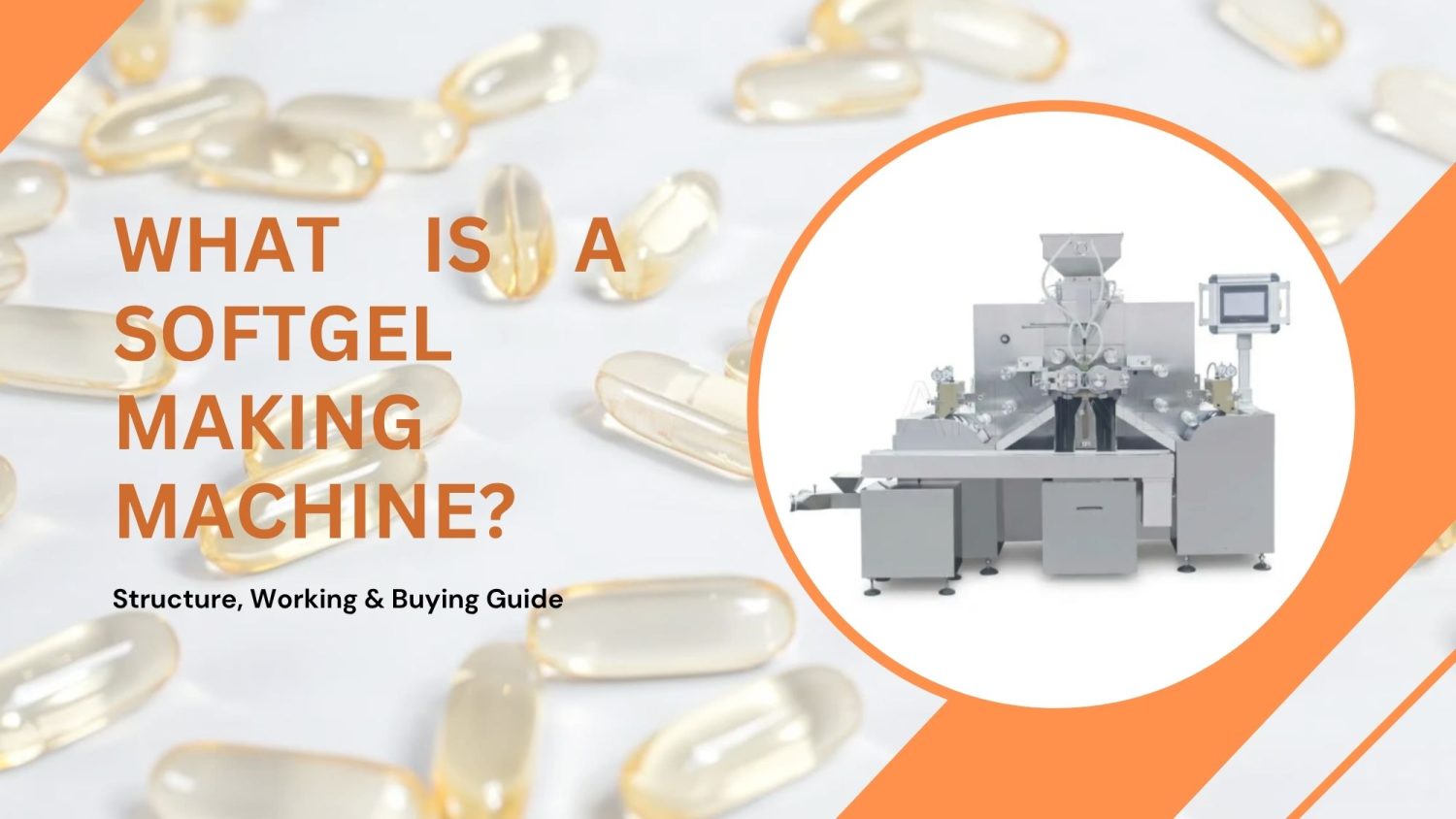
Softgel encapsulation machines are widely used in the pharmaceutical and supplement industries to produce softgels. They fill liquid or semi-liquid materials into soft capsules in different shapes. This manufacturing method improves smooth swallowing and protects sensitive ingredients from air, light, and moisture. As demand grows for softgel products such as vitamins and oils, softgel making machines become a key part of drug and supplement manufacturing.
What is a softgel encapsulation machine?
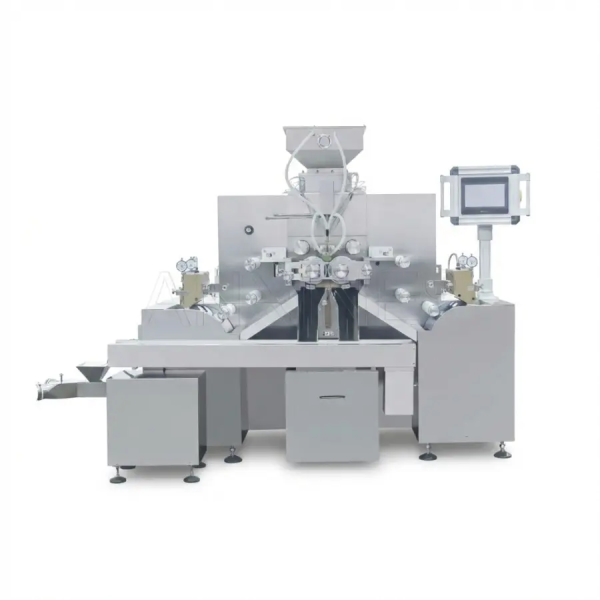
A softgel encapsulation machine is a type of equipment used to produce soft gelatin capsules in different sizes. It could fill oil, liquid or suspension into soft capsules. This softgel making machine forms, fills, and seals the capsules in one continuous process. This method protects sensitive ingredients and improves product consistency.
Why need a softgel making machine?
In pharma or nutrient production, some materials may not be processed well in powder or tablet form. This softgel encapsulation machine makes it possible to produce stable and accurate products.
- Liquid and oil materials are well handled. Some ingredients, such as fish oil or herbal extracts, are liquid or semi-liquid. They cannot be filled into hard capsules or pressed into tablets. A softgel machine can process these materials directly.
- Sensitive ingredients are protected. Softgel capsules form a sealed shell. This shell reduces contact with the environment like air and light. It keeps the product stable and extends shelf life.
- An accurate dosage can be achieved when the machine is properly calibrated and maintained. The filling volume could be controlled precisely for effectiveness and safety.
- The Capsule’s appearance is improved. Softgels have a smooth surface and uniform shape.
Applications of softgel encapsulation machines
This equipment is used in many areas for diverse production.
- The pharmaceutical industry. They are used to produce softgel drugs such as pain relievers, vitamins, and prescription medicines with liquid fillings.
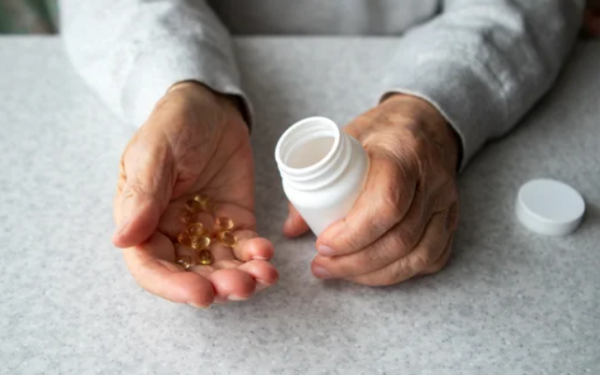
- Dietary supplements. Softgel machines are widely used for products like fish oil, vitamin D, vitamin E, and herbal extracts.
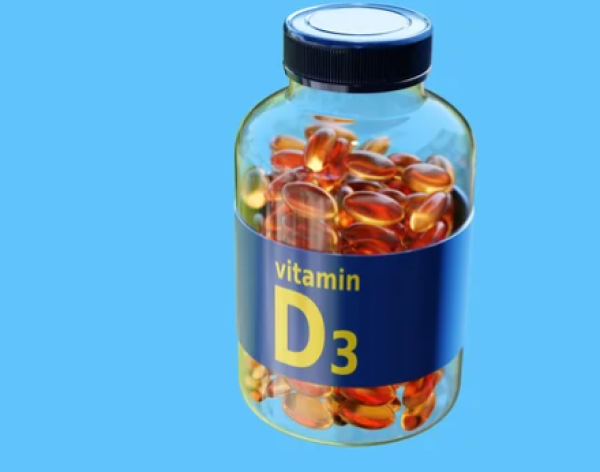
- Nutraceutical products. Many health products are produced in softgel form for better absorption and convenient use, including omega-3 oils and plant-based extracts.
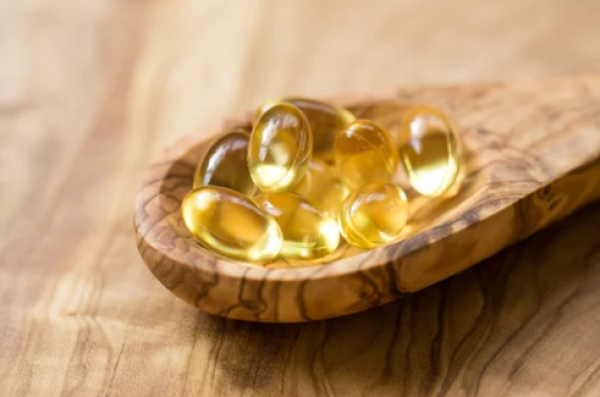
- Cosmetics and beauty products. They are used for skincare oils, serums, or beauty essences. These softgels are often used for single-dose applications.
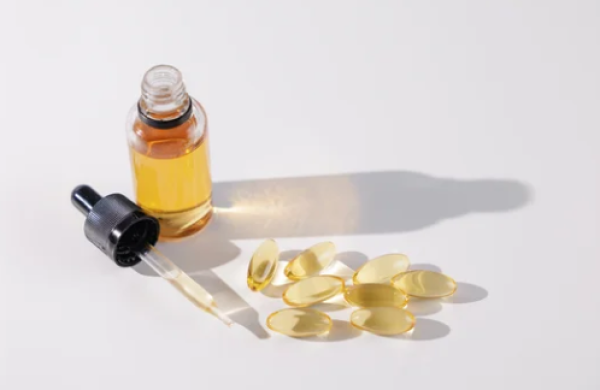
What key parts of a softgel capsule making machine should you know?
A softgel encapsulation machine is made up of several key parts. Each part has its own function to complete the softgel making process.
Part 1: Material storage tank
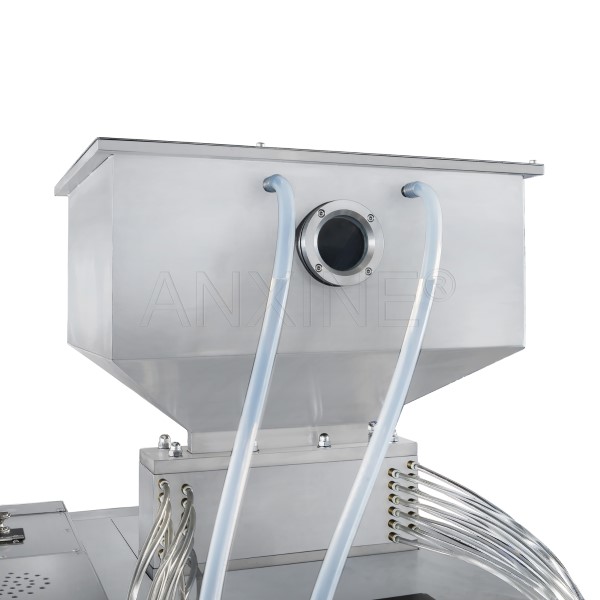
This tank holds the filling material before production. It may include mixing or heating functions to keep the material uniform. This prevents separation or solidification during operation.
Part 2: Distribution box
This part is used to form gelatin ribbon. It spreads liquid gelatin into thin ribbons with uniform thickness. It has a heating function to keep the gelatin at the required temperature. The thickness can be adjusted according to your needs. It directly affects the strength and appearance of the softgel shell.
Part 3: Feeding system
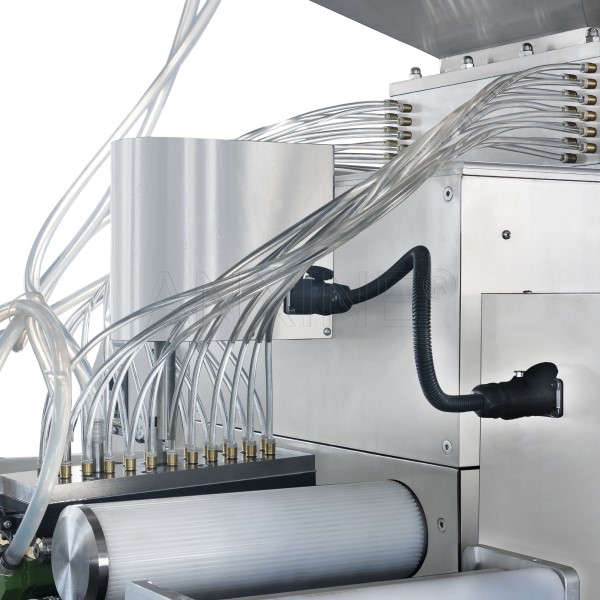
The feeding system mainly includes the hopper, pump, and pipes. It delivers the liquid or semi-liquid material into the capsule. The pump controls the filling volume, so each capsule has a consistent dose. It also allows adjustment when the product weight needs to change. In addition, there are dosing nozzles. They deliver the exact volume of fill into the die pockets. The internal diameter and design must match the viscosity and required fill weight.
Part 4: Chiller
The chiller cools the liquid gelatin during processing. It keeps the gelatin at a stable temperature so that proper gelatin ribbons can form. In many softgel production lines, the outlet temperature is typically set around 16°C to 20°C. This is a general process recommendation. But the exact setting should be adjusted according to the specific gelatin formulation and ambient conditions. This is important for maintaining consistent capsule quality.
Part 5: Encapsulation system
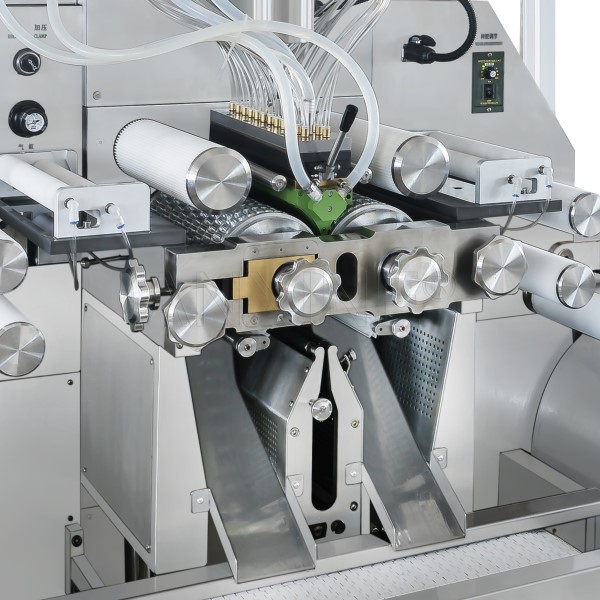
This system includes die rollers and a wedge. They work together to form and seal the soft capsules. During the manufacturing process, two gelatin ribbons meet at the die rollers. And the filling material is injected between them. The rollers shape the soft capsule and seal it at the same time. This part plays a key role in capsule size, shape, and sealing quality.
Part 6: Tumble dryer
The tumble dryer is used for initial drying and shaping. Soft capsules rotate inside a mesh drum while air flows through. This removes surface moisture and makes the capsules keep their shape before final drying.
Part 7: Control panel
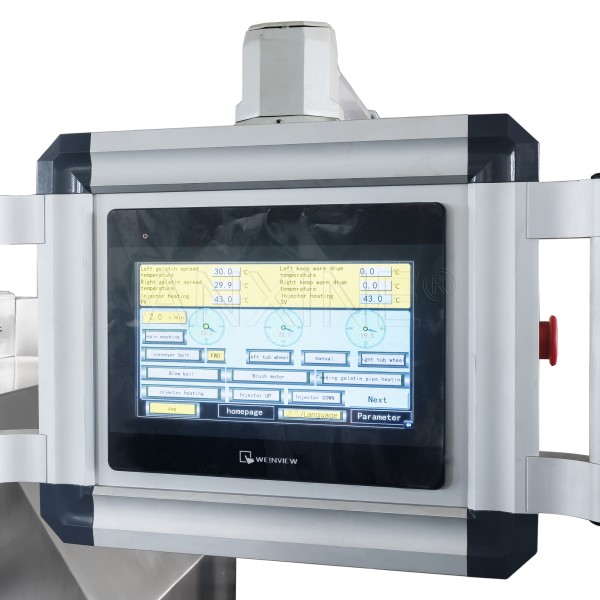
The control panel manages the operation of the whole machine. It controls speed, temperature, filling volume, etc. Operators can adjust parameters through a panel or screen easily.
How does a soft gel making machine work?
The softgels are made with the help of die rollers to form and fill. The main working principle is as follows.
Step 1: Gelatin preparation and heating
At first, pour the liquid gelatin into the hopper. The material will be kept in the storage tank at a stable temperature. If the gelatin is too cold, it becomes thick and hard to spread. If it is too hot, it may lose strength.
Step 2: Gelatin ribbon formation
The liquid gelatin is spread to form two thin and even ribbons. The thickness of the ribbons can be adjusted based on the required capsule strength.
A chiller cools the gelatin ribbons to get a stable form. This makes them firm enough for shaping and sealing. The cooling temperature should be carefully controlled to avoid brittleness or stickiness.
Step 3: Filling material delivery
The filling material is stored in a tank and pumped into the machine through a feeding system. The pump controls the amount delivered into each capsule. In this step, the viscosity should be suitable, or the filling may be unstable or inaccurate.
Step 4: Encapsulation
It includes the process of shell forming, material filling and capsule sealing. On this stage, the two gelatin ribbons meet at the die rollers. Meanwhile, the filling material is injected between them. The rollers press, shape, and seal the soft capsules in one step. It also cuts them from the gelatin ribbons at the same time. During the process,
Settings like temperature and alignment need to be correct for tight sealing. Improper settings can cause leakage, weak seams, or irregular shapes.
Step 5: Drying and shaping
The formed softgels are removed from the die and moved to dry. Some systems can separate defective capsules at this step. Softgels then enter a tumble dryer. It removes surface moisture by airflow and also keeps its shape. Many softgel manufacturers choose to place these soft capsules in a tray for further drying and make them stronger. This article provides a detailed description of the softgel drying process.
For more clear understanding, you may check the video to see how the softgel making machine works.
How to maintain a softgel making machine?
Proper maintenance is important to keep the equipment work stablely and produce high-quality softgels. The work usually includes daily checks and replacement, regular cleaning, and lubrication. Because of the unique technical features of softgel making machines, there are some maintenance requirements for key parts you need to notice.
Die roller
This part features high precision, and it contacts the hot liquid directly, so the maintenance should be careful. It requires regular cleaning to prevent gelatin residue or degradation. This can cause sticking or uneven capsule wall thickness. Moreover, the mold should be regularly inspected for scratches or corrosion, as scratches can lead to leakage or incomplete capsules.
Material handling system
It involves heating, stirring, and gelatin solution handling. Without proper maintenance, it may cause lumping or degradation. The following ways should be conducted.
- Clean the pipes and tanks to prevent gelatin residue from fermenting or deteriorating.
- Inspect the heating and cooling systems for a stable temperature.
- Check lubrication and seals to prevent gelatin leakage.
Filling part
Because the filling material may be oil-based or contain active ingredients, it can affect the pump and dosing system. The pump and pipelines then need regular cleaning to prevent clogging or contamination. Dosing components such as pistons and screws also need inspection. This could maintain accuracy. Otherwise, capsule weight may become inconsistent.
Environment control
Softgel capsules are sensitive to humidity and they can easily absorb moisture and deform. In general, a relative humidity of about 30–40% RH is recommended for softgel drying and storage. Higher RH can lead to sticking, while lower RH may cause brittle shells. In addition, it is also necessary to maintain proper air circulation and filtration. It reduces dust or particle contamination of the capsules.
Data recording
There are many factors that affect softgel quality and consistency, such as temperature, humidity, and machine speed. It is better to record the process parameters for each batch, so quality issues can be traced. This also makes it easier to adjust parameters for future softgel production.
How to select a suitable softgel encapsulation machine for your business?
A suitable softgel encapsulation machine is not only about price or speed. It is about matching the machine with your product, scale, and future plan.
Product type
Though softgel making machines could fill oil, suspension, or paste, not every model can handle all types. You need to confirm your requirement with the supplier. Wrong selection can cause leakage, unstable filling or inconsistent dosage.
Capsule shape and size
Softgels could be made in many shapes, like round, oval and oblong. Different shapes need different designs. This is mainly based on the design of the die rollers. If you have special requirements for softgels, contact your supplier for customization to meet your needs. But it costs much more.
Quality compliance
This is critical in pharma and supplement production. It affects product safety, stability, and whether your products can enter regulated markets. Common standards include
- The FDA requirements
- cGMP
- CE Marking
- ISO standards
If not, your products may not be approved to enter the target market.
Flexibility
Besides matching your current production needs, you should also consider your future needs when buying an advanced model with a large investment. A flexible machine supports your long-term profit. Before purchasing, you can ask yourself the following questions to find if the machine is suitable. They include
- Can this machine support new products?
- Can capacity meet future production volume?
- Is it compatible with other equipment, like blister packaging equipment?


