Finding the right gummy manufacturing equipment suppliers in China can make or break your candy business. With China’s vast manufacturing base and competitive costs, it’s no wonder so many companies look east for their gummy production lines.
But choosing a gummy equipment supplier is not just about finding a machine with the right price or output. A reliable supplier should be able to provide a clear technical plan, explain the limits of the equipment, show how it performs, and support installation and commissioning. Once the equipment is in production, they should also be able to provide the documents and spare parts you need.
In this post, we’ll walk through six steps for choosing a gummy making machine supplier in China, along with what to watch out for. By the end, you’ll know exactly how to source gummy-making machinery from China with confidence and ease.
6 Steps to Choose a Gummy Equipment Supplier in China
Step 1: Define Your Gummy Production Requirements
The most effective way to compare suppliers is to give each one the same production requirements. If you simply ask, “How much does gummy production equipment cost?”, you may receive quotes based on very different conditions. For example, the equipment may be manual, semi-automatic, or fully automatic. One quote may include only the gummy making machine, while another may also include auxiliary equipment for cooking, depositing, cooling, demolding, and other steps.
Table 1. Key Considerations for Gummy Manufacturing Equipment
| Requirement | Information to Define | Why It Matters |
|---|---|---|
| Gel system | Gelatin, pectin, carrageenan, or other system | Different gel systems set differently |
| Application | Candy, dietary supplement gummy, functional gummy, etc. | Different applications have different production requirements |
| Target piece weight | Target weight and acceptable variation | This affects the depositing and mold requirements |
| Shape and mold design | Standard or custom | It determines the machine’s mold design and mold changeover requirements |
| Color, layering, and filling requirements | Single-color, multi-color, filled, layered | It places different demands on the machine’s depositing setup |
| Target capacity | Required output per hour or shift | It determines the machine’s specifications and level of automation |
| Molding process | Starchless or starch mogul | It affects the choice of production line |
| Available installation space | Available length, width, and height | This affects production line design |
| Available utilities | Electricity, compressed air, cooling water, steam, if required | The equipment must match site conditions |
| Future expansion | New molds, higher capacity, additional products | This can reduce future expansion costs |
Pay close attention to whether the gummy manufacturing equipment is compatible with your formula. Gelatin and pectin, for example, behave differently during cooking, depositing, and setting. Functional gummies may also contain active ingredients that require specific temperatures or mixing conditions. For that reason, you should tell the supplier about your formula before selecting the equipment.
Step 2: Clarify What’s Included in the Quote
Although gummy candy production lines are often referred to by the same name, the equipment they include can vary widely. When requesting quotes, you should ask each supplier to clearly define the configuration included in its offer.
A commercial gummy candy production line may include some or all of the following:
- raw material cooking and mixing equipment
- holding and transfer systems
- depositing machines
- molds and mold handling equipment
- cooling
- demolding
- optional sanding or oil coating
- conveying
- inspection
- connection to downstream packaging equipment
Therefore, each supplier should clearly state:
- which equipment and configurations are included in the quote
- which items are optional
- what upstream and downstream equipment the line can connect to
- What services are included—equipment delivery only, or also training, trial runs, and after-sales support
Step 3: Shortlist Reliable Gummy Machine Suppliers
China has so many gummy manufacturing equipment suppliers—how do you narrow the field?
1. Start with B2B Supplier Platforms
Begin your search on established B2B platforms such as:
- Alibaba.com – Allows users to search by keyword and narrow down suppliers using filters. Its new AI sourcing mode can also help match suppliers based on specific requirements.
- Made-in-China.com – Supports keyword searches with filters, and also allows buyers to post RFQs so suppliers can respond with relevant quotations.
- Global Sources – Another useful platform for finding Chinese machinery manufacturers and exporters.

2. Check the Supplier’s Official Website
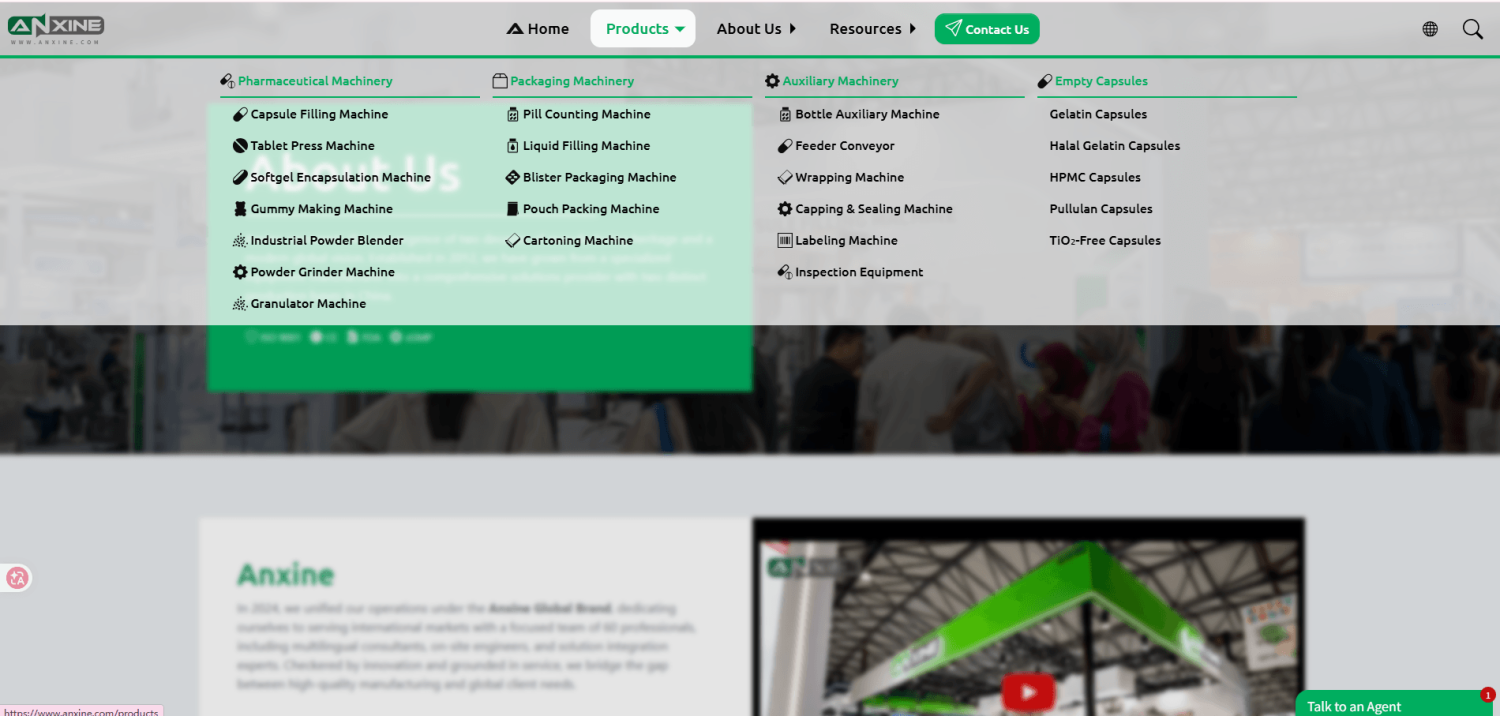
After narrowing down your options on B2B platforms, search for each supplier on Google or another search engine and visit its official website. The website can help you learn more about the supplier, including its background, capabilities, and facilities. A website alone cannot prove that a supplier is legitimate or reliable, but it can still help you evaluate the company.
3. Meeting Suppliers Face-to-Face (Trade Shows)
Another great way to check out gummy manufacturing equipment suppliers in China? Meet them in person. China hosts several trade shows that focus on food and packaging machinery:
- Canton Fair (China Import and Export Fair)
- Held twice a year in Guangzhou
- Features entire halls filled with machinery exhibitors
- This is where you’ll come across suppliers

- Industry-specific expos like:
- Bakery China
- ProPak China
- These events attract more specialized and serious suppliers
Many suppliers of gummy manufacturing machines in China also attend international trade shows, especially those related to pharmaceuticals, nutraceuticals, dietary supplements, and functional foods. Relevant exhibitions include:
- CPHI (Convention on Pharmaceutical Ingredients)
- International pharmaceutical trade show
- Relevant to pharmaceutical and functional gummy equipment
- Vitafoods Europe
- International nutraceutical and dietary supplement trade show
- Relevant to vitamin and functional gummy equipment
Why trade shows are worth it:
- You get to see machines in action
- You can touch and inspect the build quality
- You can talk directly with sales engineers and ask technical questions
- It’s easier to compare multiple suppliers side by side
Step 4: Evaluate the Supplier’s Credibility and Technical Capability
When evaluating suppliers, do not rely only on price or marketing materials. Assess them on two levels: first, whether they are legitimate and trustworthy; second, whether they have the technical capability to equip your production line with the right machinery.
1. Evaluate the Supplier’s Legitimacy and Reliability
- Company Credentials and Physical Presence: Company registration, business license, business scope, factory, and office
- Project experience and global delivery capability: Similar projects, target market experience, client references, and export handling
- Quotation, proposal, and contract: Clear pricing, a technical proposal, and contract terms
- After-sales and delivery support: Spare parts supply, remote support, warranty terms, and delivery commitments
- Factory audit and communication: Willingness to accept a video audit or an on-site visit
2. Evaluate the supplier’s technical capability
- Equipment and formula compatibility: Support for producing your product type, such as gelatin gummies or center-filled gummies
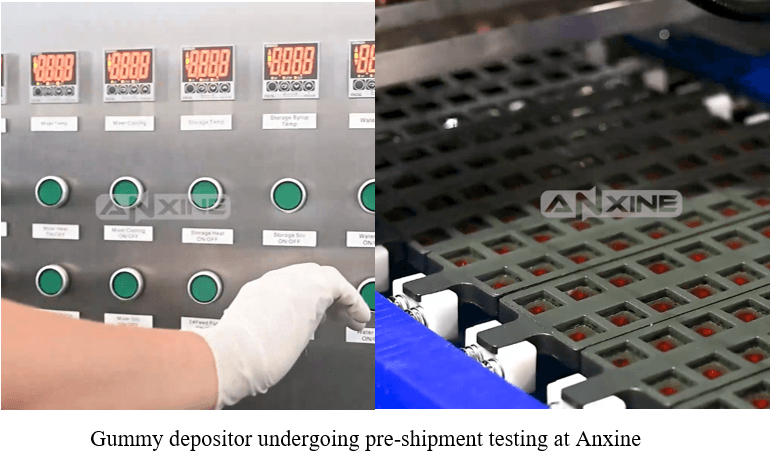
- Trial runs: Ability to run trials using your formula or similar ingredients to verify actual production performance
- Cleanability: Hygienic design, compliance, easy cleaning, and no hard-to-clean areas
- Mold change capability: Ability to change molds and support custom mold development
- Production line integration: Smooth connection between the different stages of gummy production
Step 5: Ask for a Technical Proposal, Not Just a Price
After defining your procurement needs, prepare a clear and complete RFQ (Request for Quotation) or URS (User Requirements Specification). This will help suppliers understand your requirements and submit technical proposal and accurate quotations more efficiently. For an initial inquiry, you don’t need to provide every details. Focus on the core requirements and ask suppliers to provide the key technical and commercial information. You can use the list in Table 1 as a reference when preparing your requirements checklist.
Once quotations and technical documents are received from prospective suppliers, consolidate the key information in a comparison matrix to support a side-by-side review. Follow up promptly to clarify any missing or unclear information and obtain confirmation where needed. The following supplier quotation comparison table is for reference only.
Table 2. Reference Comparison Table for Gummy Making Machines
| Suppliers | Supplier A | Supplier B | Supplier C |
|---|---|---|---|
| Technical Specifications | |||
| Model | |||
| Capacity | |||
| Depositing Speed | |||
| Power Supply | |||
| Dimensions | |||
| Weight | |||
| …… | |||
| Equipment Configuration | |||
| Main Machine | |||
| Molds | |||
| Conveyor System | |||
| Cooling System | |||
| Control System and Software | |||
| Spare Parts and Tools | |||
| …… | |||
| Scope of Services | |||
| Installation and Commissioning | |||
| Operator Training | |||
| Acceptance Testing | |||
| Delivery Period | |||
| …… | |||
| Warranty Period | |||
| Quoted Price | |||
| Pricing by Package | |||
Step 6: Comparing Pricing and Total Cost
After following the steps above, you should have received several quotations. However, when comparing them, please keep in mind that the purchase price is only one part of the total investment. Why so many buyers turn to China? Because their equipment is very competitively. But don’t look only at the listed price. You also need to consider the total cost, including the factors below:
1. Shipping costs
- Ask for the packed dimensions and gross weight first. Do not estimate shipping based only on the machine size, since gummy machines are usually shipped in large wooden crates.
- Get at least two freight quotes. One should come from the supplier, and one from your own freight forwarder, so you can compare the pricing
- Check what the quote includes. CIF usually covers cost, insurance, and freight, while DDP usually includes duty-paid delivery
- Do not underestimate ocean freight. Shipping a large gummy machine can add several thousand dollars to the total cost
- Compare the final landed cost. Look beyond the machine price and include freight, insurance, customs duties, and local delivery

2. Import duties and taxes
- Check your country’s import tariffs for food processing equipment
- You may also need to budget for:
- Customs duties
- VAT or GST on imports
- Customs brokerage fees
3. Installation and training
- Ask if the price includes on-site support
- For more complex lines, some suppliers may send an engineer to help install (you usually cover their travel and stay)
- Other suppliers may offer only remote support
4. Spare parts
- Ask what’s included in the initial spare parts kit
- It’s smart to buy extras like:
- Heater elements
- Gaskets
- Nozzles
- Free spare parts can sometimes be negotiated as part of the deal.
7 Risks to Consider Before Choosing a Gummy Making Machine Supplier in China
Sourcing from China can be a good option, but you should still proceed with caution.
Keep the following points in mind:
1. Poor or Inconsistent Communication
- Be cautious if a supplier is hard to reach, slow to respond, or vague in their answers.
- Poor communication before a sale often leads to bigger problems after payment.
- Some suppliers may respond quickly at first, then become hard to reach once you have paid.
- Reliable suppliers communicate clearly, reply within a reasonable time, and keep their commitments.
2. No References or Credentials
- Can’t provide past customer contacts? No business license or certifications? That’s a red flag.
- A serious supplier has nothing to hide—they might even invite you to visit.
- Lack of verifiable info means you should dig deeper… or walk away.
3. “Too Good to Be True” Pricing
- Be cautious of quotes that are far below the market price.
- They may involve low-quality materials, missing components, or even scams.
- Compare specifications line by line and choose suppliers with realistic, competitive pricing.
4. Odd Payment Requests
- Be cautious if a supplier requires full payment upfront.
- Do not send money to a supplier’s personal bank account, and be careful with requests for cryptocurrency payments.
- Agree to the payment terms in writing and tie them to production or delivery milestones.
- Be wary of unusually large discounts offered for full upfront payment.
- Use a secure, traceable payment method, such as Alibaba Trade Assurance, a letter of credit, or another verified platform.
5. Lack of Transparency
- Be cautious if a supplier cannot answer technical questions or refuses to share factory information.
- A reliable manufacturer should understand its equipment and explain its materials, specifications, and limitations.
- Generic answers may mean:
- They’re a middleman, or
- They don’t actually make the machines at all
6. Lack of Certifications and Compliance Documents
- Be cautious if a supplier has no CE mark, ISO system, or basic documentation.
- Not every certification is mandatory, but proper certifications help show that the supplier is reliable.
- If the supplier says they “do not provide documents,” the machine may be unsafe or difficult to import.
7. Pressure Tactics and Unrealistic Claims
- Claims such as “the price goes up tomorrow” are often used to pressure you into placing an order.
- Be wary of promises that a machine will make your product a top seller, require no maintenance, or deliver output far above industry norms. These claims are usually unrealistic.
- A reliable supplier should support its claims with real data, not verbal assurances alone.
FAQs
A factory with its own engineering team can usually handle design, production, and commissioning more efficiently, which makes communication easier. If it also provides global delivery, after-sales support, complete equipment packages, and turnkey solutions, the buying process is more straightforward. When problems arise, responsibility is easier to determine.