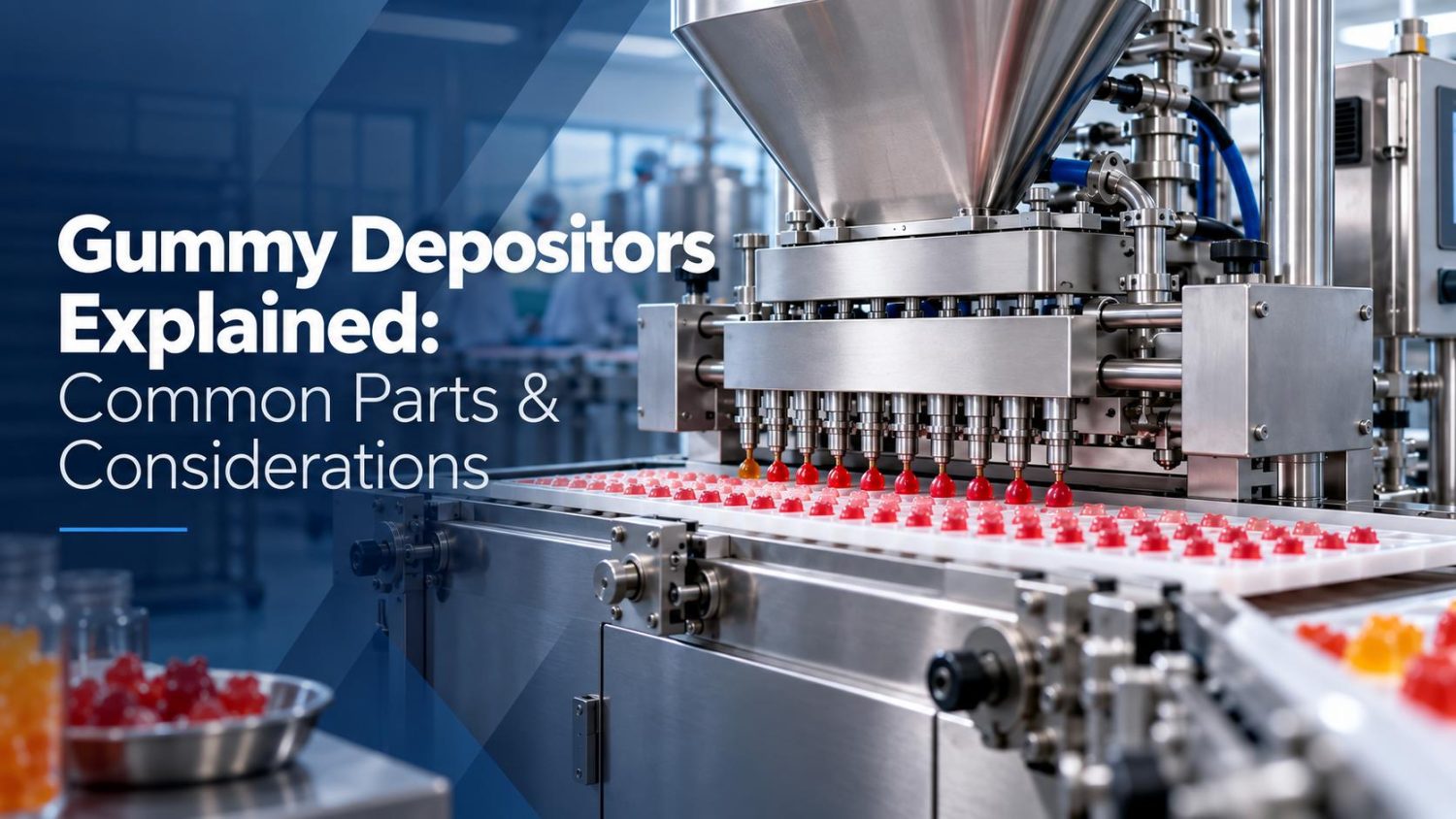
If you are making vitamin or dietary supplement gummies, a depositing machine is necessary. It is the core making machine in gummy production. The quality and appearance of gummies are highly related to this equipment. This article helps you have a clear understanding of gummy depositors.
What Is a Gummy Depositor?
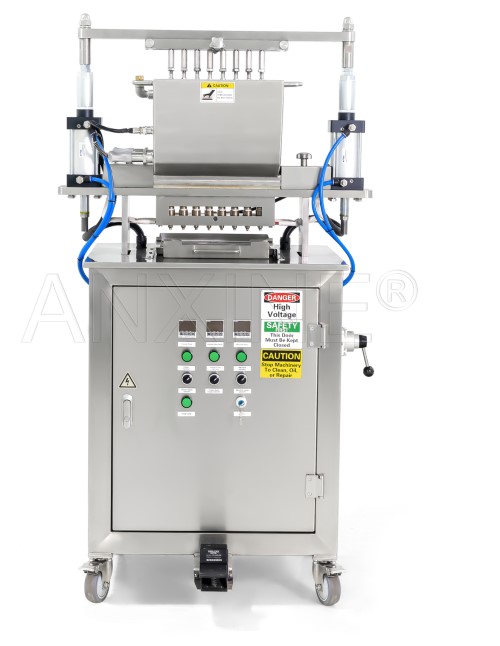
A gummy depositor measures and deposits an accurate amount of mixture into molds to form gummies. It controls how much gummy mass enters each mold cavity and maintains the fill position and appearance. The shape and size of gummies could be adjusted based on the mold design.
In the gummy manufacturing process, the depositor is used after the materials are heated to the required condition. The material is then transferred to the depositor. It is kept at a suitable temperature and fed into a metering system. The system then delivers a set amount of gummy mass through the depositing nozzles and into the mold cavities. Finally, the gummies are cooled to keep the shape.
Here is a video to show you how an automatic gummy candy depositor works.
What Is a Gummy Depositor Mainly Used For?
The main job of a gummy depositor is to fill molds accurately and consistently. It can produce
- Vitamin gummies, such as multivitamin and vitamin C gummies.
- Dietary supplement gummies. They may have vitamins, minerals,or other permitted active ingredients, such as melatonin where allowed by local regulations.
- Functional gummies with ingredients, such as herbal extracts.
- Gummy candies, including fruit-shaped and other molded gummies.
What Are the Main Parts of a Gummy Depositor?
A gummy depositor consists of many parts to heat, measure, and deposit the mixture into molds. The configuration depends on the machine model. A small semi-automatic depositor may have a simpler structure. An automatic machine can include multiple hoppers, servo-driven pistons, oil spraying, etc. The Anxine AGC-LD20, for example, features a cylinder-driven piston to control the depositing volume. Others may use servo-controlled depositing parameters. The design can be different between semi-automatic and fully automatic models. Here are some common parts they both have for your reference.
Hopper
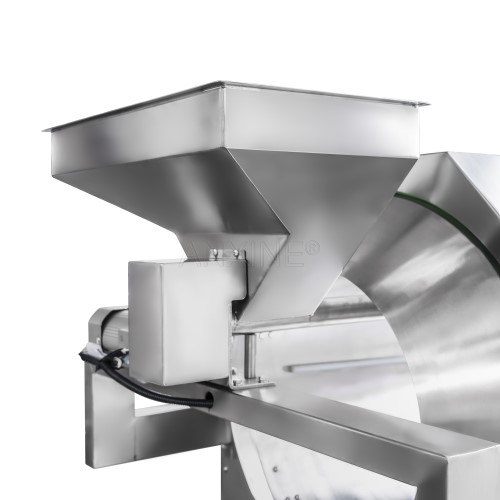
The hopper is the container that holds the prepared gummy mass before depositing. It is used to offer gummy mass to the depositing system. The operator often needs to pour the material into the hopper. In some automatic models, the material can be transferred into the hopper through a pump for continuous production. For more production efficiency, some gummy depositors may have two hoppers for different depositing requirements.
The hopper should be kept clean. Depending on the machine design, its temperature may need to be controlled during depositing. Some advanced models support separate temperature controls for the hopper body and bottom.
Heating System
It keeps the gummy mass and the relevant depositing parts at the required temperature. So, the material could be maintained in a suitable condition for depositing. The temperature should match the gummy formula and process. A low temperature can make processing take longer, while excessive temperature can create safety risks. Moreover, the heating system should not exceed its specified temperature limits. Operators should also avoid touching the heated hopper or material during operation because of the burn risk.
Metering and Piston System
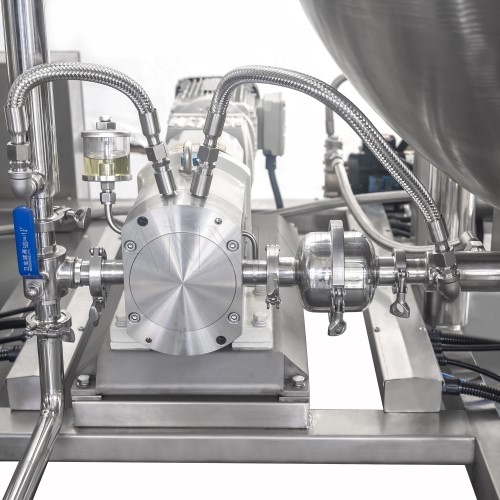
This part controls how much gummy mass is released during each depositing cycle. It is one of the most important parts to control gummy weight. During the operation, a cylinder drives the piston, and the piston stroke is adjusted to control the depositing volume in some depositors. Some may adopt servo-driven pistons. Its piston travel can be adjusted for different depositing weights, while the servo motor controls the depositing speed.
With piston driving, the piston stroke should be adjusted according to the required gummy weight. Depositing speed also needs to match the production conditions. Before production, the machine should be checked to make sure the depositing is stable before continuous operation.
Depositing Nozzles
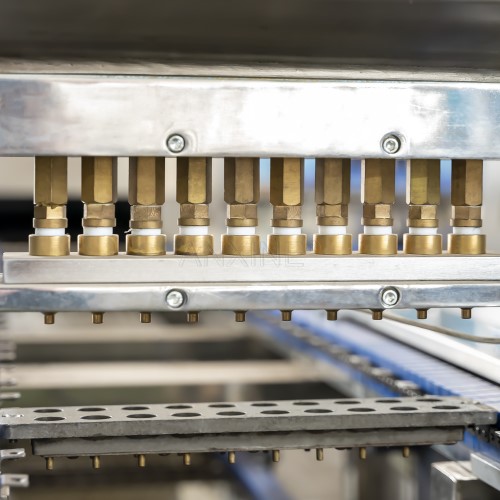
The depositing nozzles deliver the measured gummy mass into the mold cavities. The filling amount and position should both be correct. The nozzle needs to align correctly with the mold. Many models include a position adjustment to correct the alignment between the dispensing nozzle and the candy mold. For smooth depositing, the nozzle and the depositing path also need regular cleaning to prevent gummy residue from affecting the next production batch. In addition, the nozzle arrangement should be confirmed according to the required gummy weight, mold design, and machine configuration.
Control Part
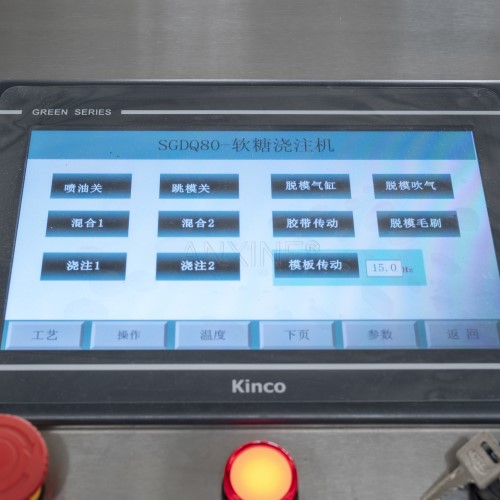
The operator uses it to set and monitor the main depositing parameters. A basic semi-automatic model can use simple controls, while a fully automatic model often has a display screen and more advanced parameter settings. It supports adjusting temperature, depositing weight, depositing speed, mold movement, etc. Please note that the main parameters should be set according to the product properties and production requirements.
Advanced Parts on Automatic Gummy Depositors
Fully automatic gummy depositors can be equipped with extra parts for more functions. These features mainly reduce manual work and support continuous production. The actual configuration depends on the machine model.
- Oil spraying system. This part applies edible oil to the mold surface before or during depositing. It reduces sticking between the gummy and the mold for easier demolding. Oil spraying is not necessary for every gummy product. The need depends on the mold, gummy formula, and demolding performance. Excessive oil can also affect the product surface.
- Flavor and color dosing system. It may include dosing pumps and flavor mixers. It adds food-grade flavor and color ingredients to the gummy mixture before depositing. The dosing system should provide a consistent filling rate, and the ingredients need to be mixed evenly before depositing.
- Automatic mold transfer. This part moves the molds through the depositing process without manual positioning. Some depositors may be equipped with a chain transfer system. It supports different mold movement, including filling one row or two rows during each stroke.
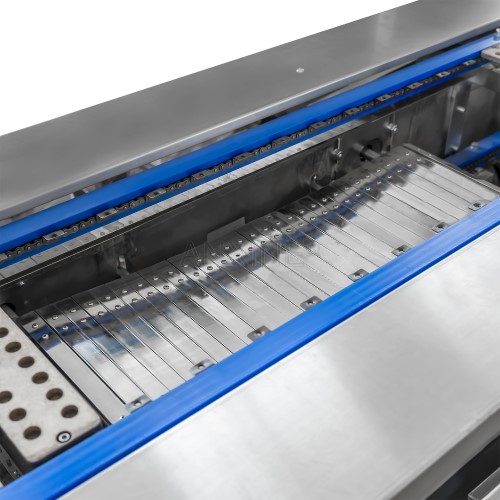
- Automatic demolding part. It removes the finished gummies from the molds after depositing and cooling. This reduces manual effort and improves production efficiency. But the gummy needs to be sufficiently solidified before demolding. The demolding method also needs to match the mold and gummy shape to avoid damage.
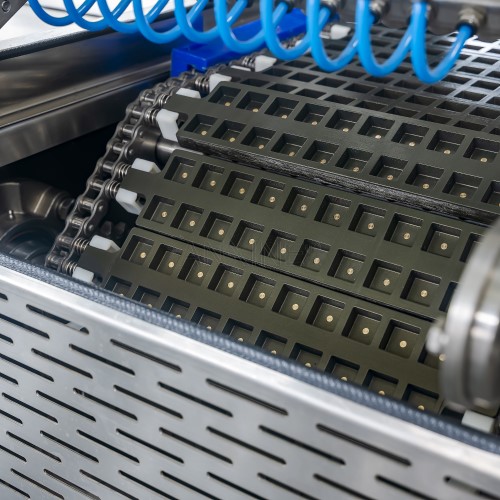
These parts should not be presented as standard parts of every gummy depositor. The basic depositor handles the core task of holding, measuring, and depositing gummy mass. Advanced parts are mainly related to product requirements or higher levels of automation.
What Factors Affect Gummy Depositing Accuracy?
Gummy depositing accuracy can be affected by many factors. Some common considerations are as follows.
Gummy Material Viscosity
Viscosity describes how easily the gummy mass flows. It directly affects depositing accuracy. When the gummy mass is too thick, it may not flow through the depositing system smoothly. This can make the actual depositing differ from the set amount. When it is too thin, the mass may spread more easily after entering the mold. It can affect the final shape.
The problem becomes more serious when viscosity changes during production. For example, if the gummy mass becomes cooler and thicker as production continues, the same machine setting may no longer be useful.
How to improve it: Keep the cooking process and material condition consistent. The depositor should also be adjusted based on the actual viscosity of the formula when something changes.
Temperature
Temperature is closely connected to viscosity. As the gummy mass cools, its viscosity can increase. This may change the way the mass moves through the hopper, manifold, and nozzles. Therefore, many gummy making machines often include temperature control around the depositing system. Good control of temperature is useful to maintain consistent flow for accurate dosing.
How to improve it: The required temperature control depends on the gummy formula and machine design. You’d better use the temperature range required by the specific formula and keep the temperature stable during depositing. Watch for changes in gummy weight or flow when the material temperature changes.
Gummy Weight
The target weight of each gummy affects how the depositing system should be set. The piston movement determines how much gummy mass is released during each depositing. This means a machine cannot use one depositing setting for every gummy size. Moreover, small gummy sizes require more careful control. They are harder to fill accurately because even a small difference in the amount of gummy mass can cause a big change in their weight.
How to improve it: it is not suggested to judge accuracy only by the machine setting. The actual gummy weight should be checked during production. Then, you can set the piston movement and depositing parameters correctly.
Nozzle Design
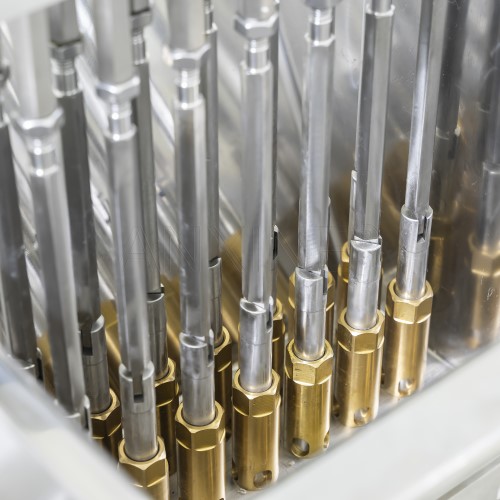
The nozzle controls how the gummy mixture enters the mold cavity. It needs to provide a stable flow and fill the material correctly into the mold. A poor nozzle setup can cause uneven filling, material strings, or buildup around the nozzle. Some depositors use specially designed nozzles and flow-control features to reduce these problems. Nozzle alignment is also important. Some depositor types include a position adjustment part to align the nozzle with the mold correctly.
How to improve it: you should choose a nozzle design that matches the required deposit volume and gummy formula. It is also necessary to keep the nozzles clean and make sure they stay aligned with the mold cavities.
Depositing Speed
It affects how much material is delivered and whether the machine can keep the flow stable. The speed is different among various depositing machines. For example, Anxine AGC-LD20 could handle 10-30 cycles/min. 1-20 pieces of gummies could be produced per cycle. In addition, the conveyor movement should also stay synchronized with the depositing. When increasing speed, you need to check if there is any
- Uneven gummy weights.
- Incomplete filling.
- Poor nozzle flow.
- Mold misalignment.
- More gummy residue around the nozzle.
How to improve it: you’d better set the depositing speed according to the gummy mass, target weight, nozzle arrangement, and mold movement. Do not choose the highest speed simply because the machine can reach it.
How to Choose a Gummy Candy Depositor?
The right depositor should match your gummy production line, output, and production process. Before buying a gummy depositor, ask yourself the following questions.
| Factor | Consideration |
|---|---|
| Production capacity | Can the machine meet your required output at your target gummy weight? |
| Formula compatibility | Can it handle your gummy formula and the flow properties? |
| Gummy size and weight | Can it produce your required gummy size and weight within the machine’s working range? |
| Gummy shape | Can the machine work with the mold shapes you need? Can you change molds easily when producing different shapes? |
| Temperature control | Does the machine provide the temperature control required by your gummy formula? |
| Machine testing | Can the supplier test your actual formula and mold before purchase? |
| Cleaning and changeover | How easy is it to clean the depositing system and change between different products or molds? |
You may also find two or more suppliers to compare their equipment, price and service. Then, you can select the most suitable one to get smooth production.
Get High-Quality Gummies with Anxine Candy Depositors
A gummy depositor is an important part of gummy production. It influences gummy weight, shape, and production consistency. To get a high-quality machine, a reliable supplier is also important. Anxine offers a wide range of gummy making equipment, including semi automatic and fully automatic models. If you need a whole gummy production line, it is also available. We can help you integrate the core machine and let them work smoothly. If you have any questions, feel free to contact us.


