Looking for packaging for tablets? You might think it is a simple choice between a blister pack and a bottle. But the real decision goes beyond choosing a package format.
Before choosing pharmaceutical packaging, you should start with the product itself. What protection does it need? How will the package be used? Then check whether the proposed format can run properly on your packaging line.
What Is Pharmaceutical Packaging?
Pharmaceutical packaging is more than just a container. It is a complete system designed to hold, protect, identify, and support the use of a drug product. The container pack we see is only one part of that system.
For example, a drug bottle package may include the bottle, cap, induction seal, desiccant, label, and carton. A blister pack may consist of the forming material and lidding material. It may also use a carton or other secondary packaging to provide extra protection or carry product information.
These components work together as one package. Changing one part may affect product protection, ease of use, or packaging-line requirements.
That is why you should evaluate the complete packaging system rather than selecting a material or component separately.
Three Levels of Pharmaceutical Packaging
Pharma packaging is usually grouped into three layers. Each level depends on where the package sits around the product and what function it provides.
| Packaging level | What it contains | Typical examples | Main purpose |
|---|---|---|---|
| Primary packaging | Directly contains the drug product | Blister pack, bottle, closure, vial, ampoule | Protects and contains the product |
| Secondary packaging | Groups one or more primary packs | Carton, leaflet, wallet, overwrap | Provides identification, grouping, and possible additional protection |
| Tertiary packaging | Groups finished packs for distribution | Shipping case, pallet, stretch wrap | Supports storage and transportation |
Primary Pharmaceutical Packaging
Primary packaging often gets the closest review because it directly contacts the drug. When choosing the package, ask one basic question: can this keep my product stable and potent throughout shelf life?
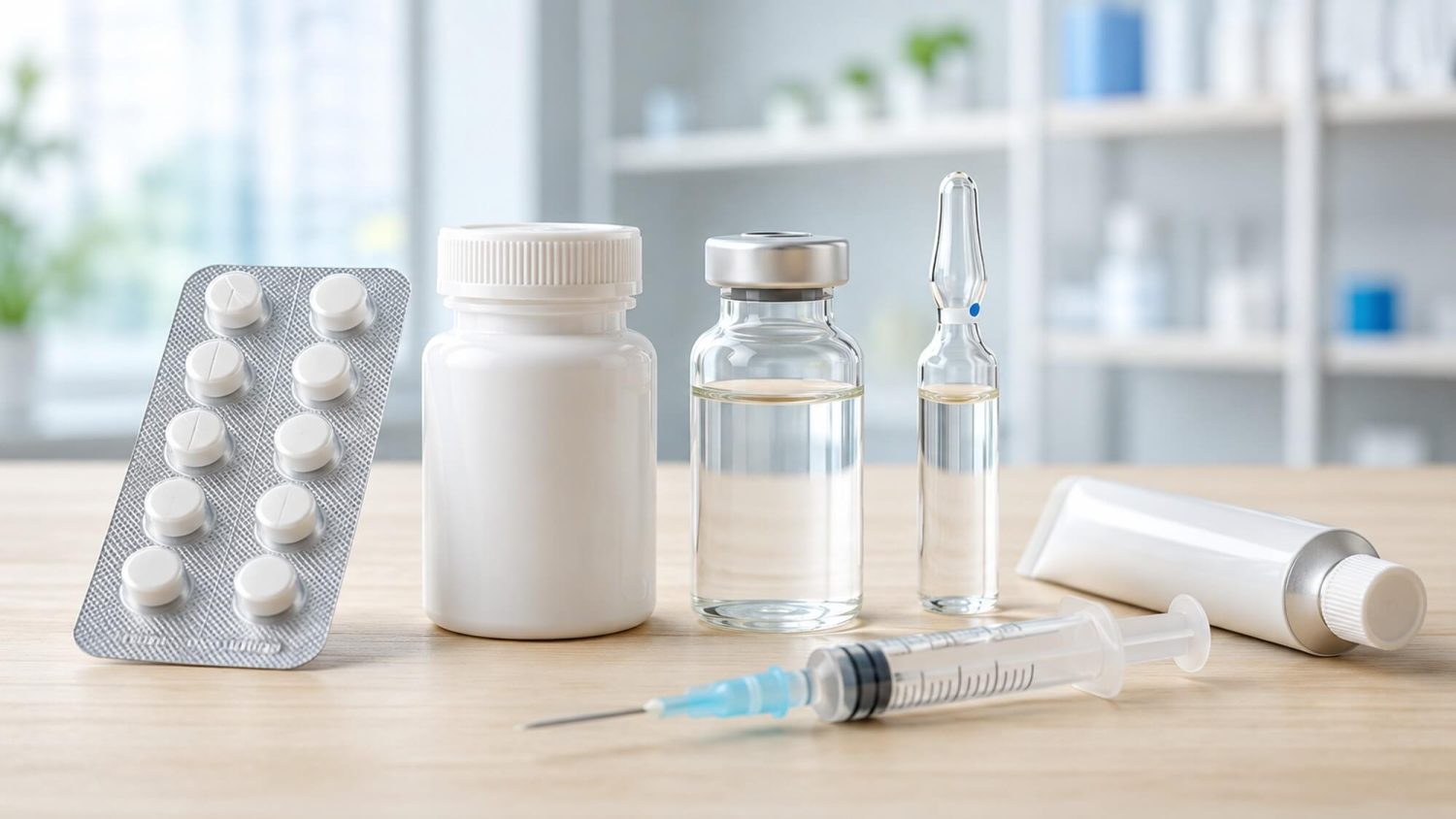
So, what will a primary package be evaluated for?
- Container and closure performance;
- Material compatibility;
- Sealing or integrity requirements;
- Protection against environmental exposure.
Secondary Pharmaceutical Packaging
This packaging layer does not touch the product. It is usually used to hold one or more primary packs for easier handling. Because of its physical structure, secondary packaging often gives you more surface area to display approved product information and branding.
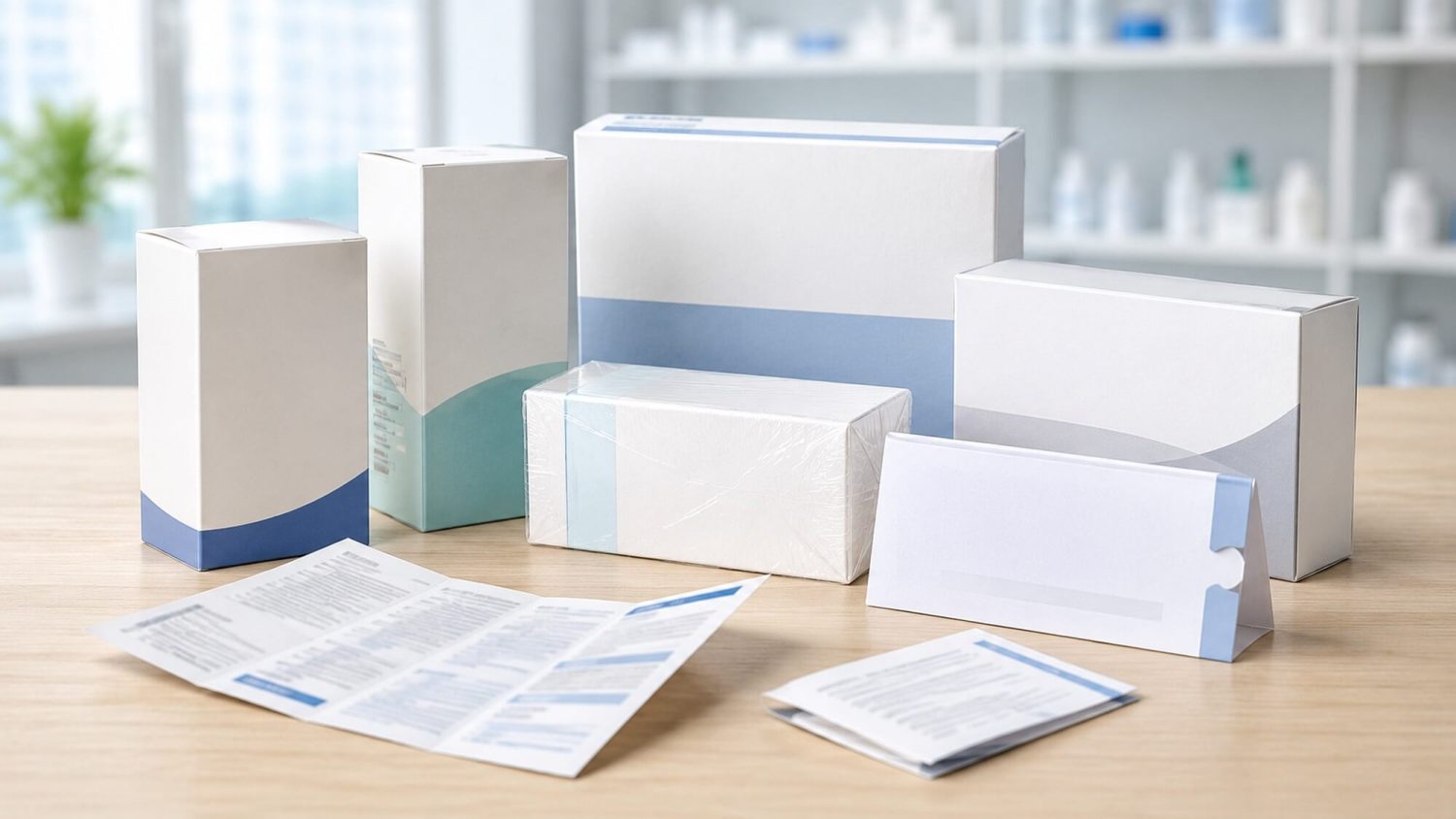
But secondary packaging is not only for presentation. In some cases, it may become part of the evaluated packaging configuration when it provides added protection.
For example, if your product is very highly sensitive, the blister packs may need to be sealed inside an aluminum foil pouch. The pouch is secondary packaging, but it still plays an important role in moisture protection. Because of that, it also needs to be evaluated as strictly as primary packaging.
Tertiary Pharmaceutical Packaging
Tertiary packaging is the outermost layer. Instead of containing individual products, it groups multiple secondary packs so they are easier to move through the supply chain. It often comes in corrugated shipping cases, pallets, stretch film, and shipping containers.
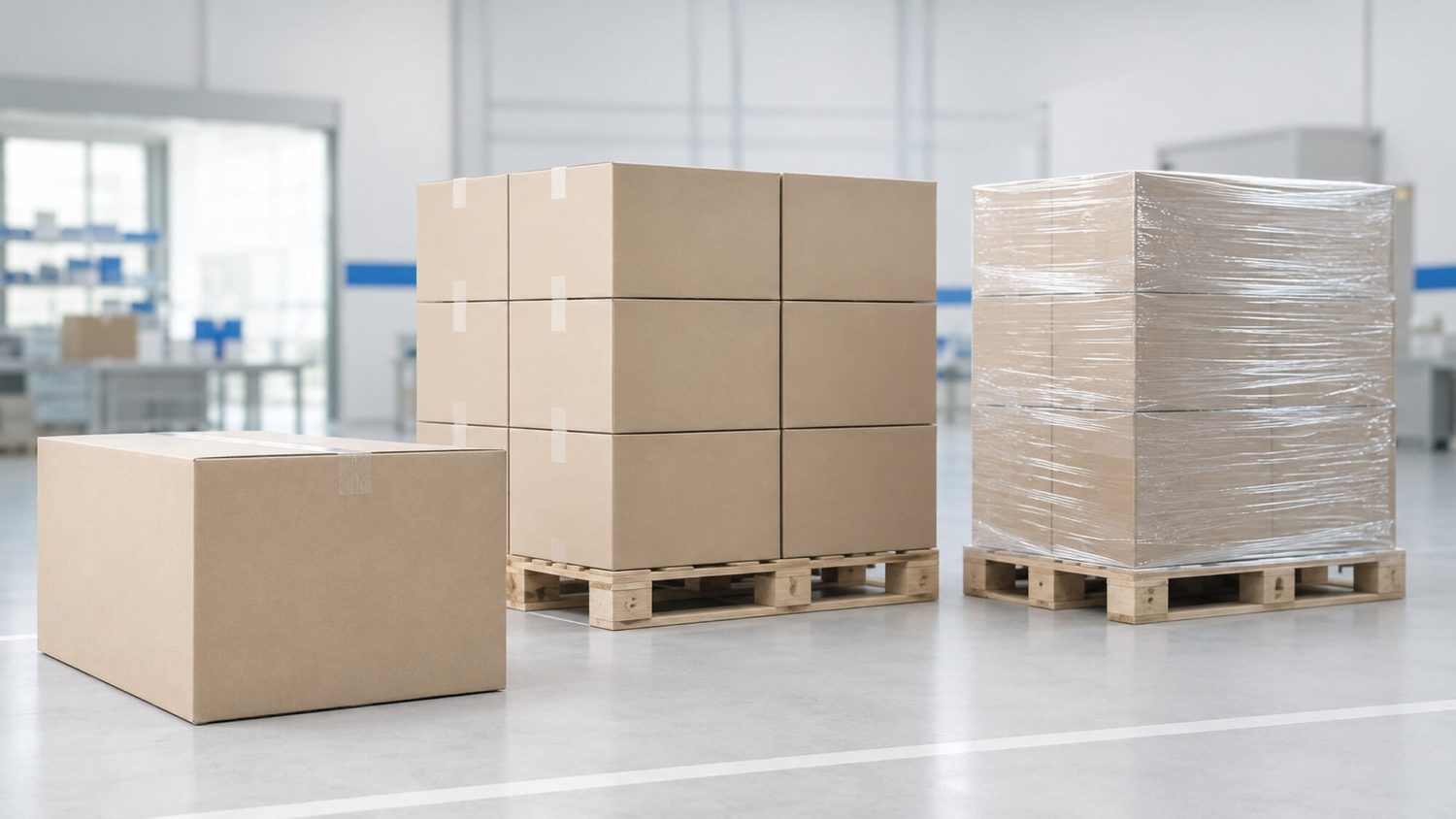
The packaging’s main job is to ensure safe shipping and handling, so it should pass vibration, compression, drops, or temperature tests. When shipping temperature-sensitive biologic products like vaccines or insulin, the tertiary packaging system may also include a cooler box and ice packs to control temperature during cold-chain logistics.
Common Types of Pharmaceutical Packaging and Their Uses
If you are looking for a packaging format for a new drug, the primary package is usually where you start. Will the product go into a blister, bottle, vial, or sachet? The answer may be in the table below.
| Packaging type | Common uses | Why it may be selected | What you need to confirm | Related Packaging Equipment |
|---|---|---|---|---|
| Blister pack | Capsules and tablets | – Separates and protects unit doses
– Enhances patient compliance |
Barrier properties, sealing, opening method, shelf-life requirements | Blister Packaging Machine |
| Bottle | Tablets, capsules, powders, liquids | – Supports multi-dose filling
– Provides easy scooping for powders – Controls liquid pouring and measuring |
Material compatibility, closure system, repeated opening | Pill Counting Machine (tablets & capsules); Liquid Filling Machine (liquids) |
| Vial or ampoule | Intravenous or intramuscular injections, freeze-dried powders | – Suitable for sterile or single-use products | Glass type, seal integrity, sterile-product requirements | Vial Filling Machine; Ampoule Filling Machine |
| Sachet | Powders, granules, oral suspensions, gels | – Provides a portable single-dose format | Barrier structure, sealing performance, opening mechanism, equipment fit | Pouch Packing Machine |
| Pre-filled syringe | Sterile injectable liquids | – Combines primary packaging and delivery system | Barrel material, needle and tip closure, sterilization | Prefilled Syringe Filling Machine |
| Tube | Ointments, creams, gels | – Clean and controlled dispensing
– Suitable for on-the-go use |
Material barrier, tip design, sealing quality | Tube Filling & Sealing Machine |
Why Similar Drug Products May Use Different Packaging
You may wonder why some tablets come in blisters and others in a bottle. The packaging choice is not random.
For example, some tablets are more sensitive to moisture. A blister can protect each dose separately. More stable tablets may work well in bottles, even though the container is opened many times during use.
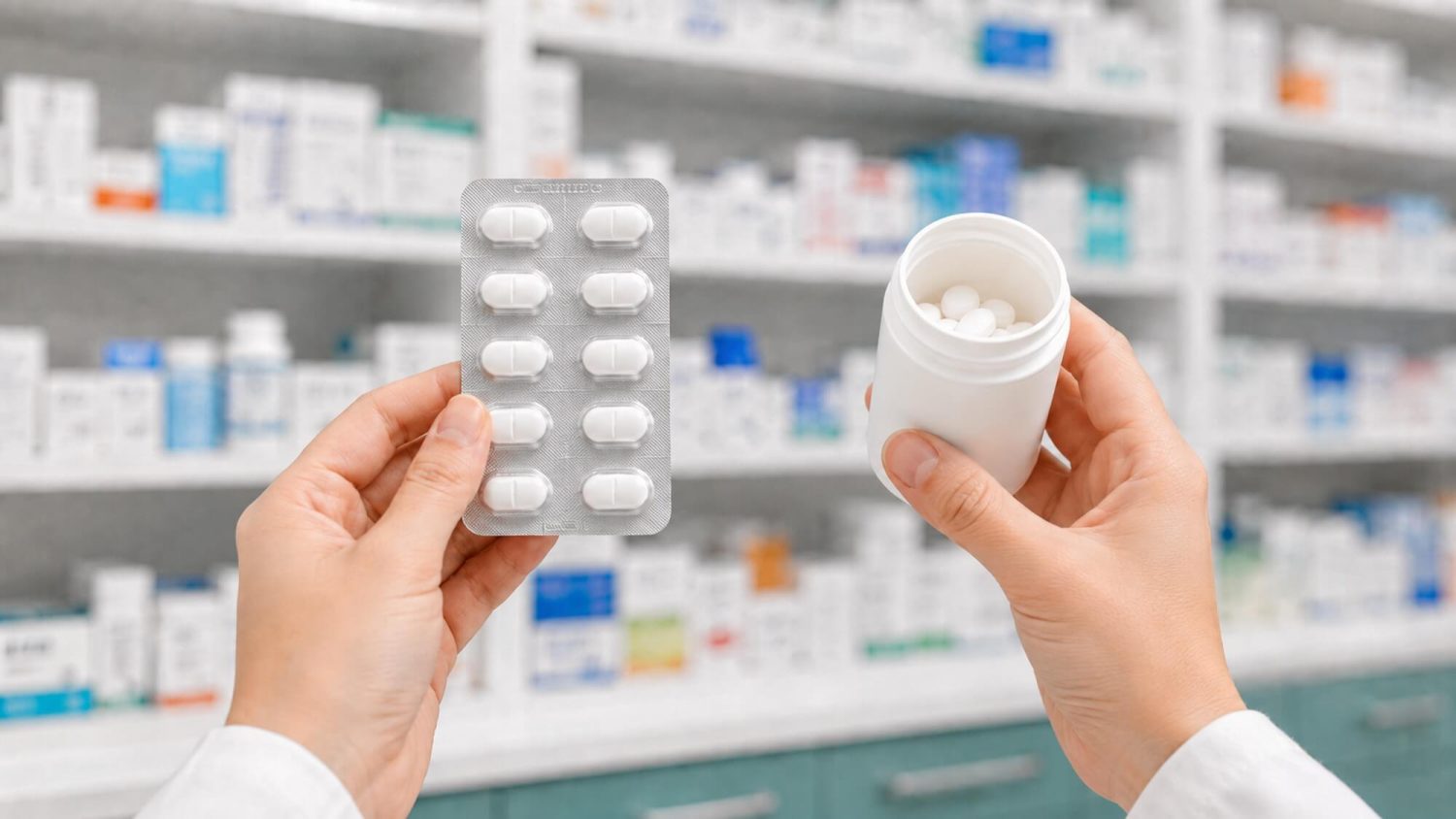
Beyond product protection, local packaging habits may also play a role. In the United States, solid dosage forms are often sold in plastic bottles. In many European markets, blister packs in cartons are more common.
In terms of manufacturing, bottle lines can handle high output and may have a lower packaging cost. Blister packaging is more complex, so equipment and material costs may be higher. But the final cost still depends on the product, pack size, output, and packaging requirements.
How Do You Choose Pharmaceutical Packaging?
It is easy to start by comparing bottles, blisters, or other packaging formats. But that puts the decision in the wrong order. A practical route may be:
| Drug Product → Protection Need → Package Format → Final Packaging System |
Each step helps narrow the choices. Once you reach the final stage, you should already know which packaging is the best fit for your product.
Start with the Drug Formulation
The dosage form gives you the first clue.
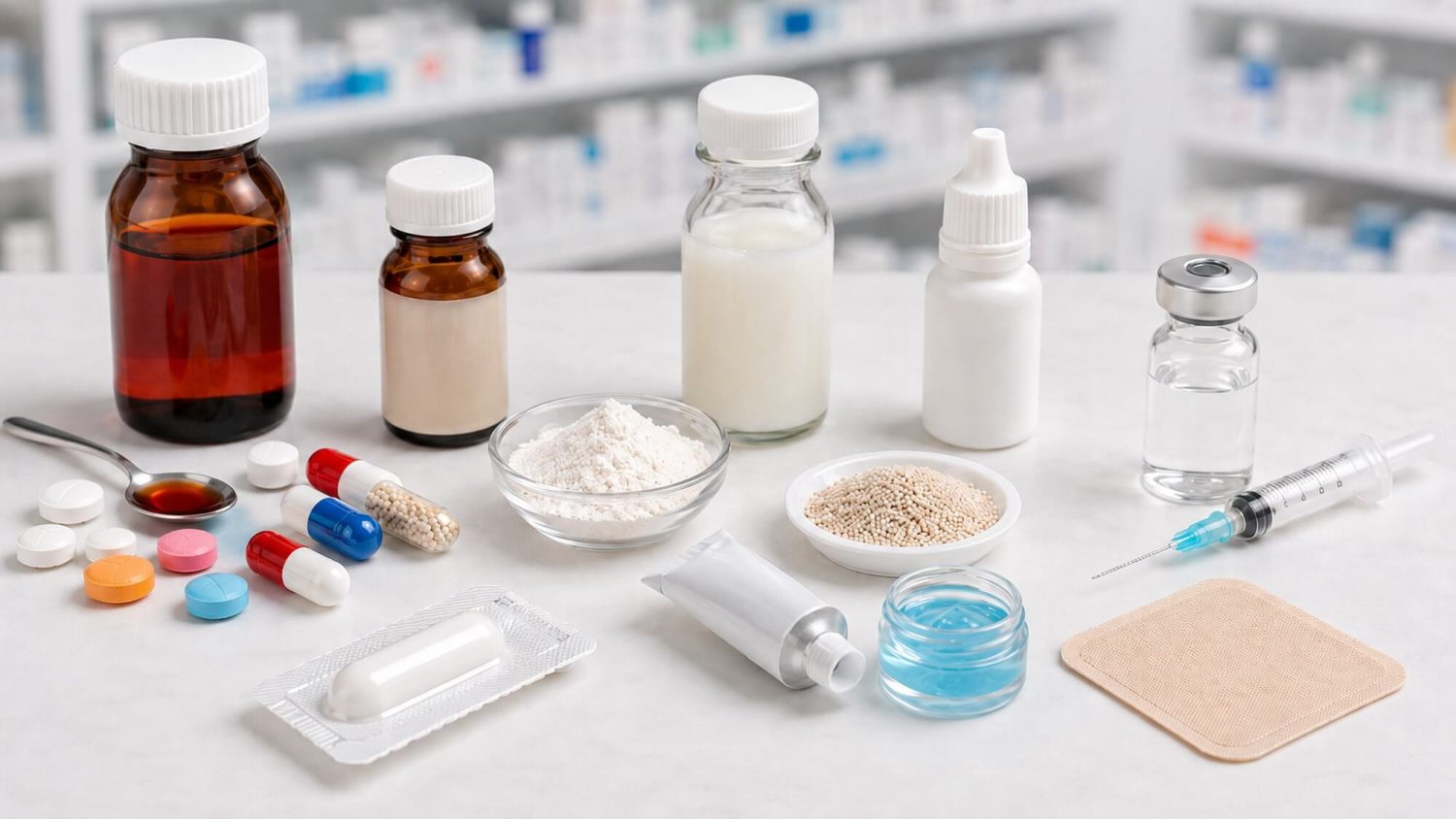
Tablets and capsules are separate solid units, so you can pack them individually in blisters or group them in bottles. The choice then depends on whether each dose needs to stay sealed until use or whether repeated opening of one container is acceptable.
Liquids create different requirements. The package must prevent leaks and make the product easy to pour or measure. This is why bottles, unit-dose containers, or some sachet formats may be considered.
For powders and granules, you need to think about moisture and how each dose will be taken. A bulk container may work well for repeated use. Sachets or stick packs are better when each serving needs to be packed separately.
Compared with the dosage forms above, injectables have fewer packaging options. Their packages must keep the product sterile and strictly sealed.
Define the Protection the Package Must Provide
Once the dosage form has narrowed the packaging options, look at the product’s specific characteristics. This will tell you what level of protection the product really needs. Two tablets may look similar but need very different packaging.
If your tablet products are moisture-sensitive, asking for a package “moisture resistant” is not enough. You need to know how much moisture the product can tolerate over its shelf life. The same idea applies to oxygen or light exposure. These limits help define the barrier performance the final package should provide.
Even when your drugs are stable and can be bottled, you also need to think about what happens after it is opened. Each time the cap is removed, the tablets inside are exposed to air. The bottle and cap should still seal well. A desiccant or cotton coil may also be needed.
Protection also means making sure the package does not cause a new problem. Packaging materials may interact with the drug. Some substances may move from the package into the product, while some drug ingredients may be absorbed by the packaging material. You need to check these compatibility risks.
Choose Between the Possible Package Formats
By this point, you should already have a short list of packaging options that fit the dosage form and can provide the required protection. Now let’s see how each option will perform in real use.
For example, a blister and a bottle can both hold tablets or capsules, but they protect the doses differently. A blister keeps each unopened dose sealed. A bottle is opened again and again. So every time you take a dose, the remaining tablets have to be exposed. That may lead to a different choice.
For a product that can come in a vial or ampoule, the trade-off is different. An ampoule is a sealed glass container that opens once and cannot be closed again. A vial may also hold more doses. It uses a rubber stopper to keep the vial properly sealed during repeated use. In some emergency-care settings, drugs are still supplied in small ampoules for quick single use. The same type of drug may also be available in a single-dose vial. A vial does not need to be snapped open, so there is no risk of glass shards.
So do not compare formats only by whether they can hold the product. Also look at:
- Exposure after opening;
- Single-dose vs multi-dose use;
- Access to the product;
- Dose presentation;
- Handling during use;
- The packaging process needed.
The best candidate is the one that fits the product and how it will be used. Once the format is clear, you can decide which materials and components are needed to build the final packaging system.
Decide the Final Packaging System
You may have already chosen the packaging format. Now it’s time to decide exactly what materials and components will make up the final pack.
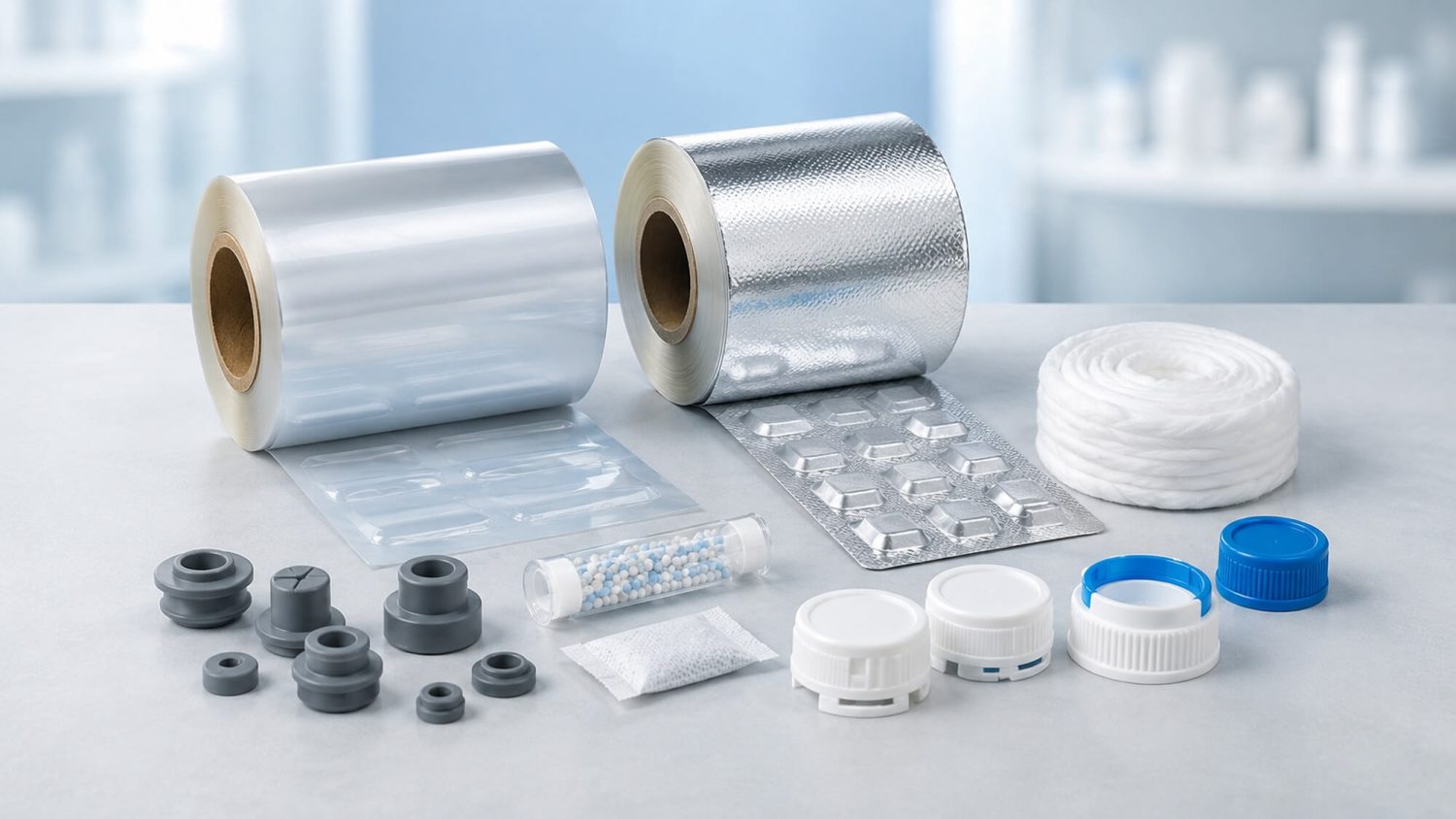
For a bottle, you may need to define the bottle material, size, closure, liner, and whether it needs a desiccant. For blisters, common options include Alu-PVC and Alu-Alu structures. A vial needs the right glass and rubber stopper. For a sachet, the laminate structure and seal are key parts of the final design.
Secondary packaging should also be included when it provides a necessary function. For example, if a carton, overwrap, or outer pouch helps block light or provides an extra barrier, it should be treated as part of the complete packaging system.
The result of this step should be a defined packaging system that is ready for use on the packaging line.
What Requirements Must Pharmaceutical Packaging Meet?
To sell the drug in a target market, its packaging must also meet that market’s regulatory requirements.
In the United States, 21 CFR 211.94 is still a core CGMP rule for drug containers and closures. It requires packaging to protect the drug from expected outside conditions and to use materials suitable for the product. It also requires written specifications and test methods for packaging components.
FDA also released a new draft guidance in August 2026 called Container Closure Systems for Human Drugs and Biological Products. It introduces an updated risk-based approach to evaluate container-closure systems. But it is still draft guidance and does not yet replace the existing regulation.
If your product is sold in the European Union, drug packaging must meet the EU GMP framework in EudraLex Volume 4. Packaging materials need to be controlled as part of the manufacturing process.
Depending on the packaging material or container, relevant European Pharmacopoeia standards may also apply. Directive 2001/83/EC sets requirements for the labeling and package information of medicines sold in the EU.
For a broader review of applicable standards across the packaging lifecycle, see our guide to Pharmaceutical Packaging Standards: From Planning to Final Pack.
How Pharmaceutical Packaging Choices Affect the Packaging Machine
The selected packaging system also helps determine what packaging machinery you need. The machine supplier needs to know what package will run on the line. Different specifications can change the line setup.
| Packaging decision | Possible machine impact |
|---|---|
| Blister material and cavity design | Forming method, heating or forming settings, sealing conditions, tooling |
| Bottle size and shape | Unscrambling, conveying, counting or filling setup, guides and change parts |
| Closure type | Cap feeding, capping method, torque control |
| Sachet or pouch structure | Film feeding, sealing, cutting, registration |
| Desiccant or other insert | Additional insertion and presence-detection equipment |
| Carton size and style | Cartoner guides, magazine setup, loading method, coding position |
That is why you should settle the package specifications before choosing the machine. Even a small change in bottle size, blister structure, cap, or carton dimensions may require new tooling or different machine settings.

When asking for a quote, send drawings or actual samples if you can. Material details are also helpful when they affect how the package is formed, sealed, or handled on the line.
A sample trial can then answer a practical question: Can the machine run the actual package reliably under the agreed test conditions? The trial should focus on machine performance, such as feeding, forming, sealing, capping, inspection, or changeover.
Get Instant Budgetary Quote
- Confidentiality for samples and drawings (NDA available)
- Engineer will respond within 24 hours
- FAT report and acceptance criteria available before order
References
- U.S. FDA. Container Closure Systems for Human Drugs and Biological Products (Draft Guidance for Industry, August 2026).
- Electronic Code of Federal Regulations. 21 CFR § 211.94, Drug Product Containers and Closures.
- European Union. EudraLex – Volume 4 – Good Manufacturing Practice (GMP) guidelines.
- European Union. Directive 2001/83/EC – EUR-Lex.


