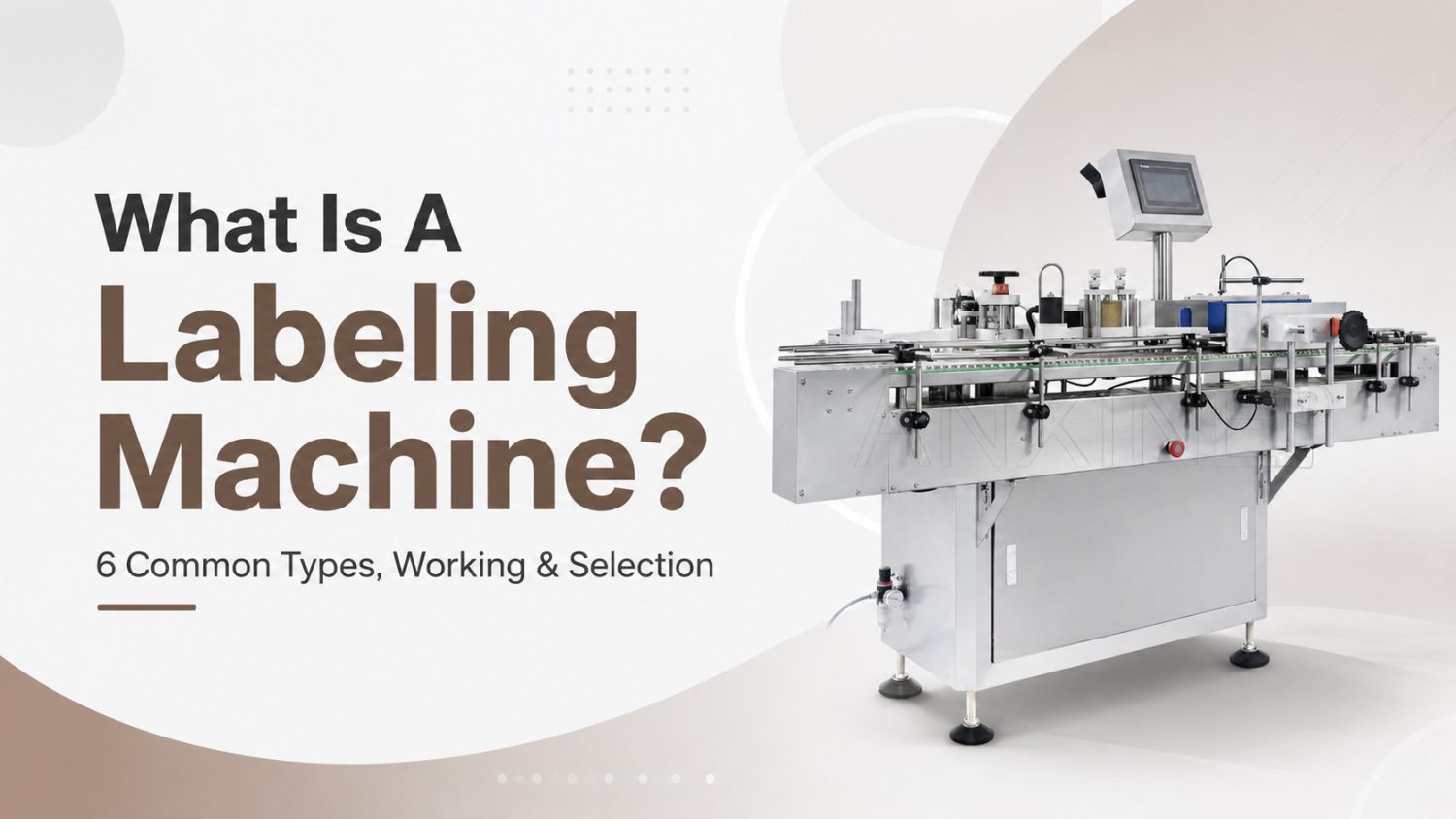
Every product on a store shelf carries a label. It tells customers what the product is and builds brand recognition. Because of the heavy task of applying thousands of labels, labeling machines are used. They can apply different labels to containers quickly and precisely. As an important piece of equipment in production, it is necessary to have a comprehensive understanding of labeling machines.
What Is a Labeling Machine?
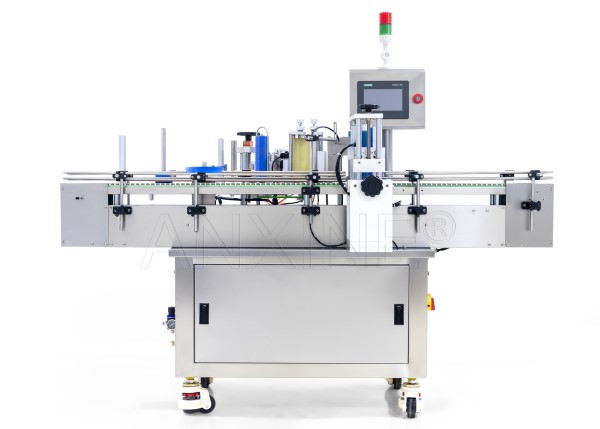
A labeling machine is used to dispense and apply labels correctly on different containers, such as bottles and cartons. Depending on the application, labels may be applied to the top, bottom, front, back, or wrapped around the entire container. Based on the design, some labeling equipment only applies pre-set labels. They are already printed with the key information, including product name, dates, batch numbers, barcodes, serial numbers, etc. Some models can be integrated with coding or printing systems. They can print variable information before or during label application, depending on the machine design.
Labeling machines are available in different automation levels, including manual, semi-automatic, and fully automatic systems. This article focuses mainly on semi-automatic and automatic models.
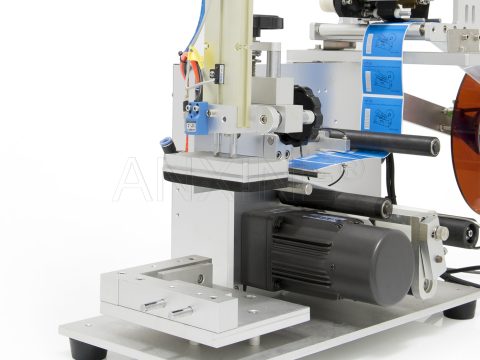
- Semi-automatic labeling machines require an operator to position each container in the correct place before applying. After one product is labeled, the operator removes it and places the next one into the machine. Because it involves much human effort, the production output is slower than that of automatic models. For example, the rated labeling speed of the Anxine MT-50M model is 25-50 pieces/min. Though the actual speed varies with product and label size, it is still more suitable for small businesses.
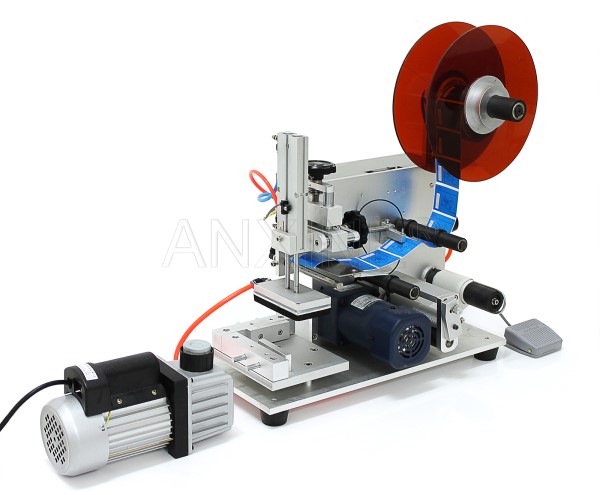
- Automatic labeling machines can complete the whole process with little human work. They feature high stability and consistency. Compared with semi-automatic machines, automatic labeling systems can run much faster. Take the Anxine NCT-21200, for example. The labeling speed could be up to 120 pcs/min, depending on the product and label size. So, automatic labeling equipment is often used in large factories for high-volume production. However, this type costs much more than semi-automatic models. The system is more complex, so installation and setup usually require skilled technicians.
What Is a Labeling Machine Used For?
Labeling machines are widely used in many industries because of their versatility. They are suitable for a wide range of containers, including bottles, jars, cans, tubes, boxes, pouches, and cartons. Here are the common examples.
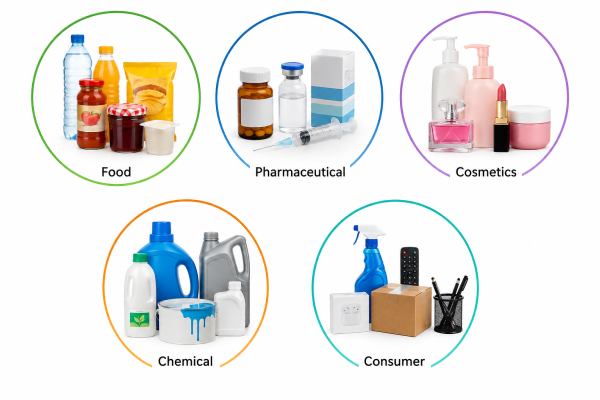
- Food and beverage. Water, drinks, sauces, jams, dairy products, and snack packaging.
- Pharmaceutical. Medicine bottles, vials, syringes, cartons, and packs.
- Cosmetics and personal care. Shampoo bottles, lotion containers, perfume bottles, lipsticks, and skincare products.
- Chemical. Detergents, lubricants, pesticides, paints, and industrial chemical containers.
- Consumer goods. Household products, electronics, office supplies, and retail packaging.
Six Common Labeling Machine Types From Different Classification Methods
Labeling machines can be classified from multiple perspectives, such as automation level, label application method, container shape, labeling position, and sealing function. The following examples are common types from different classification angles, so they are not mutually exclusive.
Self-adhesive Labeling Machine
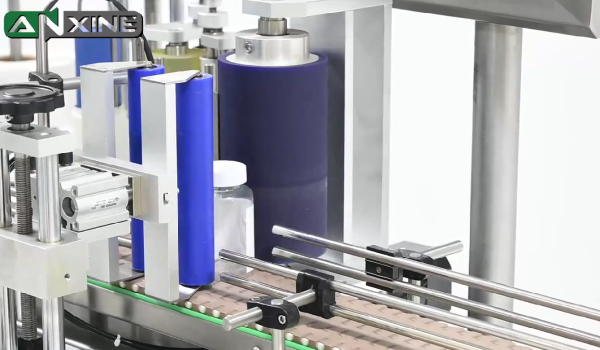
A self-adhesive labeling machine is also known as a pressure-sensitive labeling machine. It is one of the most widely used types of labeling equipment. This machine uses rolls of pre-coated self-adhesive labels. During operation, the label is peeled away from its release liner and applied to the product or package with gentle pressure. No additional glue, heat, or water is required. For accurate labeling, the machine is usually equipped with a label tension control system and position sensors. These components keep the label feeding smoothly and place each label in the correct position.
Self-adhesive labeling machines can label containers made of glass, plastic, metal, and paperboard. They also support labels in different sizes and shapes. Since no heating or drying is needed, products can move directly to the next production step after labeling.
Shrink Sleeve Label Applicator
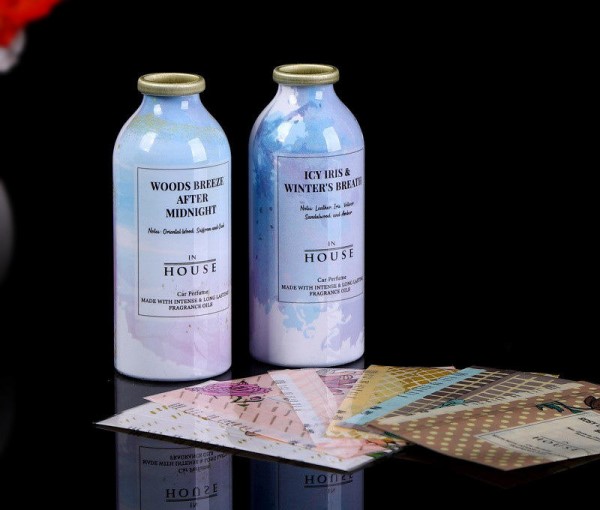
This type of equipment combines sleeve labeling and heat shrink technology. It feeds pre-formed shrink sleeve film from a roll, cuts it to length, opens the sleeve, and places it over the container automatically. After that, the container passes through a shrink tunnel. Heat causes the sleeve to shrink evenly and tightly fit the product surface.
Shrink sleeve label applicators create a strong visual impact. It can be used for full-body or partial decoration of bottles or containers, depending on the sleeve design. This greatly improves product appearance and branding. However, the labeling process is more complex compared to self-adhesive labeling. It also has higher requirements for label material quality and temperature control. So the overall cost is much higher for production.
The two types above are classified according to their labeling method. Based on different functions, labeling machines can also be divided into the following categories.
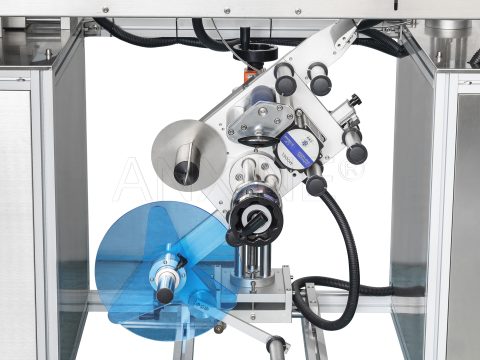
Flat Surface Labeling Machine
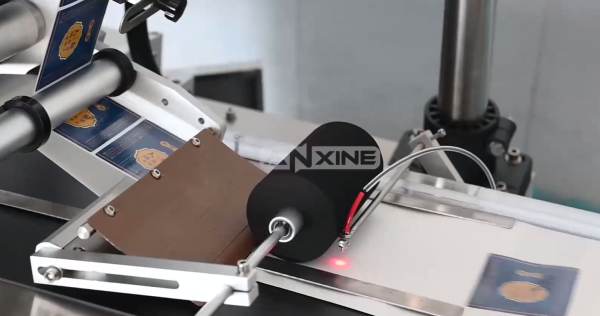
Flat surface labeling machines apply labels onto flat products such as cartons, paper boxes, pouches, wooden boards, metal plates, etc. They apply the label smoothly and accurately aligned with the product surface. In addition, the label should remain flat without noticeable skewing, wrinkling, or air bubbles. To achieve this, the positioning accuracy of the labeling head and the pressure of the labeling roller need to be properly adjusted. It could be changed according to the material and hardness of the product. This prevents surface damage while keeping good labeling quality.
Round Bottle Labeling Machine
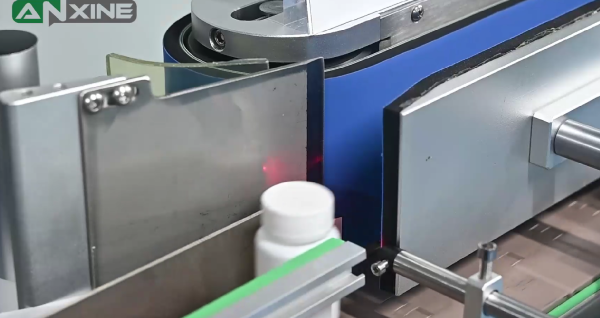
As the name says, this type applies labels on cylindrical containers such as plastic bottles, glass bottles, metal cans, and barrels. The key point of this equipment is accurate label positioning around the bottle. The label wraps around the bottle and sticks smoothly. It should not have wrinkles, bubbles, or obvious misalignment. For full-wrap labels, the overlap also needs to match well. To achieve high-precision circumferential labeling, the machine may be equipped with a bottle spacing system, such as a screw or star wheel. In some applications, additional sensors are used for more precise positioning and more consistent labeling.
Side Labeling Equipment
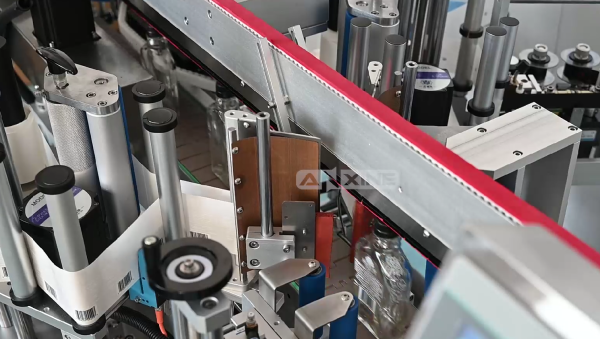
These labeling machines are designed to apply labels to the side panels or top edge areas of large upright packages. They include cartons, boxes, and pouches. Unlike flat products, these labeling surfaces often contain height variations, rounded corners, or uneven transitions, making accurate label placement more challenging. During operation, the label must be applied parallel to the product edges. Common defects should be avoided, such as skewing, wrinkles, air bubbles, or edge lifting. To achieve consistent labeling quality, these machines are typically equipped with a product positioning system and guide and wipe-down assemblies. There is also an adjustable labeling head that can be set to different angles for various package sizes and labeling positions.
Corner Labeling and Sealing Machines
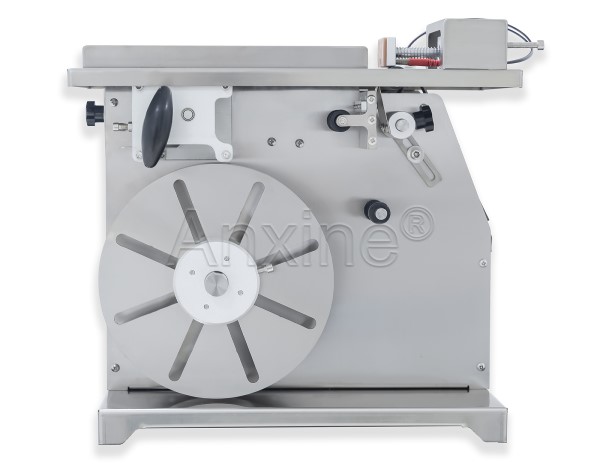
This type is used to apply labels and seal the corners of cartons or boxes. It is commonly used for packaging that needs both labeling and tamper-proof sealing at the same time. During the operation, position accuracy and folding quality should be closely monitored. Labels should bend smoothly over the corner without cracking or lifting. Proper pressure control is also important. Too low causes lifting, and too high may deform the carton surface.
You may check the chart to see the differences.
| Type | Labeling Target | Labeling Position | Product Shape | Core Action |
|---|---|---|---|---|
| Flat surface labeling | Flat products | A complete flat surface | Flat/Box/Bag/Pouch | Direct pressing and applying |
| Round bottle labeling | Cylindrical containers | Around the entire circumference | Round bottles/cans/jars
|
Rotary wrapping |
| Side labeling equipment | Side surface of 3D packages | Side area | Cartons/Bags/Boxes | Positioning and side labeling |
| Corner sealing & labeling | Packaging corners | Across two adjacent surfaces (corner) | Cartons/Boxes | Edge folding and sealing |
How Does a Labeling Machine Work?
A pressure-sensitive labeling machine separates labels from the liner and applies them accurately to products. Other labeling machines, such as shrink sleeve or glue-based labelers, use different feeding and application methods. Take the automatic model for pressure-sensitive labeling equipment in the production line, for example, to explain how it works.
- Feeding and positioning. After bottles are filled and capped, they move along the conveyor. Then they are guided into the correct labeling position. A sensor detects each product and triggers the labeling operation.
- Label feeding. The label roll unwinds and feeds the label web into the labeling head. The backing liner carries the labels toward the peel plate.
- Label separation. As the label web passes over the peel plate, the backing liner bends away while the label separates from the liner. The adhesive side appears.
- Label application. The label is released and placed on the bottle as it passes the labeling point. Different machines use wiping, tamping, or air-blowing to transfer the label.
- Pressing and bonding. Rollers or brushes press the label onto the product to remove trapped air and improve adhesion.
- Discharge. Once labeling is complete, the product moves out of the machine and continues to the next stage, such as cartoning.
You can check the video to see how it works clearly.
How to Choose a Good Labeling Machine?
When you want to buy a labeling machine, the following questions need to be considered clearly.
- What type of products will you be labeling? (e.g., bottles, boxes, pouches)
- What is your approximate production volume per day?
- Are there any specific label types or materials you need to use? (e.g., pressure-sensitive, shrink sleeves)
- Do you need to integrate the labeling equipment into an existing production line?
- Do you need to print batch numbers, production dates, or QR codes before labeling?
- How about your budget?
You can see the following selection guide as a reference.
| Requirement | Recommended labeling machine | Suitable label type | Typical production scale | Main reason |
|---|---|---|---|---|
| Small batches, samples, or start-up production | Semi-automatic labeling machine | Self-adhesive labels | Low to medium output | Lower cost and simple operation |
| Production line with filler, capper, cartoner, or conveyor | Fully automatic labeling machine | Depends on product and label design | Continuous production | It connects with upstream and downstream equipment for smooth production. |
| Round bottles, jars, cans, or barrels | Round bottle labeling machine | Self-adhesive wrap-around labels | Medium to high output | Designed for cylindrical containers |
| Square bottles, oval bottles, or large upright packages | Side labeling equipment or double-sided labeling machine | Self-adhesive labels | Medium to high output | It can label one or two sides of the product, suitable for products with side panels. |
| Cartons, boxes, pouches, flat bags, or plates | Flat surface labeling machine | Self-adhesive labels | Low to high output | It applies labels smoothly on flat surfaces without wrinkles or obvious skewing. |
| Bottles that need full-body decoration | Shrink sleeve label applicator | Shrink sleeve film | Medium to high output | 360-degree package decoration and stronger shelf impact |
| Cartons or boxes that need both labeling and sealing | Corner labeling and sealing machine | Tamper-evident labels or sealing labels | Medium output | It applies labels over the carton corner for sealing and anti-opening purposes. |
| Products that need a date, batch number, barcode, or QR code | Labeling machine with coding system | Printed or print-and-apply labels | Medium to high output | Prints variable information before or during labeling |
This table is only a basic guide. The final machine choice should also depend on the container size, label size, label material, required labeling position, and available space in the workshop.
Once you have clear answers, it becomes much easier to narrow down the right machine type. Different products require different labeling structures, such as flat labeling for boxes and round bottle labeling for cylinders. Production speed also matters. It should match your required production volume. Otherwise, you may face problems like production delays or higher investment. If you need integration, the conveyor height, speed, and control system should be checked. They need to match the upstream and downstream equipment for continuous running. If not, you can ask the supplier to customize the specific part.
How Much Does a Labeling Machine Cost?
Machine price is a key factor. It covers a share of the overall budget. The price is closely related to the machine’s production capacity, manufacturing quality, labeling accuracy, reliability, and after-sales service. So it can be different with a wide range. The following data is collected from the online marketplace for your reference. The final price should be confirmed with your supplier.
| Equipment level | Type | Application | Typical price range | Typical labeling speed | Key features |
|---|---|---|---|---|---|
| Semi-automatic | Compact tabletop model | Small workshop and sample production | $150-$1,300 | 15-40 pcs/min, | Basic mechanical structure |
| Industrial semi-automatic model | Small food, pharmaceutical, and chemical factories | $1,500-$2,200 | 15-60 pcs/min.
|
Stainless steel structure with PLC control | |
| Fully automatic | Standard mode | Round bottles, cartons, cans, and bags in different areas | $2,200-$8,800 | 20-100 pcs/min.
Typical labeling accuracy: ±1.00 mm |
Servo-driven, automatic, and continuous labeling |
| High-speed mode | Large-scale standardized production line | $4,415-$22,000 | 80-300 pcs/min.
Typical labeling accuracy: ±1.00 mm |
High-speed transmission speed | |
| High-end grade for multi-function | Automatic special-shape labeling machine | Irregular-shaped, conical, curved surfaces and special-shaped containers | $4,400-$23,000 | 30-80 pcs/min.
|
Customized features, applicable to complex shapes |
| Automatic double-sided/multi-surface labeling machine | Square bottles, elliptical bottles | $4,200-$29,400 | 60-150 pcs/min.
|
Multi-position drive, synchronous multi-surface labeling |
Note: Prices are for reference only and may vary depending on configuration, brand, customization, and market conditions.
The End
Labeling machines are important equipment in production. Clear labels support product identification and brand presentation. When you are selecting a labeling machine, choose one based on your production and budget. If you find it difficult to choose, contact Anxine to find reliable solutions.