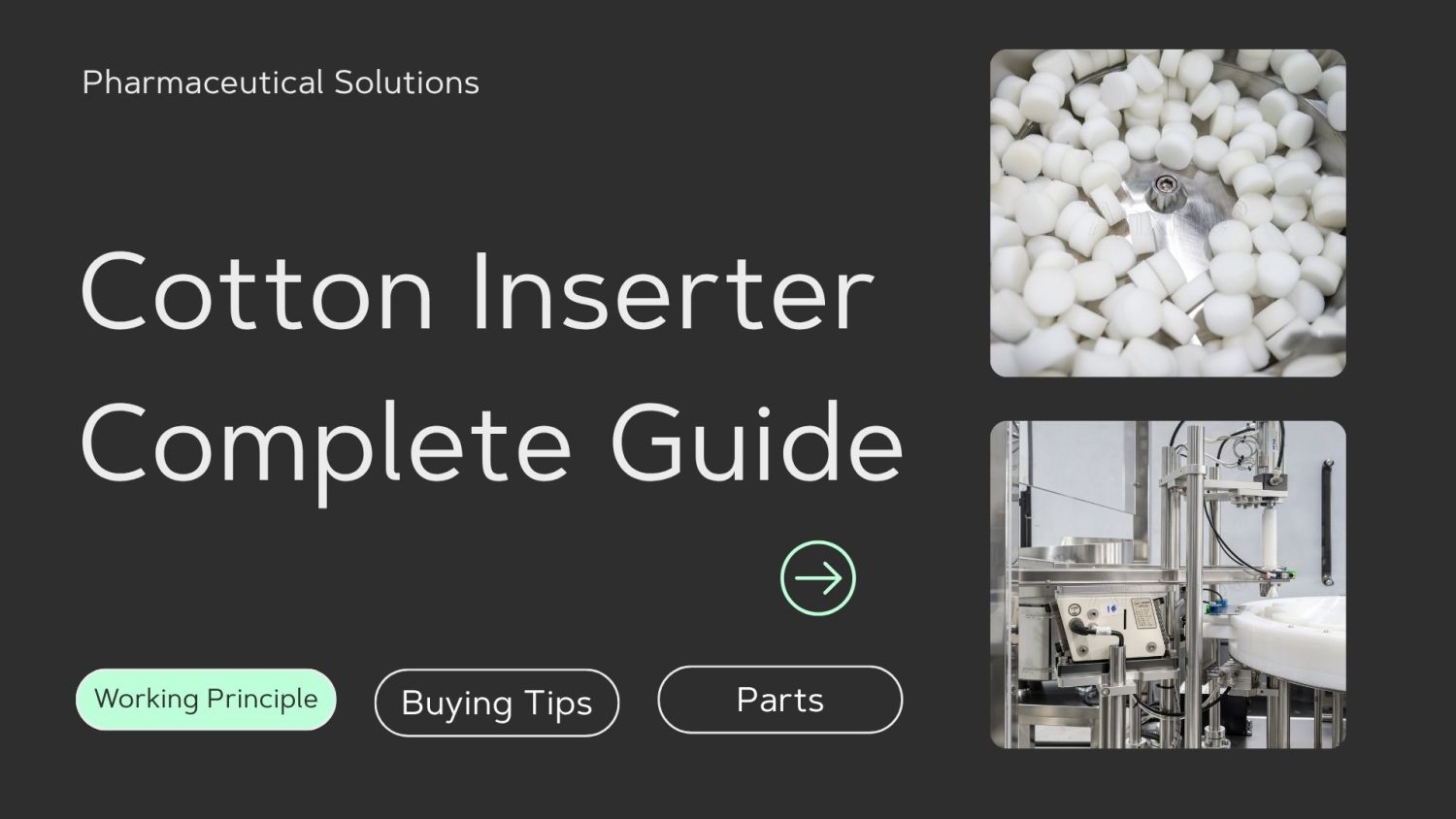
If you take a closer look at many vitamin, fish oil, and dietary supplement bottles, you’ll often find a small piece of cotton inside. Although it looks simple, this small piece of cotton plays an important role in protecting pills during transportation and storage. To meet high production demands, manufacturers use cotton inserters to place cotton into bottles quickly and accurately. If you are interested in this machine, a clear understanding is important.
What Is a Cotton Inserter?
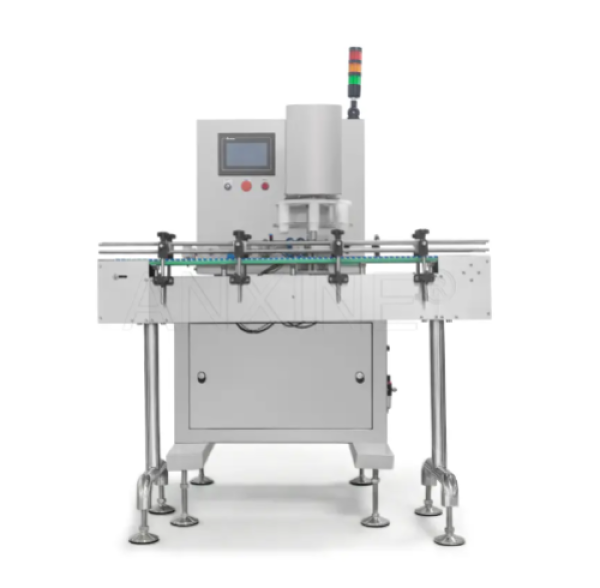
A cotton inserter is a packaging machine that automatically places cotton into bottles before they are sealed. The machine is always built for easy use, so it doesn’t have a big or complex structure. Cotton inserters could handle containers filled with tablets, capsules, softgels, or gummies.
Cotton inserting machines are often installed in bottling lines after the pill filling and before induction sealing or capping. Modern machines can automatically detect bottles, adjust insertion length, and synchronize with other packaging equipment.
Importance of Cotton Inserters
Although cotton is a simple packaging material, it offers many advantages.
- Protecting products during transportation. Tablets, capsules, and softgels can move inside bottles during shipping. Excessive movement may cause chipping, breakage, or damage to products. Cotton fills empty space and keeps products more stable inside the container.
- Wide range of applications. Most of the equipment could handle various types of containers, such as glass and plastic bottles, vials, etc. Moreover, it also supports a wide range of sizes.
- Lower labor costs. Without a cotton inserter, workers need to place cotton into each bottle manually. Automation minimizes labor requirements and improves efficiency.
- Integration into automated packaging lines. Modern cotton inserters can be integrated with bottle fillers, induction sealers, capping machines, and labeling machines. This creates a more efficient and fully automated production line.
Application of Cotton Inserters

Cotton inserters are mainly used in the nutraceutical and dietary supplement industries. They are commonly applied in packaging lines for
- Dietary supplements.
- Vitamins.
- OTC pharmaceuticals.
- Some food products.
Although some pharmaceutical manufacturers still use cotton inserts, many modern packaging lines have switched to desiccant canisters or sachets. This is for product protection and moisture control.
What Is the Difference Between a Cotton Inserter and a Desiccant Inserter?
Cotton inserters and desiccant inserters are both used in bottle packaging lines, and their machines often look very similar. Both machines automatically feed a material, position the bottle, and insert the material into the container before sealing. However, they have many differences.
Different Purposes
A cotton inserter is designed to place cotton into bottles. The cotton fills empty space inside the container and keeps the product stable during transportation. It is mainly used to protect tablets, capsules, and softgels from impact damage.
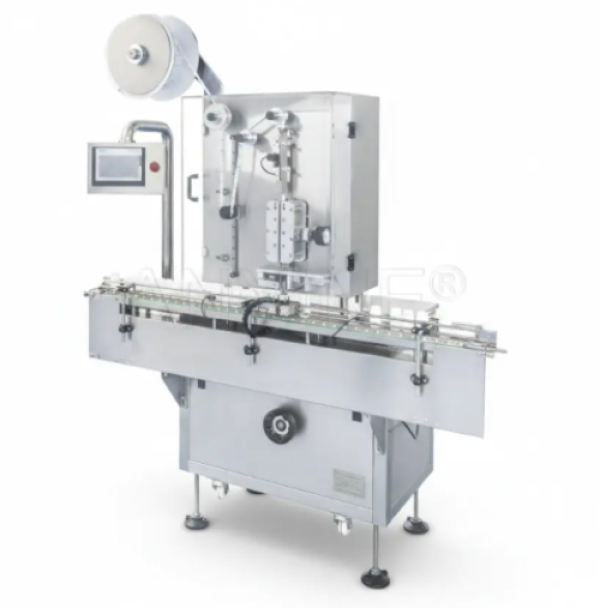
A desiccant inserter is used to insert desiccants. They absorb moisture inside the bottle and keep a dry storage environment. Its primary purpose is to protect moisture-sensitive products and extend shelf life.
Different Materials and Functions
Cotton inserters are used for cotton strips or sponge-like materials. They are usually soft, lightweight, and flexible. The main function of cotton is cushioning. It reduces breakage caused by vibration and impact.

Desiccant inserters handle desiccant canisters, sachets, or continuous desiccant strips. These materials contain moisture-absorbing agents such as silica gel or molecular sieves. They absorb water vapor inside the package and maintain product quality during storage or transportation.
Market Trend
Cotton insertion was widely used in the 20th century. It was considered a standard solution to reduce product movement inside bottles. As packaging technologies developed, many manufacturers adopted alternative protection methods, such as tablet coating or blister packs. But cotton insertion remains common in some vitamin and dietary supplement products today.
Desiccant inserters have been increasingly popular. Because moisture control has become a critical requirement in many types of packaging. Desiccants protect products from humidity and keep product stability. Therefore, many modern bottling lines now include a desiccant inserter as a standard component.
How Does a Cotton Inserting Machine Work?
A cotton inserting machine automatically feeds, cuts, and inserts cotton into bottles. The entire process is controlled by a PLC system and sensors to achieve accurate and consistent insertion.
Step 1: Bottle Feeding and Positioning
When the bottles are filled with products like tablets, they can be put on the cotton insertion machine. In the integrated production line, they are transferred by a conveyor system. The bottles are then guided into position and indexed by a star wheel or positioning mechanism. Sensors detect the presence of each bottle. They make sure each bottle is correctly aligned before insertion begins.
Step 2: Cotton Feeding
Cotton material is supplied from a feeding unit. The machine automatically pulls the cotton forward according to the preset insertion length. The feeding speed can be adjusted to match different production requirements.
Step 3: Cotton Cutting
Once the required length is reached, the machine cuts the cotton into individual pieces. It keeps consistent cotton lengths for uniform packaging quality.
Step 4: Cotton Insertion
When the bottle reaches the insertion position, a pneumatic insertion mechanism pushes the cotton into the bottle. This step is important to prevent missed insertions or product contamination. In dual-head models, two insertion stations work simultaneously. This allows higher production speeds and better efficiency.
Step 5: Bottle Discharge
After the cotton is inserted, the bottle moves to the next packaging process, such as capping, sealing, or labeling.
Here is a video to show you how the cotton inserter works.
What Are the Common Components of Cotton Inserting Equipment?
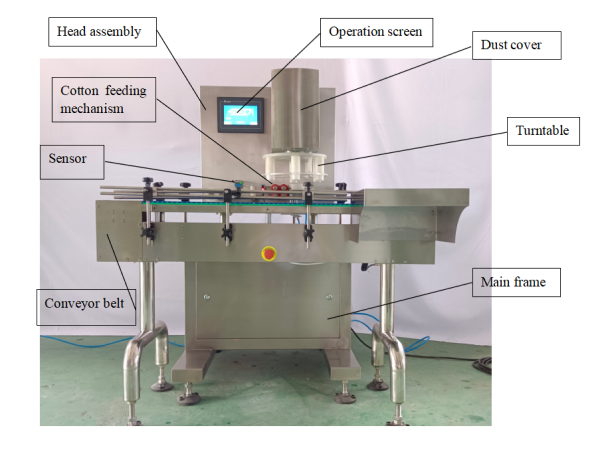
A cotton inserting machine contains many parts for operation. Here are 8 common parts for your reference.
| Part | Function | Common materials | Customization options | Remarks |
|---|---|---|---|---|
| Head assembly | It precisely inserts cotton into bottles with controlled depth. | Stainless steel, high-strength aluminum alloy | Customizable insertion depth, pressure, and it allows customization to fit various bottle mouth diameters and designs. | Food/pharmaceutical-grade contact surfaces for hygiene |
| Operation screen | It controls and displays production parameters, status, and alarms. | ABS engineering plastic housing with LCD touchscreen. | Customizable language, interface functions, and remote monitoring | It supports parameter adjustment and manual/automatic switching |
| Dust cover | This prevents dust from entering key mechanisms, and keeps internal parts clean. | Polycarbonate (PC), stainless steel | Customizable shape, opening method, and transparency | Essential in food and pharmaceutical production |
| Cotton feeding mechanism | It feeds and cuts cotton slivers to a specified length. | Stainless steel and hard plastic | Customizable for different cotton shapes and densities | It works with sensors for precise feeding. |
| Sensor | It detects the presence of bottles and cotton, and provides alarms when something unusual occurs. | Photoelectric and infrared sensors with corrosion-resistant housing | Adjustable sensitivity for various bottle materials, and transparency levels | It enhances automation reliability and product quality consistency. |
| Turntable | This positions bottles and rotates them to the cotton inserting location. | Stainless steel, and engineering plastics | Customizable diameter and number of bottle slots | It works with stepper motors for precise positioning. |
| Conveyor belt | It transports bottles to and from working stations. | Food-grade PVC, and PU | Customizable width and speed; adjustable designs available | Wear-resistant and easy to clean, suitable for high-speed operation |
| Main frame | This supports and carries the whole machine structure. | Stainless steel (304/316) | Customizable size, height, mobility options like casters | It provides internal space for wiring and pneumatic lines. The structure is always stable and durable. |
Is this Cotton Inserting Machine Suitable for My Factory?
If you need to buy a cotton inserter, some factors need to be considered.
Production Speed
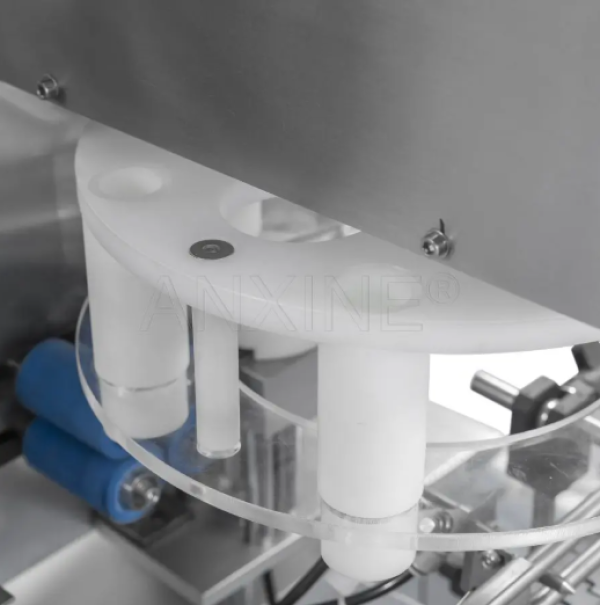
A suitable production speed is important, especially in an integrated production line. A machine that is too slow may become a bottleneck. A machine that has higher production speed can increase investment costs unnecessarily. Take the Anxine XCI-1 model for example. The filling speed is 10-40 bottles/min. It suits small and medium manufacturers. For large-scale businesses, the machine should achieve at least 80 bottles/min. This prevents the cotton inserter from becoming the bottleneck during the whole production.
Wide Compatibility
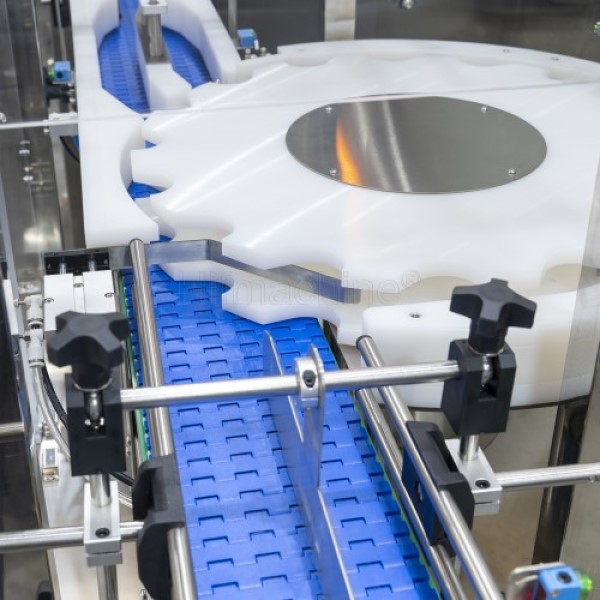
If you want to produce bottles in different sizes, like different diameters and heights, compatibility is important. Wide compatibility helps you quickly change bottle formats and improve production efficiency. Before buying, you should confirm what sizes of bottles you want to handle and check the machine specifications. For example, the XCI-1 can handle bottle outer diameters within Φ20-80 mm and bottle heights from 35 to 200 mm. If your products are in this range, the changeover would be much easier and more efficient.
Smooth Integration
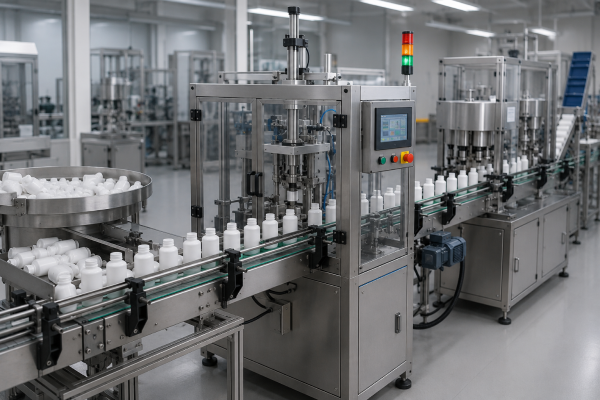
A cotton inserter should work smoothly with upstream and downstream equipment when integrating into an existing production line. Besides matching height and speed, you also need to confirm whether the machine supports common PLC communication protocols and standard I/O signals. Proper integration allows the cotton inserter to synchronize with other equipment like bottle unscramblers, counting machines, cappers, etc. A well-integrated system can greatly improve efficiency and reduce operational problems.
Reliable Supplier

This is another key consideration. A good supplier should not only offer high-quality equipment but also comprehensive after-sales service. When you need part replacement or to troubleshoot small issues, the supplier can solve your problem in time. This supports continuous production and reduces downtime. For customization needs, you’d better find a manufacturer who has done the related work in your production area. He would be more experienced in offering practical advice when you have problems.
What Specifications Should You Notice When Purchasing?
| Parameter | What to check | Why it matters | Example |
|---|---|---|---|
| Bottle type | Check whether the machine supports your bottle shape and material, such as round bottles, square bottles, glass bottles, or plastic bottles. | Bottle type affects bottle positioning, guide rail adjustment, turntable/star wheel design, and insertion accuracy. | XCI-1 supports glass and plastic bottles and XCI-2 for square bottles and round bottles. |
| Bottle outer diameter | Check whether your bottle diameter is within the machine’s standard range. | If the bottle diameter is outside the standard range, the bottle may not be held or positioned correctly. This can cause bottle falling and insertion misalignment. | XCI-1: Φ20-80 mm. XCI-2: Φ30-100mm. |
| Bottle height | Confirm the minimum and maximum bottle height the machine can handle. | Bottle height affects conveyor guide rail height, inserting head position, and insertion depth. | XCI-1: 35-200 mm. XCI-2: 40-200 mm. |
| Bottle volume | If available, check whether the machine supports your bottle capacity range. | Bottle volume helps suppliers judge the overall bottle size when diameter and height are not enough. | Example range: 20-300 ml. |
| Cotton type | Confirm whether the machine is designed for cotton strips, cotton slivers, sponge plugs, or other materials. | Different cotton forms require different feeding and inserting mechanisms. Wrong methods may cause jamming, unstable feeding, or failed insertion. | It depends on the design. |
| Cotton strip length | Check whether the cotton strip length can be adjusted on the touch screen. | Cotton length affects both product protection and machine stability. | Many machines allow cotton strip length setting through the touch screen. |
| Sponge / cotton plug size | If you use sponge plugs instead of continuous cotton strips, confirm the plug diameter and height. | Sponge plug size should match the feeding channel, cutting/feeding mechanism, and inserting head. | Example sponge size: diameter 33 mm, height 16 mm. |
| Power supply | Confirm voltage, frequency, phase, and power consumption before purchase. | The machine must match your factory’s electrical conditions. If the voltage, frequency, or phase is different, you may need a transformer or electrical customization. | Customizable |
| Compressed air | Check required air pressure and air consumption, especially if the machine uses pneumatic cylinders. | Pneumatic inserting, bottle stopping, and feeding actions depend on stable air supply. Low or unstable air pressure may cause problems. | Example air requirement: 0.6-0.8 m³/h air consumption and 0.8 MPa pressure. |
How to Troubleshoot Common Faults When Using a Cotton Inserter?
You may meet some problems during the cotton inserting. Many of them could be solved easily by yourself. Here are common solutions for your reference.
| Problem | Cause | Solution |
|---|---|---|
| The cotton strip can’t be inserted into the tube. | The cotton strip is too long. | Set the cotton strip length on the Touch Screen. |
| The cotton is not inserted into the bottle completely. | The pole don’t insert into the center of the bottle mouth. | Adjust the bottle’s and pole’s position. Then, make the inserting pole go through the center of the bottle mouth when inserting. |
| The bottle falls down when the container gating arm is working. | The conveyor speed is too fast. | Adjust the speed of the conveyor |
| Machine has no response after power on. | Power is not connected, or main switch is off, or wiring is loose. | Turn on the power supply and tighten loose electrical connections. |
| Touch screen displays abnormally or buttons do not respond. | Temporary software error or unstable power supply. | Power off the machine, wait briefly, then restart it. If the problem remains, check the controller and wiring. |
| Bottle jam alarm. | Bottles are blocked on the conveyor or the guide rail is too tight. | Clear the jam, adjust guide rail width, and set proper conveyor speed. |
| Sensor failure alarm. | Sensor is dirty, misaligned, damaged, or wiring is loose. | Clean the sensor, adjust its position, tighten wiring, or replace the sensor. |
Upgrade Your Cotton Inserting Equipment with Anxine
Anxine provides cotton inserters and related packaging equipment, including capsule filling machines, tablet presses, counting machines, and labeling machines. For cotton inserting, we can help confirm bottle size, cotton type, insertion length, power supply, and integration suggestions. We also support customization to meet your specific production needs. You just tell us what extra function you need or what part should be changed. Our professional technical team will communicate with you in detail and confirm the plan.
Moreover, we offer a comprehensive 1-year warranty. You can get free part replacement and don’t need to pay for shipping costs. If needed, our technical team can assist you directly at your facility for smooth operation.


