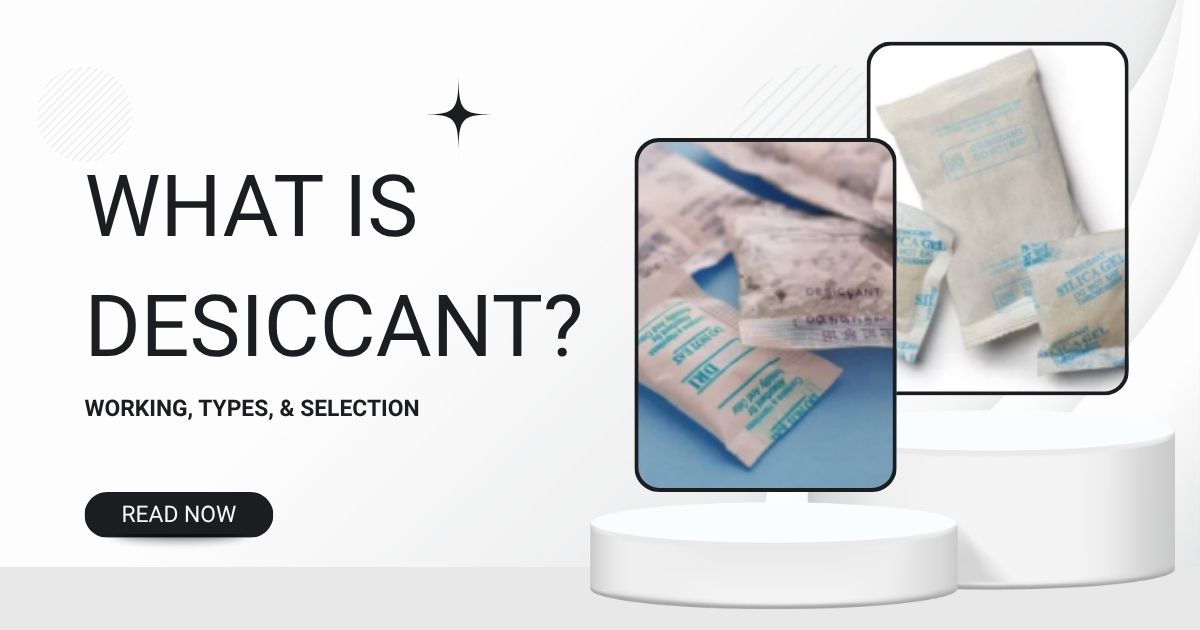
Whether in pharma, supplements, or food products, desiccants are necessary. They have good control over the moisture inside the packages for better quality. Moisture is one of the most common causes of product damage during storage and transportation. Although desiccants are small in size, they play an important role in protecting products from humidity.
What Are Desiccants?
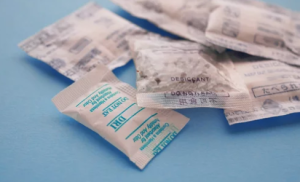
Desiccants are materials used to control moisture and keep the product or package dry. They help the products maintain good quality or effectiveness during storage and transportation. It also reduces production costs because of low moisture damage. Desiccants are usually packed in small sachets, canisters, or packets. They could be placed inside product packaging, shipping containers, or storage facilities.
What Is Desiccant Used For?
Different industries rely on desiccants because many products react easily with water vapor in the air. Common applications include
- Pharmaceutical packaging. It helps tablets, capsules, and powders stay stable and prevents clumping or degradation.
- Food packaging. It reduces mold growth and keeps products fresh for a longer time.
- Chemistry. It maintains product stability and prevents unwanted reactions with moisture.
- Industrial goods and metal parts. Desiccants reduce rust and surface damage during shipping and storage.
How Do Desiccants Work: Absorption vs Adsorption
Though there are many types of desiccants, they remove moisture in two main ways: adsorption and absorption. In adsorption, water vapor attaches to the surface of the desiccants. It forms a thin layer on the surface. Most desiccants, such as silica gel use this method.
In absorption, water enters the desiccant and becomes part of it. Sometimes this causes a chemical or physical change. Calcium chloride works in this way. It can even turn into a liquid after it takes in enough moisture.
What Are Common Types of Desiccants?
Desiccants could be divided into many types based on the compositions. Here are common examples.
Silica Gel
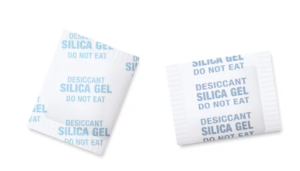
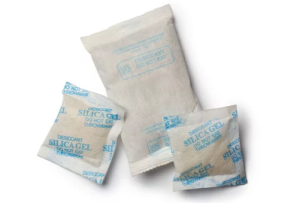
It is a popular desiccant type. The desiccant is made from silicon dioxide. This desiccant contains many tiny pores that attract and hold water vapor through adsorption. Silica gel is non-toxic, odorless, and chemically stable. It can hold around 20% to 40% of its own weight in moisture.
Silica gel works effectively in normal temperature environments. It is commonly placed in pharmaceutical bottles, dietary supplement containers, medical devices, food packaging, etc. The material features good moisture control and a long service life.
Clay Desiccant
Clay desiccant is made from natural clay materials, such as montmorillonite clay. The clay is processed into small granules or packets for moisture control. Clay desiccant removes moisture through adsorption. It can handle about 30% of its own weight in moisture under normal conditions. Clay desiccants keep their original and solid shape during use. This makes handling and disposal simple. In addition, clay desiccants feature low cost. It is ideal for large-volume packaging applications that don’t have high demands for moisture control.
Calcium Chloride
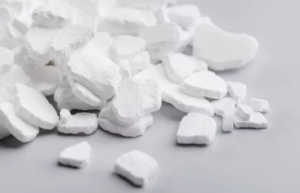
This desiccant has both adsorption and absorption processes. After capturing water vapor from the air, it gradually dissolves and forms a liquid brine solution. This allows the desiccant to absorb much more moisture than most other types. Under suitable conditions, calcium chloride can absorb several times its own weight in water. It also has good absorption in very humid environments where some other desiccants become less effective.
Calcium chloride is widely used in container shipping, ocean transportation, warehouse storage, and large export packages. Common applications include furniture, textiles, machinery, and automotive parts. Calcium chloride costs more than clay desiccant, but it can absorb several times more moisture. This makes it a popular choice for long-distance shipping and high-humidity environments.
Calcium Oxide
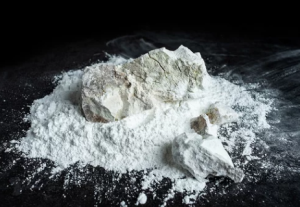
Calcium oxide is also known as quicklime. It removes moisture through a chemical reaction with water. Once the desiccant reacts with moisture, it forms calcium hydroxide and cannot be regenerated. Calcium oxide can absorb a large amount of water compared with its own weight. It is commonly used in food packaging, especially for dried foods such as seaweed, spices, and snacks.
The raw material is inexpensive, so calcium oxide desiccants are usually less expensive than many specialty desiccants. However, because calcium oxide is alkaline, it is not suitable for every product. Direct contact with products should be avoided, and the desiccant should remain sealed inside its package.
Molecular Sieve
Molecular sieves are synthetic desiccants with very small and uniform pores. The pore size can be controlled during manufacturing. It allows the material to selectively capture molecules of a certain size. It has a stronger moisture removal ability than most other desiccants. The type remains in a solid form after holding moisture and does not create leakage problems. Moreover, molecular sieves remain effective in very low humidity conditions.
Molecular sieves are often used for pharmaceuticals, laboratory reagents, medical devices, electronic components, etc. It suits products that require strict moisture control. However, because of the complex manufacturing process, molecular sieves cost much more than other types.
Activated Alumina
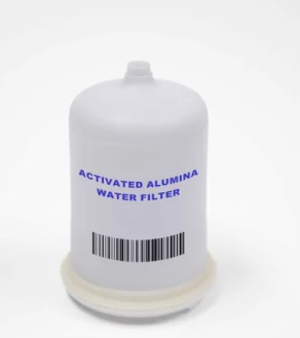
Activated alumina is a porous form of aluminum oxide with a large internal surface area. It is specifically designed to remove moisture from air and gases. This type of desiccant provides strong moisture removal and performs well in both low-humidity and high-temperature environments. It can also be regenerated and reused after the absorbed moisture is removed through heating.
Activated alumina is always used in compressed air systems, gas drying equipment, chemical plants, and air separation units. It is less common in consumer product packaging. Because silica gel and clay desiccants are usually more cost-effective for small packages.
You can check the chart to see their differences.
| Type | Moisture absorption | Features | Cost | Applications |
|---|---|---|---|---|
| Silica gel | Good | Safe and stable, suitable for many products | Low to moderate | Pharmaceuticals, supplements, food, and electronics |
| Calcium Oxide | High | Strong moisture removal | Low | Dried foods, seaweed, spices, and snack packaging |
| Calcium chloride | Very high | It can absorb several times more moisture than many other desiccants. | Moderate | Shipping containers, furniture, textiles, and export goods |
| Clay desiccant | Moderate | Natural material and non-corrosive | Lowest | Industrial products, tools, and machinery |
| Molecular Sieve | Excellent | It works even at very low humidity levels | Highest | Pharmaceuticals, medical devices, laboratory reagents, and electronics |
| Activated alumina | Good | It can be regenerated. | Moderate to high | Compressed air systems, gas drying, and chemical processing |
What Are Desiccant Packets?
Desiccants could be made in many forms. Desiccant packets are the most common ones. The desiccant material is sealed inside paper, fabric, or fibers. Packet sizes range from a few grams to several hundred grams. Manufacturers can select the packet size based on package volume, product moisture sensitivity, and storage conditions.
Desiccant packets are widely used in pharmaceutical bottles, dietary supplements, food products, electronics, and medical devices. They are easily placed inside the package with a desiccant insertion machine. But when you place the desiccant packets, a label needs to be printed to tell customers what it is. Otherwise, customers may remove or damage it accidentally.
Besides packets, other common forms include desiccant canisters, cards, sheets, and stoppers. Each has unique features and functions. You may choose one according to your products for better performance.
How to Choose a Suitable Desiccant?
The following factors should be considered when you choose a desiccant.
Product Moisture Sensitivity
Different products require different levels of moisture protection. Products such as pharmaceuticals, diagnostic kits, and electronic components can be damaged by even small amounts of moisture. These products often use molecular sieves or high-quality silica gel. Less sensitive products, such as tools and metal parts, may only require clay desiccants.
Package Size
The amount of air inside a package affects how much moisture must be removed. Small pharmaceutical bottles may only need a small desiccant packet or canister. As the package size increases, the required desiccant quantity usually increases as well. If not, it may result in insufficient moisture protection and cause damage.
Desiccant Form
The desiccant format affects how easily it can be integrated into the packaging process. Some production lines can automatically insert canisters or packs into bottles, while others rely on manual placement. If you need to integrate the desiccant inserting machines into your production, a suitable speed and height also need to be considered. For example, the Anxine XDI-I model could handle 80-160 bottles/min to insert desiccants. For smooth integration, the speed of your bottle filling equipment should also be within this range.
Safety Compliance
Some industries have strict packaging requirements, such as food, pharmaceutical, and medical areas. Pharmaceutical manufacturers in the US often require desiccants that comply with USP standards. Most of them may also require complete quality documentation for compliance. Food manufacturers may need desiccants that use food-contact packaging materials for safer use.


