
Accurate product weighing is an important part of modern packaging production. Many industries use linear weighers to ensure accurate product weight. Compared with manual weighing, they are more efficient and cost-effective. This article helps you have a good understanding of linear weighers.
What Is A Linear Weigher?
A linear weigher is an automatic weighing machine used to calculate and dispense products in the correct amount. When the preset amount is reached, the measured product is packaged into bags, bottles, jars, or boxes. The machine is usually used for granules, powders, and small solid items. Common materials include rice, sugar, coffee beans, capsules, pet food, protein powder, etc.
Linear weighing machines have many feeding systems based on product properties. Some products flow smoothly, while others may stick to the surface during movement. So a suitable feeding system is important. The feeding method affects weighing accuracy and machine stability.
Advantages of Linear Weighers
Linear weighers feature accurate product weighing. It maintains consistent package weight and reduces product waste. If the package contains less product than you need, it may cause complaints or legal problems. If the package contains too much product, it increases production cost. In addition, automatic weighing also improves production efficiency. It can achieve continuous weighing with high accuracy.
Meanwhile, linear weighers support integration with other equipment to make a complete production line. Linear weighers are often connected with vertical form fill seal (VFFS) machines, premade pouch machines, bottle filling lines, or cartoning equipment. This allows products to move smoothly from weighing to packaging for further processing.
Application of Linear Weighers
Linear weighing machines could weigh different types of products for filling or packaging.
- Pharmaceutical industry. Linear weighers are popular in pharmaceutical production for tablets, capsules, granules, and medical powders. Accurate weighing is important because incorrect product weight can lead to inaccurate dosage.
- Supplement area. Linear weighing equipment is commonly used for protein powder, collagen powder, vitamin gummies, capsules, and health supplement granules.
- Food production. These machines are used for products such as rice, sugar, coffee beans, snacks, nuts, candy, etc.
- Chemical area. Factories use linear weighers for products such as detergent powder, fertilizer granules, plastic pellets, and industrial chemicals.
- Agricultural area. Linear weighers are used to pack seeds, grains, animal feed, beans, and corn.
How Does a Linear Weigher Work?
A linear weigher works by feeding product into a weighing hopper, measuring the target weight, and then discharging the measured product. You can check the video to see how it works.
Material Feeding
At first, materials are poured into the hopper or feeding tank. The feeder then transfers product into the weighing hopper steadily. You need to choose a suitable feeding method for your products. For example, free-flowing products like rice usually use vibration feeders.
In addition, the feeding speed needs to be kept stable during operation. If too much product enters the hopper too quickly, weighing accuracy may be influenced. If feeding is too slow, production efficiency becomes lower. You can control product flow on the panel to set the target weight.
Weighing
After the product enters the weighing hopper, the load cell works. Then, the product weight could be measured correctly during feeding. When the measured weight approaches the preset target amount, the machine reduces the feeding speed automatically. This step could prevent overweight filling. For example, if the target weight is 500g, the feeder may first run at high speed to quickly deliver most of the product. Near the target value, the machine switches to slower feeding to get an exact amount.
Discharge
When the target weight reaches the preset amount, the weighing hopper opens automatically. The weighed product then drops into the container below. The discharge process should keep smooth and stable. Poor discharge may cause product blockage or inconsistent filling. Different discharge systems are designed according to product characteristics. After discharge is finished, the hopper closes and starts the next process.
What Common Types of Linear Weighers?
Different linear weighers are designed for different production capacities and product types. They have unique features for various productions.
Single-Head Linear Weigher
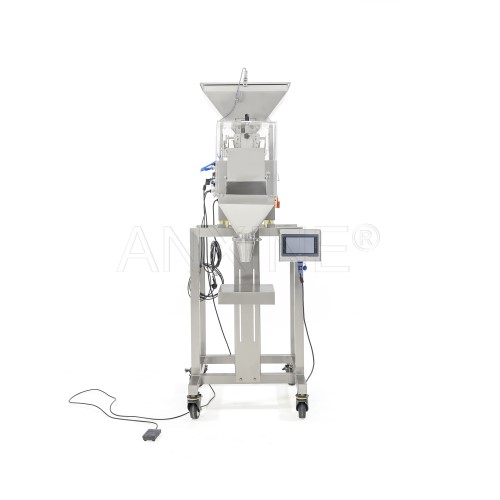
A single-head linear weigher is equipped with one weighing hopper to complete the weighing process. The machine structure is simple and easy to operate. Product enters the hopper, reaches the target weight, and then discharges into the packaging machine or container. This type of machine is suitable for small factories, startup businesses, and low production output. It is commonly used for products such as rice, beans, sugar, coffee powder, tea, etc. Single-head linear weighers usually have a lower production speed compared with larger machines. But the cost is less.
2-Head Linear Weigher
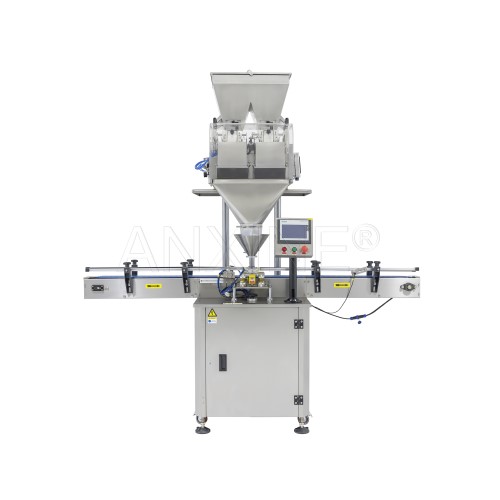
A 2-head linear weigher contains two weighing heads that work at the same time. Compared with single-head machines, it provides higher production speed and better efficiency. Two weighing systems can work simultaneously. It reduces production time compared to single-head models. This structure is commonly used for medium production capacity. It is also suitable for factories that need a stable production speed while maintaining good weighing accuracy. On the other hand, double-head machines usually require more installation space and have a higher equipment cost.
Multi-Head Linear Weigher
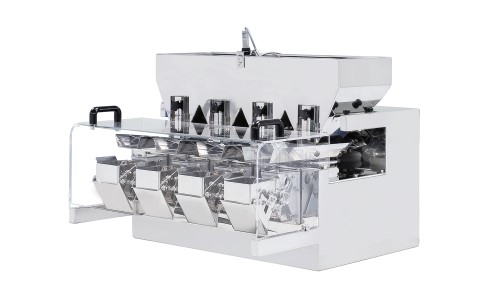
This type uses multiple weighing heads to achieve higher efficiency and faster production speed. Several weighing hoppers work at the same time to calculate and sum the product weight more quickly. Multi-head linear weighers are commonly used for large-scale production factories. It is ideal for products such as chips, candy, frozen food, seafood, nuts and gummies. Because multiple weighing heads operate together, the machine can achieve high efficiency and accuracy. Some advanced multi-head systems can handle hundreds of weighing tasks within a short time.
Multi-head linear weighers usually have more complex structures and higher machine cost compared with the other two models. They also require more maintenance and operator training.
The models above are divided into different numbers of weighing heads. Here are some types classified by different feeding methods.
Screw Linear Weigher
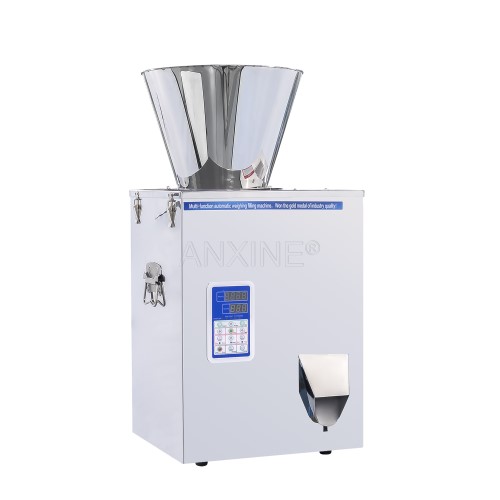
A screw linear weigher uses a rotating screw to feed product into the weighing hopper. The screw is installed inside a feeding tube or hopper. When the motor starts, the screw rotates and pushes the product forward gradually. This machine is suitable for powder products or materials with poor flowability. The screw can control the feeding amount more precisely. Common applications include milk powder, protein powder, spice powder, flour, etc. It is also suitable for powders that may flow unevenly under vibration. However, screw linear weighing machines may have a slower production speed for some products, especially large granules or irregular materials.
Vibratory Linear Weigher
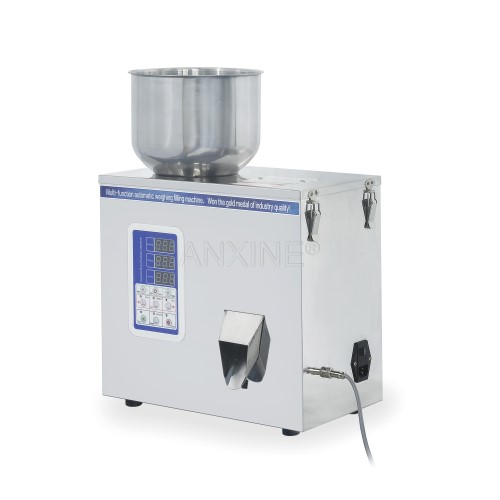
A vibratory linear weigher uses vibration feeders to move product into the weighing hopper. The vibration controls the product flow speed during the weighing process. Vibratory linear weighers are widely used for granules, small solid products, and free-flowing materials, such as rice, sugar, beans and nuts. They usually have a simple structure and easy maintenance. They also support high production speed for many products.
Some advanced vibratory linear weighers can adjust vibration frequency automatically according to product flow conditions. Free-flowing materials may be applied with stronger vibration, while fragile or lightweight products may require gentler vibration for stable weighing.
You can check the chart to see their differences.
| Type | Single-head linear weigher | 2-head linear weigher | Multi-head linear weigher | Screw linear weigher | Vibratory linear weigher |
|---|---|---|---|---|---|
| Production Speed | Low | Medium | High | Low to medium | Medium to high |
| Cost | Low | Medium | High | Medium | Low to medium |
| Application | Rice, beans, sugar, tea, coffee powder | Snacks, grains, nuts, pet food | Chips, candy, frozen food, seafood, gummies | Milk powder, flour, protein powder, spice powder | Rice, sugar, beans, nuts, granules |
| Production scale | Small factories | Medium production capacity | Large-scale production | Powder product production | Small to high-speed production |
| Maintenance | Easy | Moderate | Higher requirement | Moderate | Easy |
How to Choose the Right Linear Weigher?
When knowing so many linear weigher types, you may wonder how to choose the best one to boost production. The choice is always related to the following important factors.
Product Type
Product characteristics are one of the most important factors when selecting a linear weigher. Different materials flow differently during feeding and weighing. So, a matching weighing machine is important. Free-flowing granules such as rice and sugar are usually used with vibratory linear weighers. Powder products such as flour and milk powder often require screw feeding systems for more stable control. Fragile products like chips may need belt feeding systems to reduce product breakage.
Accuracy Requirement
Different industries have different accuracy requirements. Pharmaceutical and nutritional supplement products usually require higher weighing precision compared with agricultural or bulk food products. Higher accuracy machines often use more advanced control systems, better load cells, and slower fine-feeding stages. Some products with uneven shapes or unstable flow may also affect final weighing accuracy. Therefore, you should determine the acceptable weight range before selecting the machine. For example, the Anxine CN series could achieve the accuracy of around ±1-3%. It mainly depends on product size, product flow condition, and machine operating speed.
Production Volume
Production output directly affects machine selection. It is highly related to the hopper volume. In most cases, larger capacity machines have lower operating speeds. Take Anxine CN series linear weighers for example. The hopper of CN-XS4-2-1 can hold 0.5L materials, and the max output could achieve 70 times/min. On the other hand, CN-XM2-2-1 can hold 15L materials, and the max output is up to 18 times/min. Large-capacity machines are usually used for heavier products, so each weighing cycle requires longer feeding time to keep stable.
If you run a small factory or a startup business, single-head linear weighers or small-capacity machines are a better choice. They feature lower cost and easy maintenance. Large-capacity machines are more suitable for large bags and heavy-weight products. They usually provide higher automation and support continuous production.
Customization
If you need customization, it is necessary to confirm it with your supplier. Customization may include special hopper sizes, dust-proof structures, anti-stick surfaces, height adjustment, or extra functions. For example, sticky gummies may require coated hoppers to reduce material buildup. Powder products may need enclosed screw feeding systems for dust control. So before ordering, you need to tell your supplier what you want to customize and see if they can complete it or not. You’d better find one who has experience in this aspect and check the former example. Then, you may know if he can be trusted to finish your task.
Get High-quality Linear Weighers with Anxine
As a leading Chinese industrial machine manufacturer, Anxine has helped dozens of clients to get good linear weighing machines. We offer different types of weighing equipment, including single-head, multi-head, rotary models, etc. From small businesses to large factories, our machines are designed to meet your specific production needs. In addition, we have a professional technical team to assist with your smooth production.


