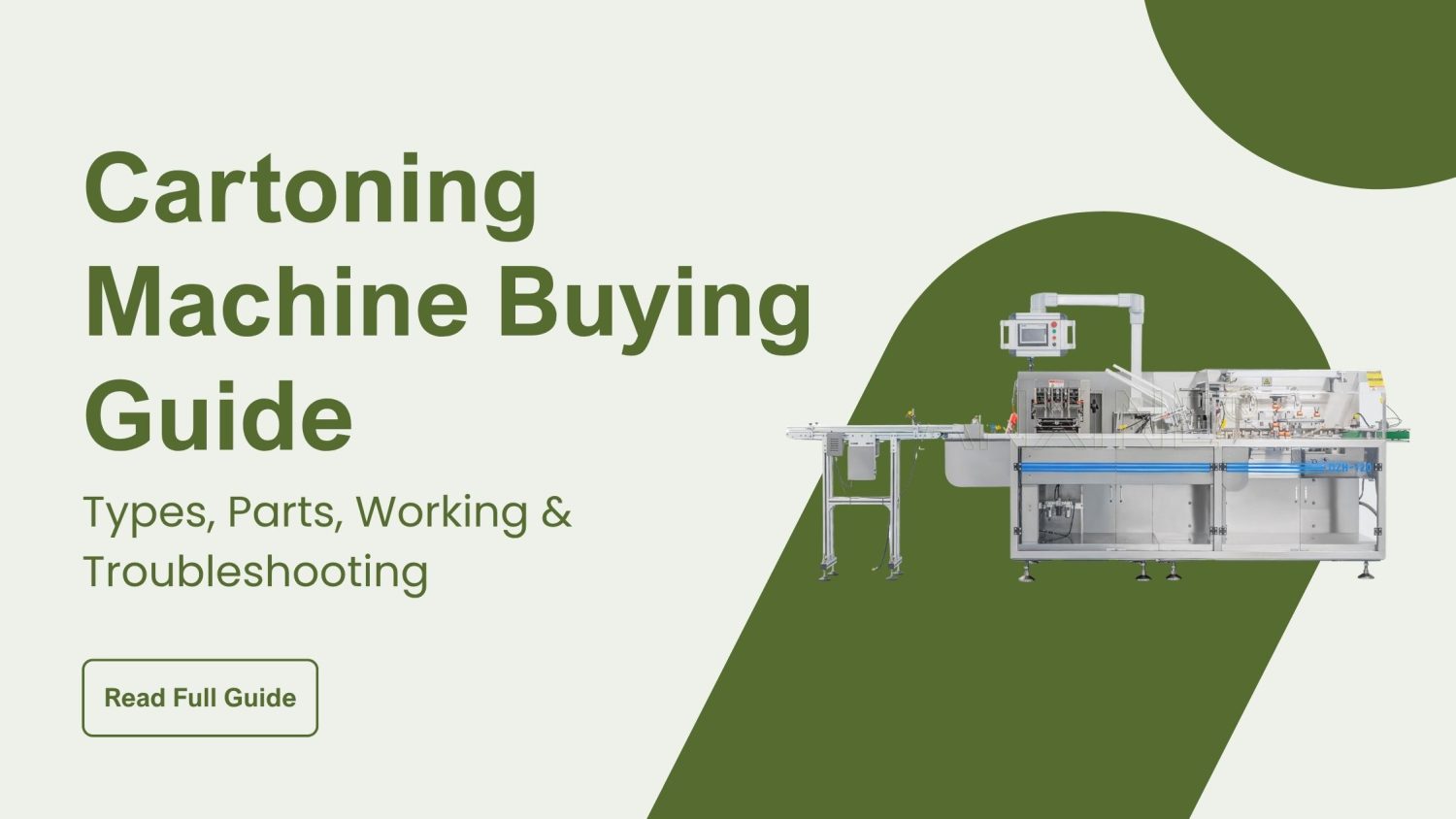
Cartons are popularly used in daily life. They can pack from medicine, food to supplement and daily items. To improve packaging efficiency, many manufacturers now use cartoning machines to pack products in different cartons. This article explains what a cartoner is, how it works, and other aspects you should know.
What is a cartoner?
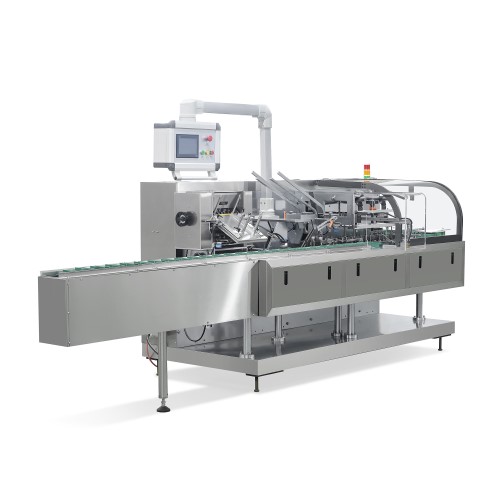
A cartoning machine is a packaging machine used to form cartons, load products into the cartons, and close the cartons automatically. It always forms the secondary packaging. Cartoners can handle many product types, such as blister packs, bottles, tubes, sachets, pouches, vials, and cosmetic items. Different machine structures are designed for different packaging requirements. Some cartoners push products into cartons from the side, while others load them from the top.
Advantages of cartoners
Cartoning machines provide many benefits. They feature high production speed, consistent packaging quality and lower labor cost. Moreover, it improves the production for products inside. Proper carton sealing reduces the risk of product contamination. Cartoners also create clean and neat packaging. It makes the products look more attractive on the shelf.
Cartoners also support batch coding and tracking. They can connect with coding and printing equipment. Batch numbers, production dates, expiration dates, and barcodes can be printed directly on cartons for easier product tracking.
Application
Cartoners are widely used in many industries because of so many advantages.
- Pharmaceutical production. Cartoners are commonly used for packaging blister packs, medicine bottles, vials, ampoules, syringes, and medical devices.
- Nutraceutical industry. The cartoning machines are used for supplement bottles, sachets, stick packs, and gummies.
- Food area. Applications include snacks, biscuits, frozen food, tea bags, coffee and sugar sachets.
- Cosmetics. Cosmetic products such as cream tubes, perfume bottles, skincare products, and makeup items are often packed with cartoners.
- Consumer products. Some cartoners are used for small electronic products, accessories, batteries, and hardware items. They provide product protection during transportation and storage.
How does a cartoning machine work?
A cartoner could complete a continuous packaging process that forms cartons, loads products, and closes the cartons. Different cartoner models may operate slightly differently, but the basic working flow is similar.
Carton feeding
At first, the operator needs to put the flat cartons into the carton magazine. The machine would automatically pick cartons one by one with suction cups or mechanical arms. The cartons move from the magazine to the forming section in a controlled speed. During this process, proper carton feeding is important. Damaged or incorrectly positioned cartons can affect the following packaging steps.
Carton shaping
After feeding, the carton enters the erection section. The machine opens the flat carton and forms it into a box shape. Mechanical arms, vacuum systems, or forming devices hold the carton in position during this process. This step maintains carton shape and prevents carton jamming during product loading.
Product loading
Once the carton is fully opened, the product could be put into the carton. Different feeding systems are used for different products. Here are some examples.
- Pushers are often used for blister packs.
- Robotic pick-and-place systems may handle bottles or cosmetic products.
- Vertical loading systems may load sachets or pouches into cartons.
Some cartoners also support inserting instruction leaflets with the product. Sensors are usually used to monitor the insertion process to reduce missing products or carton errors.
Carton closing
After product loading, the carton moves to the closing station. The machine folds and seals the carton flaps tightly. Common carton closing methods include
- Tuck-in flap closing.
- Hot melt glue sealing.
- Lock-bottom carton sealing.
The sealing method depends on carton design and packaging requirements. You can choose the most suitable one based on the specific production.
Carton discharge
After sealing, the finished carton exits the machine through the conveyor. The cartons may then move to other packaging equipment, such as checkweighers, labeling machines, etc. Many cartoners may be equipped with sensors and rejection systems. They can remove damaged or incomplete cartons before the products leave the packaging line.
You can check the video to see how it works.
What are the main parts of a cartoning machine?
No matter which type of cartoning machine is used, they generally contain the following components.
Carton magazine
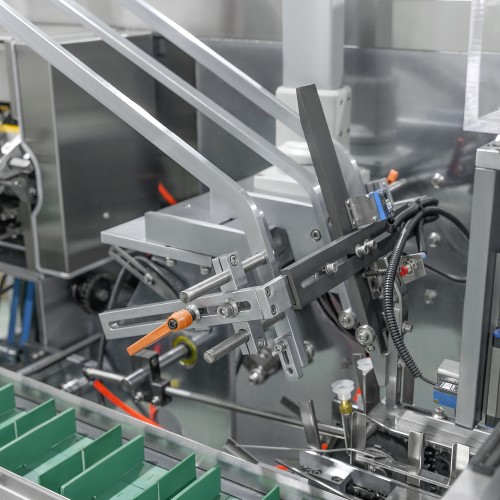
Some manufacturers may call it a carton library. This part stores flat cartons before the cartoning process starts. The cartons are arranged in stacks inside the magazine, and the suction system picks them up one by one for feeding into the machine. The width and length of the carton magazine can usually be adjusted according to different carton sizes. A stable carton supply is important for continuous machine operation.
Carton erection system
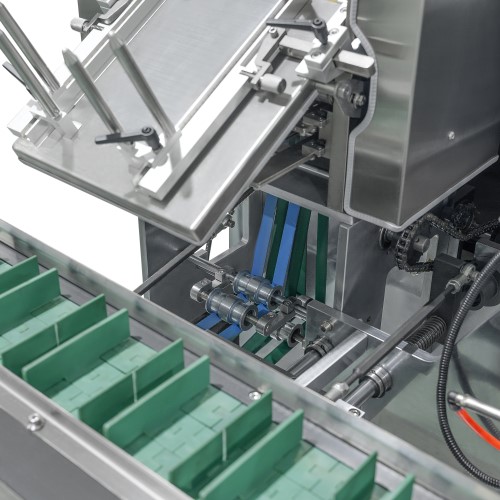
The carton erection system opens the flat carton and forms it into a box shape. It contains mechanical guides, cams, and suction devices. They are combined to keep the carton stable during forming. The carton erection speed must match the operating speed of the entire cartoning machine. If the erection speed is too fast, cartons may not fully open or may become deformed during transfer. If the speed is too slow, the machine output may decrease and affect production efficiency.
Moreover, carton size, material, and paperboard stiffness also affect erection performance. Thin or soft cartons may collapse during forming. On the other hand, thick cartons may require stronger suction force and more precise timing control.
Product loading system
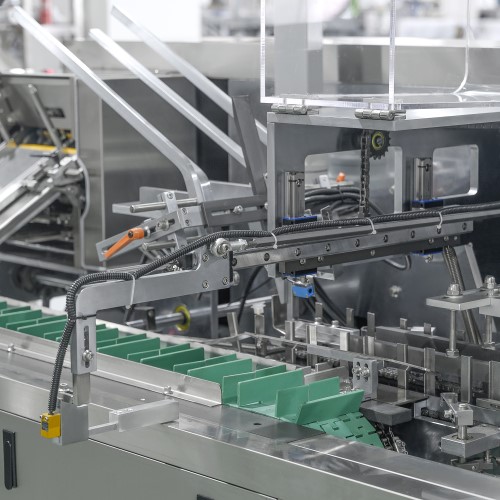
The product loading system transfers products into opened cartons in the correct position. Different loading methods are used according to cartoner structure and product type.
In horizontal cartoners, push rods or pusher blades usually move products into cartons from the side. This method is common for blister packs, sachets, tubes, and bags. The movement must stay synchronized with carton positioning for smooth product loading. In vertical cartoners, products are commonly loaded from the top of the carton. They require gravity feeding systems, drop-loading devices, or robotic pick-and-place systems for operation. These parts can load bottles, cosmetic products, and food items.
Conveyor belt
The carton conveyor moves cartons through different working stations for processing. It transports cartons during carton opening, product insertion, carton sealing, and finished product discharge. The belt width and guide rails can be adjusted according to carton dimensions.
Carton closing and sealing part
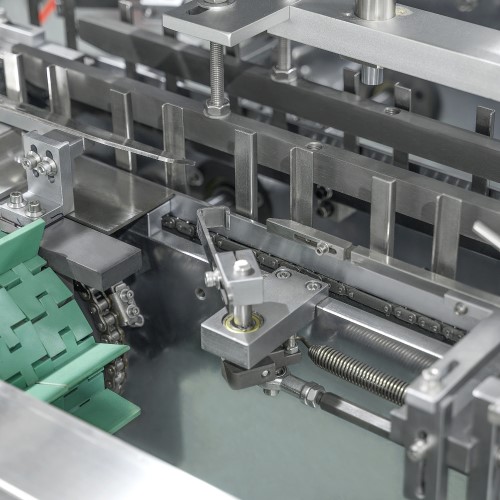
This part folds and seals carton flaps after product loading. Different cartoners apply different sealing methods, such as tuck-in flap closing or hot melt glue sealing. The system usually includes tongue folding plates, guide rails, sealing mechanisms, and carton positioning devices. Accurate synchronization between carton movement and flap folding is important. If the timing is incorrect, the carton flaps may not fully close or become damaged.
PLC control panel
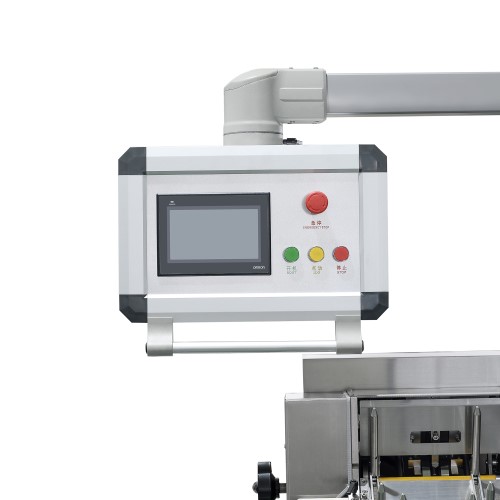
The PLC control system controls machine operation, parameter setting, and alarm monitoring. Operators use the touch screen interface to start machine functions and monitor equipment status. Some control panels could record alarm history and machine fault information. Operators can quickly identify problems such as carton jams, low air pressure, or missing products. This reduces downtime and improves troubleshooting efficiency.
Safety cover
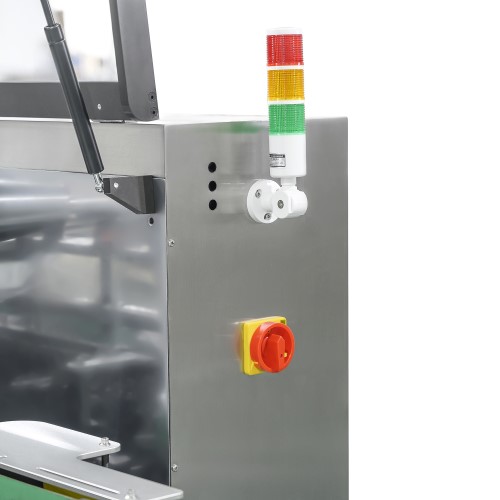
The safety protection system is used to protect operators and machine components during production. It usually includes safety doors, emergency stop buttons, overload protection, alarm systems, and sensor monitoring devices. Many cartoning equipment automatically stop operation when safety doors are opened or when abnormal noises are detected. This could reduce the risk of operator injury and machine damage.
In high-speed cartoners, overload protection is important. When excessive resistance or mechanical blockage occurs, the system prevents damage to motors, conveyor chains, and transmission components.
How to choose a suitable cartoning machine?
A suitable machine can improve packaging efficiency, and maintain stable packaging quality. To avoid further production problems, a good selection is important.
Product type
Product type is one of the most important factors when selecting a cartoner. Different products require different feeding methods, carton structures, and loading systems. Blister packs often use horizontal cartoners with a push-loading mechanism. Fragile products may need gentle handling systems. Product size, shape, and material also affect machine selection. Irregular or unstable products may require customized feeding devices or robotic loading systems.
Carton size
Carton dimensions and carton structure directly affect machine configuration. The cartoner must support the required carton length, width, and height range. Take the Anxine DZH-120 for example. It supports the carton dimension range of (60-200)mm x (25-85)mm x (15-65)mm. For the DZH-100 model, it supports the size range of (80-180)mm x (30-95)mm x (15-50)mm. If you need to use different sizes of cartons frequently, you’d better choose a machine with easier adjustment and faster changeover capability.
Production speed
Your business scale needs to match the production speed. Small production environments may only require low or medium speed equipment. Large-scale factories usually require high-speed automatic cartoners that can operate continuously for long production periods. For example, the production speed of the Anxine DZH-50S is 20-60 cartons/min. This model is ideal for small factories or manufacturers that have a limited budget. For large factories or continuous production, you’d better choose cartoning equipment with a speed of around 150 cartons/min.
How to troubleshoot the cartoning machines?
During production, you may meet some challenges. Some of them could be easily solved by yourself.
| Fault | Cause | Solution |
|---|---|---|
| The paper box cannot be successfully sucked in. | Vacuum tube has blockage or leakage. | Check the air path carefully and eliminate
the fault. |
| Suction disc in the suction box mechanism is aging and weak. | Replace the suction disc. | |
| Improper adjustment of the
paper box storage rack. |
Re-adjust according to the adjustment steps. | |
| Packaged paper boxes stick together. | Replace the paper box. | |
| Discharge is ineffective. | Blowing time is too early or
too late. |
Re-adjust the blowing time to match the
host machine. |
| Insufficient compressed air
pressure in the system leads to insufficient blowing force. |
Check the machine’s air system and adjust
the air pressure. |
|
| The machine can’t start. | The emergency stop is pressed or not reset. | Identify and eliminate the cause of the emergency stop, then manually reset or release the emergency stop device and restart the machine according to the operating procedure. |
| Paper box opening signal on. | Close the paper box opening detection. |


