As concerns about thinning hair, brittle nails, and poor skin condition grow, biotin supplements for hair, skin, and nails have become a popular choice. However, many consumers are still unsure whether they need biotin or which safety issues to consider.
For brands and manufacturers, developing a biotin supplement is not always simple. The right dosage, product form, formula design, quality control, regulatory requirements, and equipment can all affect product quality and market potential. This article explains the basic benefits, suitable users, safety considerations, and market demand for biotin supplements. It also covers key factors to consider during production. It is useful for consumers who want to learn more about biotin, as well as supplement brands, manufacturers, and buyers planning to develop or produce related products.
What Is Biotin?
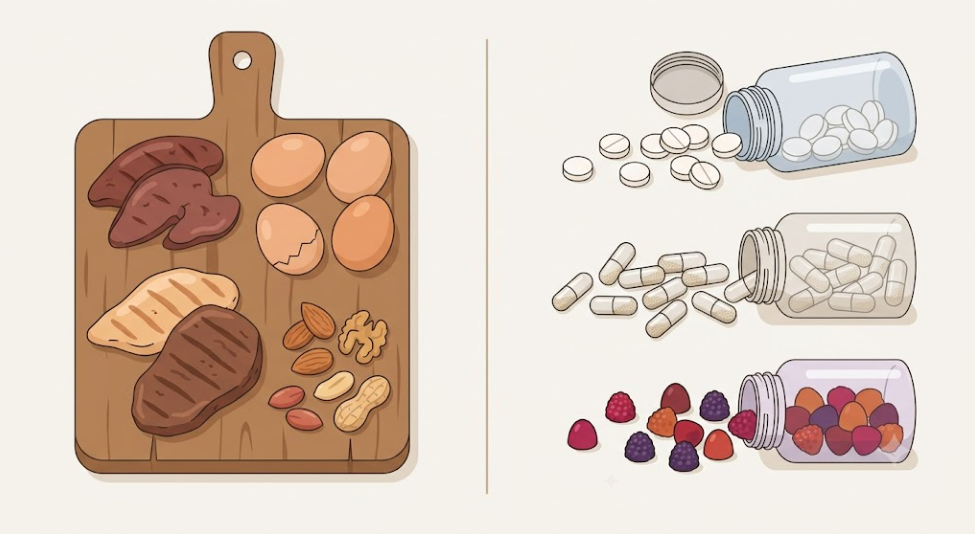
Biotin, also known as vitamin B7, is a water-soluble B vitamin and an essential nutrient for the human body. It helps enzymes break down carbohydrates, proteins, and fats so the body can use them for energy. Because the body cannot produce enough biotin on its own, regular intake from external sources is needed. Biotin occurs naturally in certain foods, including organ meats, eggs, meat, and nuts. Many people can get an adequate amount by planning a balanced diet. However, diet alone may not provide enough biotin for everyone. For this reason, some people choose to take biotin supplements to support their intake.
Who Requires a Biotin Supplement?
According to the Institute of Medicine’s Dietary Reference Intakes report, the recommended Adequate Intake (AI) of biotin for adults is 30 micrograms per day. Based on the data in the table “Biotin Content of Selected Foods,” a balanced diet can usually provide this amount. Therefore, most healthy people do not need an additional biotin supplement if they have a healthy and balanced diet. However, some people may not get enough biotin, especially when their diet lacks biotin-rich foods. Biotin deficiency is uncommon in healthy people, but certain conditions may lower biotin levels, including pregnancy, poor nutrition, medication effects, and biotinidase deficiency. People in these situations may need appropriate supplementation, but they should consult a healthcare professional before taking biotin supplements.
Low biotin levels may lead to symptoms such as skin rash, hair loss, and brittle nails. For this reason, a biotin supplement for hair, skin and nails is often promoted as a product designed to support overall beauty and wellness. Some research suggests that biotin may be helpful for these conditions. The review “A Review of the Use of Biotin for Hair Loss” examined 18 reported cases in which biotin was used to treat hair and nail disorders. In all of the cases reviewed, patients showed clinical improvement after taking biotin. However, these cases involved people with existing diseases or symptoms, not healthy people. Therefore, although many brands promote biotin supplements for beauty-related benefits, there is still limited research to support these effects in healthy people who are not deficient. Below is a table showing the biotin content of selected foods.
Biotin Content of Selected Foods
| Foods | Serving size (g) | μg biotin/serving |
|---|---|---|
| Meat, fish, poultry, egg | ||
| Egg, whole, cooked | 47 | 10.0 |
| Hamburger patty, cooked | 37 | 1.65 |
| Pork chop, cooked | 80 | 3.57 |
| Chicken liver, cooked | 74 | 138 |
| Beef liver, cooked | 74 | 30.8 |
| Sliced turkey, processed deli | 21 | 0.15 |
| Dairy | ||
| 2% milk | 236 | 0.27 |
| American cheese | 19 | 0.59 |
| Plain yogurt | 170 | 0.14 |
| Skim milk | 236 | 0.31 |
| Whole milk | 236 | 0.31 |
| Chocolate milk, low-fat | 236 | 0.90 |
| Vegetables | ||
| Broccoli, fresh | 113 | 1.07 |
| Carrots, canned | 29 | 0.18 |
| Cauliflower, fresh | 32 | 0.05 |
| Mushrooms, canned | 120 | 2.59 |
| Fruits and berries | ||
| Apple, fresh | 185 | 0.04 |
| Apple juice, canned, from concentrate | 250 | 0.13 |
| Banana, fresh | 103 | 0.14 |
| Strawberries, fresh | 111 | 1.67 |
| Bread and grains | ||
| Grilled toast | 84 | 1.03 |
| Hamburger bun | 58 | 0.17 |
| Noodles | 180 | 0.32 |
| Whole wheat bread | 33 | 0.02 |
Note: Data adapted from PMC1450323.
Is It Safe to Take Biotin Supplements?
Biotin is generally considered safe. But this does not mean you can take it without caution. The Institute of Medicine sets the adequate intake for adults at 30 mcg per day. Most people can get this amount from a normal diet. However, many biotin supplements on the market contain much higher doses, often 5,000 to 10,000 mcg. This is far above the adequate intake. These products are mainly marketed for hair, skin, and nail health.
So, are such high doses safe? The Food and Nutrition Board has not set an Upper Intake Level for biotin. This is because current evidence does not show that high biotin intake is toxic. Also, because biotin is water-soluble, extra amounts are usually passed out of the body in urine. However, high-dose biotin may interfere with certain lab tests. These include thyroid tests and heart-related markers, such as troponin. This may lead to inaccurate results. If you have blood work or other medical tests coming up, tell your doctor that you are taking biotin.
Biotin may also interact with some medications. People who take medication, are pregnant or breastfeeding, or have an existing health condition should talk with a doctor before using high-dose biotin. This can help make biotin use safer and more appropriate.
Is There a Market for Biotin Supplements?
Yes. Although there is still no solid scientific evidence on the long-term safety and effectiveness of biotin supplements for healthy people, the market remains strong. Many consumers believe biotin may help improve hair, skin, and nail health. As more people focus on wellness, demand for biotin supplements continues to grow. A report by Fortune Business Insights shows that the global biotin supplements market was valued at USD 5.5 billion in 2025. The market is expected to rise from USD 5.78 billion in 2026 to USD 8.52 billion by 2034.

What Should Be Considered When Making Biotin Supplements?
Data from Fortune Business Insights shows strong demand for biotin supplements. At the same time, this also means competition is intense. Biotin supplement manufacturers need to consider several factors to make sure their products can stay competitive in the market.
Product Positioning
Product positioning should come first. It shapes almost every key decision that follows. Before you develop the product, you need to answer these questions:
- Who is your target customer? Why would they want to buy a biotin supplement?
- What do they care about most? Are they mainly focused on hair, nails, skin, or daily nutritional support?
- Who are your competitors? What are they doing well, and where are they falling short?
- What makes your product different? What is the main selling point?
- How should the product be priced? Are you building a premium product or a more affordable mass-market option?
- Where will you sell it? Your sales channel will affect the packaging, pricing, and marketing strategy.
These six questions can give you a clearer starting point for deciding what kind of product to build. But product positioning should not be based on guesswork. Accurate positioning depends on real market research.
Dosage Design
The dosage of a biotin supplement is not simply a matter of “more is better.” It should be based on the product’s purpose, intended users, common market dosages, and safety considerations. For a daily nutrition product, a lower dose may be more appropriate. Biotin can also be included as part of a B-complex formula. If the product is positioned for beauty support, such as hair, skin, and nail health, a higher dose may be considered. However, the product should not make unsupported claims. The label should also inform consumers of possible risks, and when needed, they should consult a doctor before use.
Dosage type
Biotin could be taken as capsules, tablets, gummies, and liquids. Capsules and tablets offer more precise dosing. Gummies are ideal for consumers who prefer good flavor. Liquid biotin features flexible dosing. You can choose the best form according to the cost and consumer preference.
Formula and Ingredient
Many biotin supplements include only biotin, while others have vitamins, minerals, or plant extracts. The ingredient list affects both labeling and consumer trust. Now, many customers pursue clean labels. So clean formulas may appeal to more buyers. If you use these additives like flavors, their purpose and source should be clearly stated. Please note that the raw materials should meet related standards, like USP. In addition, you need to prepare clear quality documents to show purity and accuracy.
Absorption
Although biotin is water-soluble, absorption can still be different based on formulation. Excipients, capsule materials, and processing methods all affect the absorption. A good formula provides a more reliable daily intake. It also supports long-term customer trust.
Quality and Compliance
In biotin supplement manufacturing, quality control and compliance are equally important. Quality control is the set of checks and process controls used before, during, and after manufacturing to ensure the product meets established specifications. Compliance means making sure a product meets the regulatory requirements of its target market at every stage, from development and manufacturing to labeling, sales, and marketing. For biotin supplements, it typically covers the following areas:
| Quality Control | Compliance |
|---|---|
| Raw Material Control | GMP Compliance |
| Formula and Dosage Control | Label Compliance |
| In-Process Control | Marketing Claims Compliance |
| Finished Product Testing | Safety Compliance |
| Stability Testing | Documentation and Recordkeeping Compliance |
| Batch Records and Traceability | Market and Regional Regulatory Compliance |
How Equipment Supports Quality Control and Compliance in Biotin Supplement Manufacturing
The right supplement manufacturing equipment can help a health supplement manufacturer improve quality control and support compliance. In this section, I will cover several common types of equipment used on supplement production lines. These examples show how drug manufacturing equipment can help support quality control and compliance in biotin supplement manufacturing. Please note that this is not a complete list of all equipment used in a full production line.
1. Powder Blender
In pharmaceutical and dietary supplement production, a powder mixing machine is used to mix different powder or granular ingredients evenly. For example, it can blend biotin with fillers, flow aids, flavors, or other nutrients. A uniform blend helps ensure that each tablet, capsule, or powder packet contains the right amount of active ingredient. For this reason, a powder blender is an important piece of equipment for product quality and content consistency. The table below shows common types of powder blenders.
Common Powder Blender Types
| Type | Suitable Materials | Common Dosage Forms |
|---|---|---|
| V Blender | Dry powders, granules, free-flowing powders | Hard capsules, tablets, powder blends |
| 3D Powder Mixer | Multi-ingredient blends, powders with different densities | Hard capsules, tablets, powder blends |
| Ribbon Blender | Large batches of powders, granules, nutrition powders | Powder products, granules, tablets |
| Trough Mixer | Common powders, granules, some moist materials | Powders, granules |
| Cone Blender | Heat-sensitive powders, fragile granules, high-value ingredients | Hard capsules, tablets, powder blends |
2. Solid Dosage Forming Equipment
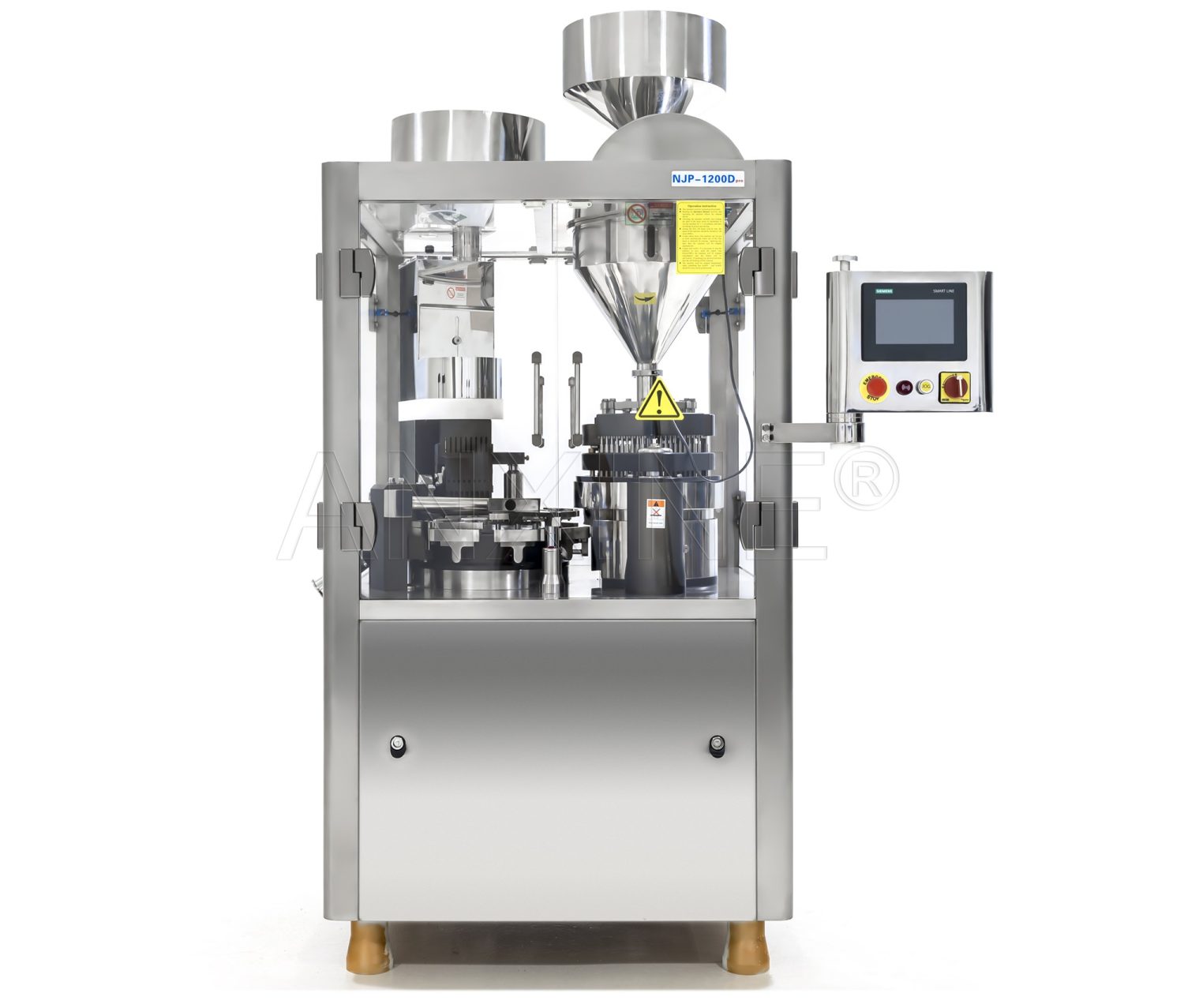
Solid dosage forming equipment is used to produce tablets and capsules. It usually handles powders, granules, or pellets that have already been mixed, granulated, or dried. The main purpose of this equipment is to fill or compress material into a set dose. This helps keep each tablet or capsule consistent. Common equipment includes tablet press machines and capsule filling machines. These machines are widely used in pharmaceutical, dietary supplement, and nutraceutical production. Depending on the setup, they can be used for lab testing, pilot production, or high-speed commercial manufacturing.
3. Inspection Equipment
Pharmaceutical inspection equipment plays a key role in quality control. Inspection runs throughout the production line, helping detect issues with weight, appearance, foreign matter, seal integrity, and label information. The required inspection steps also vary by dosage form. The table below shows several pharma inspection machines and explains where they are typically used in the production process.
Common Examples of Pharmaceutical Inspection Equipment
| Inspection Equipment | Main Function | Position |
|---|---|---|
| Metal Detector | Detects metal contamination and rejects affected products | After tablet press or capsule filler, before packaging |
| Visual Inspection Machine | Checks surface defects, damage, color issues, and fill problems | After forming, before packaging |
| Automatic Rejecting System | Removes failed products based on inspection results | After the inspection point |
4. Auxiliary Machinery
In pharmaceutical and supplement production, auxiliary equipment is also an important part of the production line. They help with tasks such as product handling, sealing, label checks, and final packaging. With this equipment, a dietary supplement manufacturer can better control product quality, keep packaging intact, and make product information easier to trace.
Common Auxiliary Equipment Used in Supplement Production Lines
| Auxiliary Equipment | Main Function | Used In | Stage |
|---|---|---|---|
| Capsule Polishing & Sorting Machine | Removes powder and rejects defective capsules | Capsule production line | After capsule filling |
| Bottle Auxiliary Machine | Sorts bottles and inserts desiccants/cotton | Bottling line | Before filling |
| Wrapping Machine | Wraps products for protection and display | Pharma, food, cosmetics packaging | Packaging stage |
| Capping & Sealing Machine | Seals bottles and tightens caps | Bottling line | After filling |
| Labeling Machine | Applies labels and prints batch/date info | Bottling and packaging lines | Final packaging |
The End
Now you must have a better understanding of the biotin supplement. If you want to make this product, a good manufacturing machine is important. Anxine has helped thousands of clients to get high-quality equipment for different production needs. We offer capsule filling machines, tablet presses, liquid fillers, gummy making machines, etc. If you don’t know how to choose, our technical team can help you select the best one according to your needs. Customization is also available. Feel free to contact us.
Sources
1. NIH Office of Dietary Supplements – Biotin Fact Sheet for Health Professionals
2. NCBI Bookshelf – Dietary Reference Intakes for Thiamin, Riboflavin, Niacin, Vitamin B6, Folate, Vitamin B12, Pantothenic Acid, Biotin, and Choline
3. National Library of Medicine – Biotin: A Review of the Use of Biotin for Hair Loss
4. National Library of Medicine – Determination of the Biotin Content of Select Foods Using Accurate and Sensitive HPLC/avidin Binding
5. Fortune Business Insights – Biotin Supplement Market Size, Share & Industry Analysis
6. US Pharmacopeia (USP)-https://www.usp.org/


