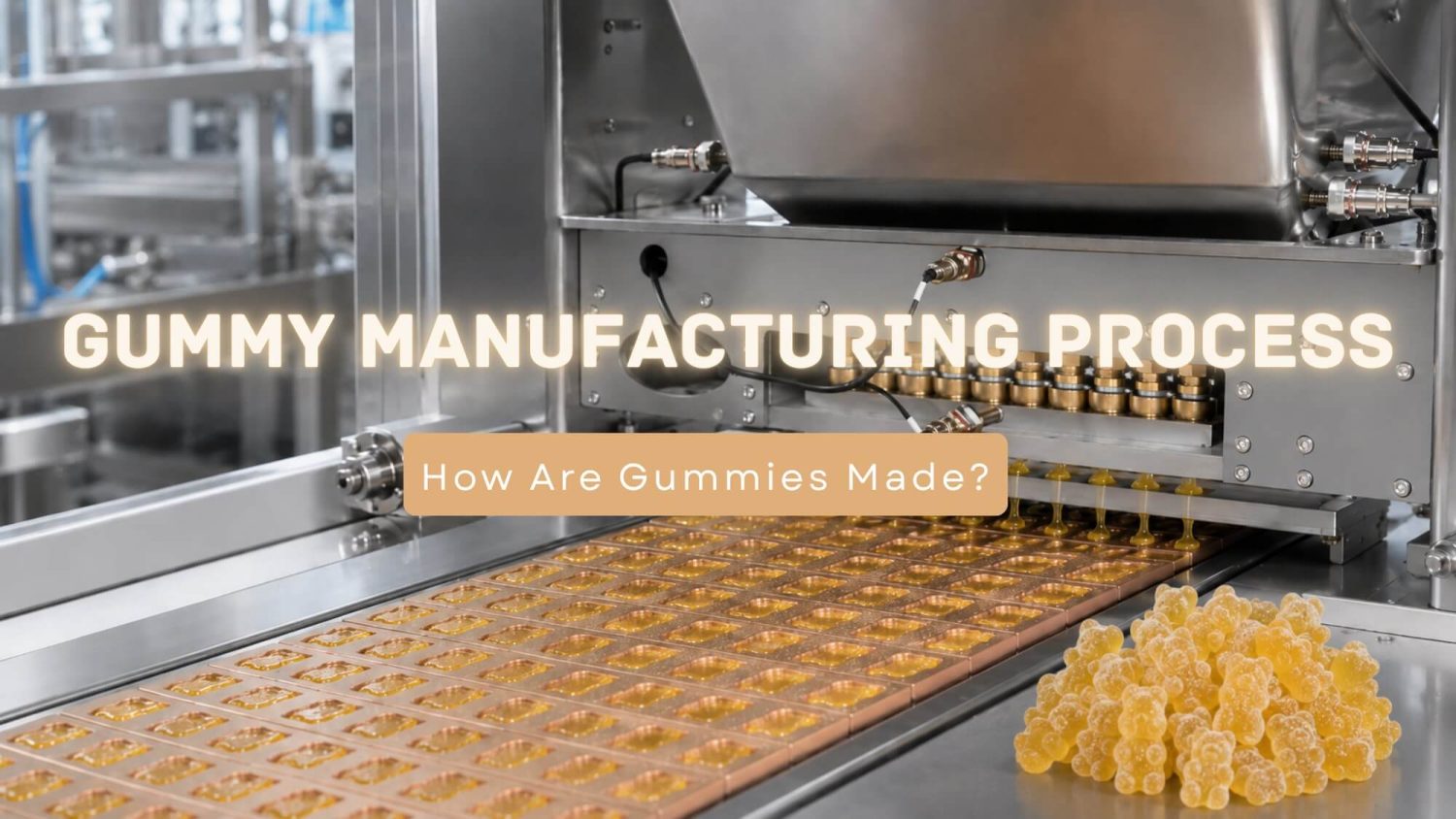
Commercial gummy production turns a liquid mixture into pieces that hold their shape and have the right texture. A typical gummy manufacturing process usually includes ingredient preparation, cooking, depositing, setting, demolding, and conditioning.
But the process is not exactly the same for every product. A gelatin gummy behaves differently from a pectin gummy. If you’re producing vitamin gummies, these ingredients may degrade at high temperatures. For this reason, commercial production depends on more than following a fixed recipe. Each stage must prepare the gummy mass properly for the next one.
Step-by-Step Gummy Manufacturing Process
The basic production sequence is easy to follow. What matters is how each stage changes the gummy mass before it moves on to the next.
Step 1: Prepare the Formula and Ingredients
Production starts with the approved formula and the right amount of each ingredient. Sweeteners, water, gelling agents, acids, flavors, and functional ingredients all need to be dosed according to the batch specification.
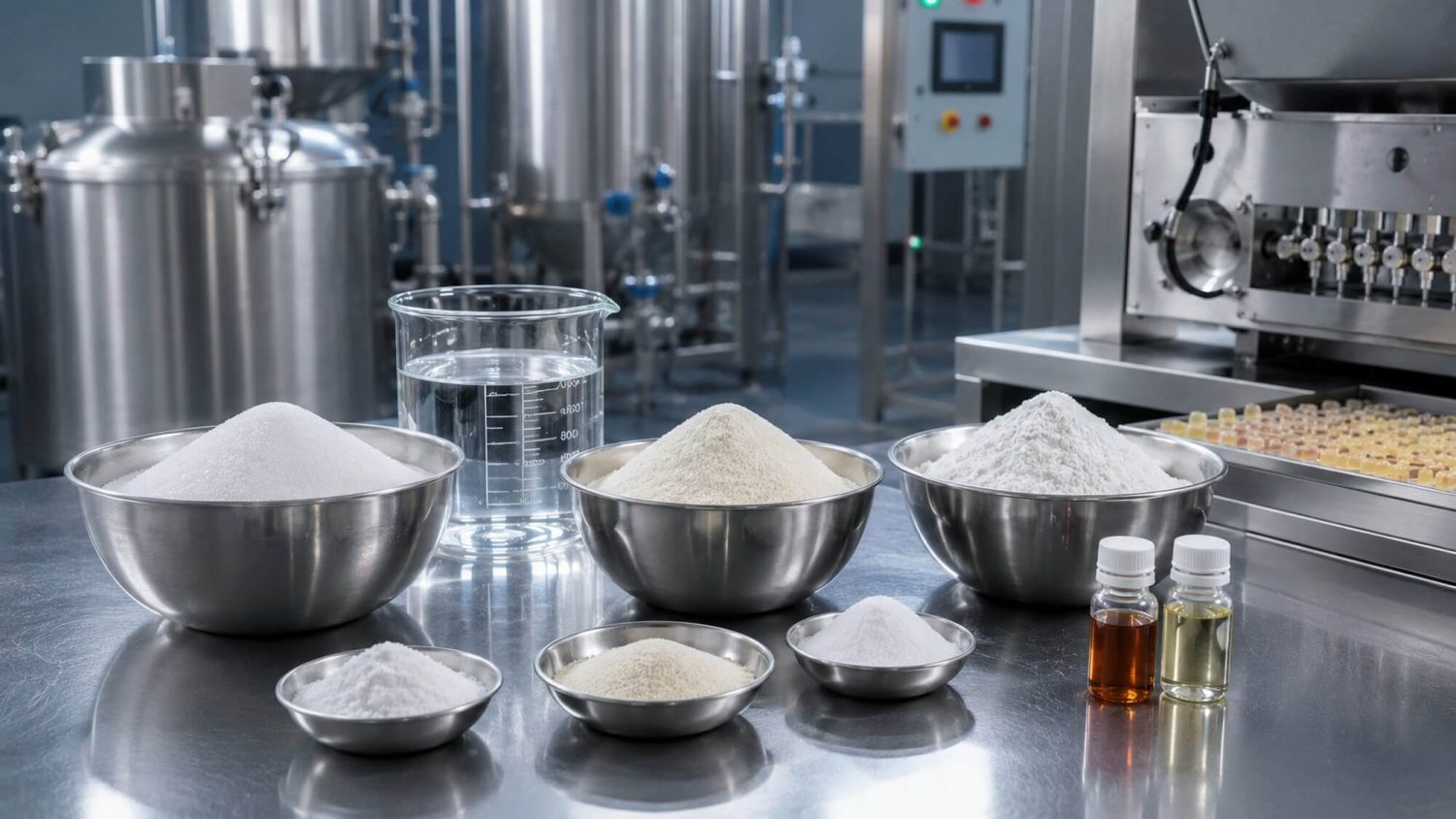
Some materials also need a little preparation before they go into the main mix. Gelatin, for example, may need to be hydrated first. Powdered ingredients must mix in evenly without forming lumps.
Small weighing errors can become more important when an ingredient is used in a very small amount or strongly affects how the gummy sets. Accurate weighing helps reduce variation between production runs.
Step 2: Cook the Gummy Mass to the Right Condition
The prepared ingredients are then mixed and heated into a smooth gummy mass. During cooking, sugars dissolve and the gelling system develops. Some of the water is also removed as the mass becomes more concentrated.
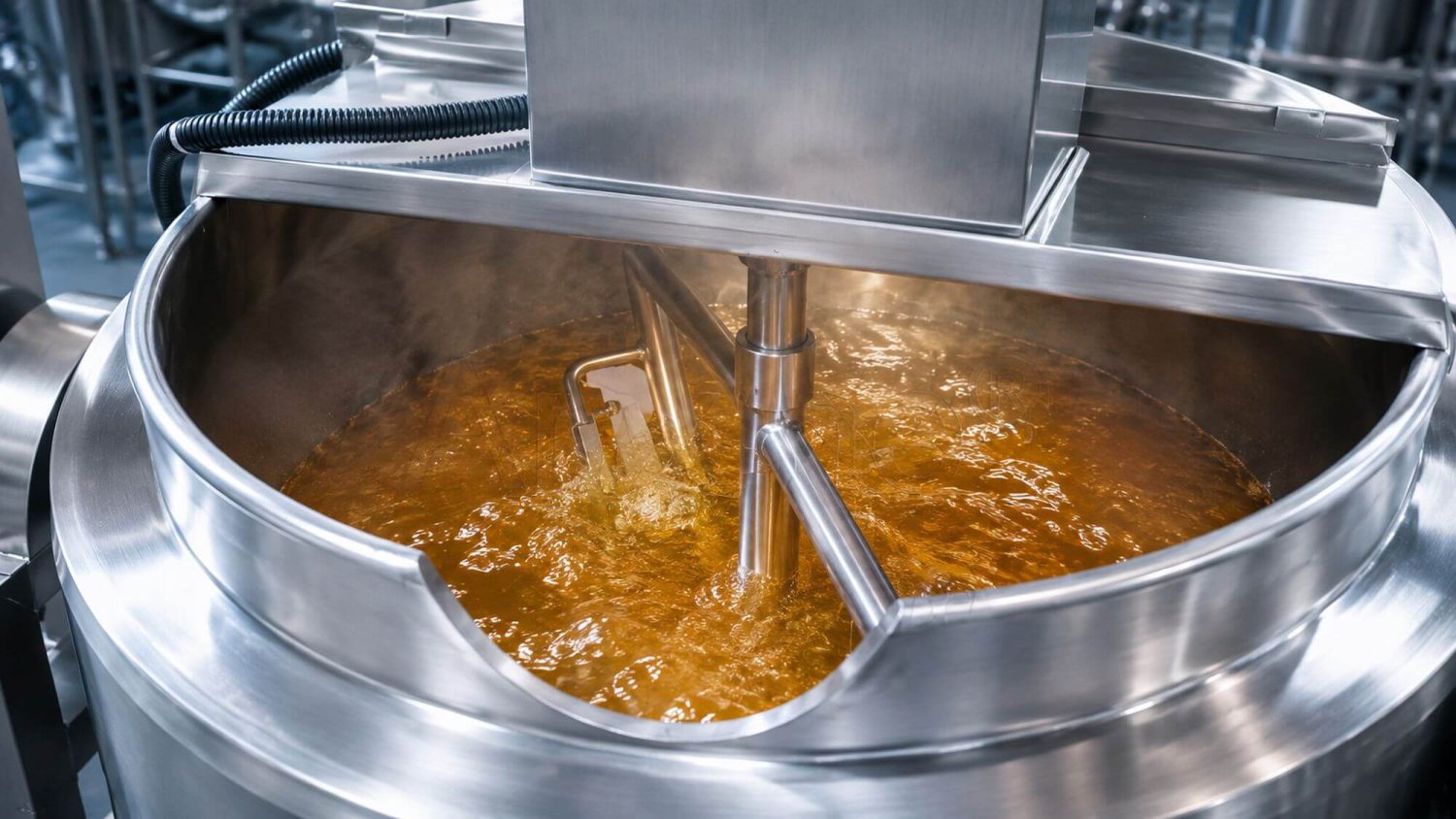
The goal is not just to hit a certain temperature. The cooked gummy mass also needs to reach the intended solids level and still be suitable for the next step. If it contains too much water, the gummies may turn out softer or stickier. Too much heat can cause other problems, especially when you add heat-sensitive ingredients.
Step 3: Add Sensitive Ingredients at the Right Time
Sensitive ingredients need less heat exposure. So they’re often added after cooking. Once the gummy mass is ready, you can add flavors, colors, acids, or heat-sensitive actives in a blending tank or dose them inline before depositing.
The timing depends on the formulation. Vitamins and botanical ingredients may lose stability if they stay hot for too long. In pectin gummies, acid is usually added later because once it goes in, the gummy mass can start setting more quickly.
Step 4: Deposit the Gummy Mass
While the cooked gummy mass can still flow well, you can move it to depositing. The gummy depositor delivers a set amount into each mold cavity. At this point, the mass condition is just as important as the depositor itself. If it becomes too thick, the molds may not fill evenly. That can lead to weight differences or poorly shaped gummies.
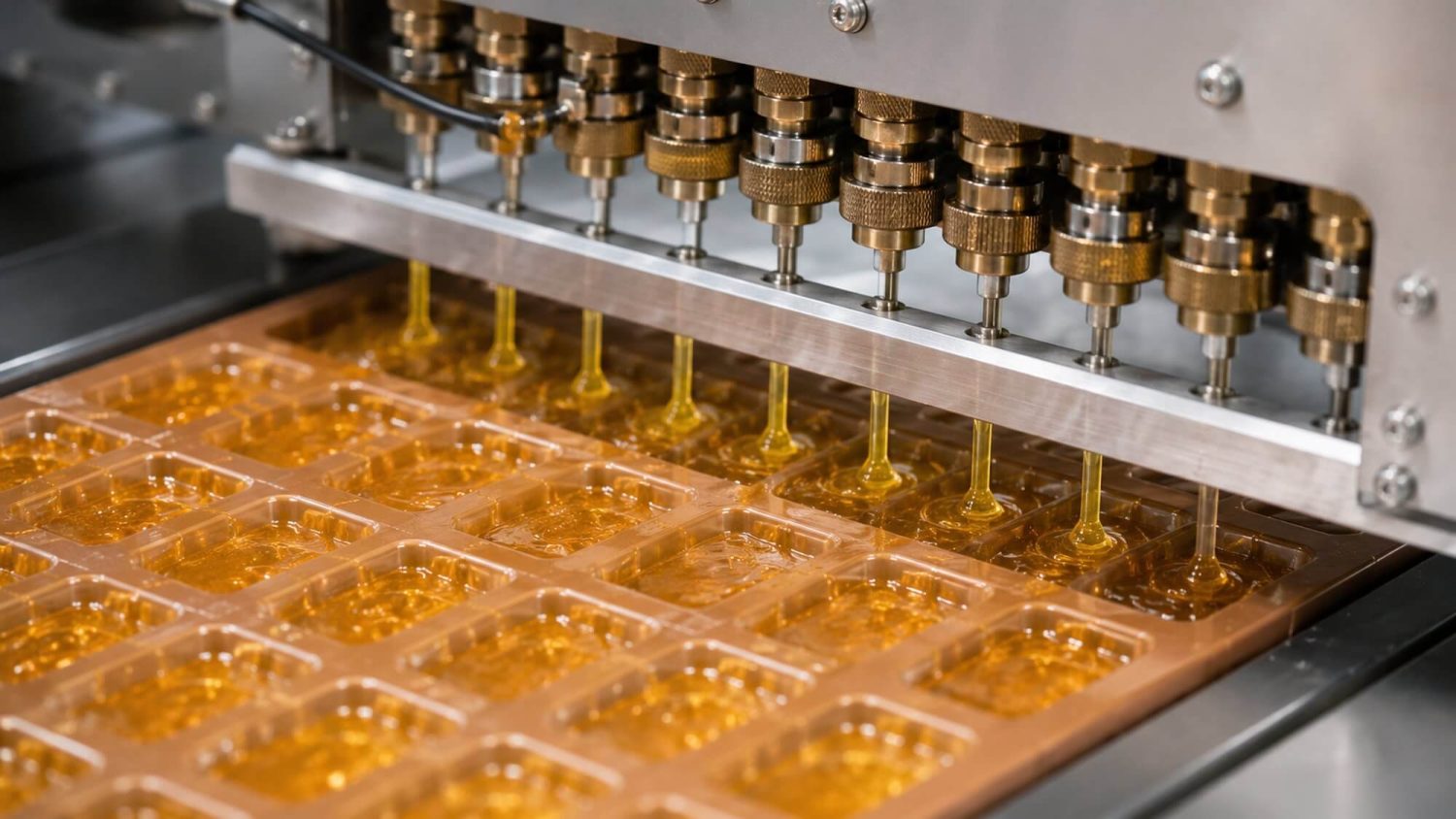
Commercial gummy manufacturing often uses starch molds or reusable starchless molds to deposit the mass. Both can shape the gummies into individual pieces, but the way the gummies set and release from the molds differs.
Step 5: Let the Gummies Set Under Controlled Conditions
At this stage, the gummies stay in the molds until they set and reach the right texture. It is not just about cooling them down. Temperature, humidity, holding time, and moisture loss can all change the final result.
The setting conditions depend on the gelling system. Gelatin gummies usually set when they cool. Pectin gummies work a little differently. The setting process depends more on soluble solids and pH. In many pectin formulas, the mass can start setting soon after the acid is added. That is why pectin gummies usually have a shorter depositing window.
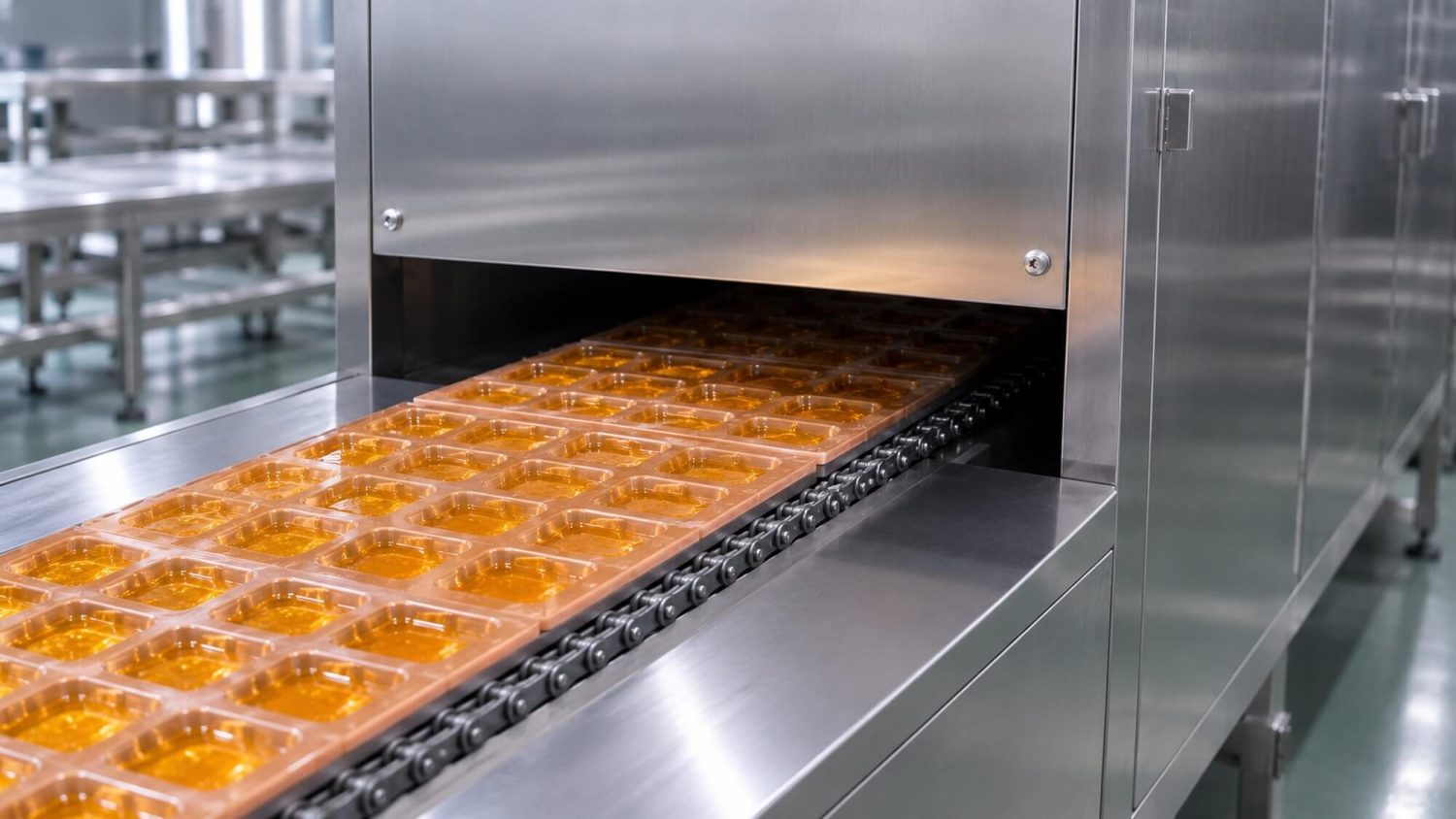
The molding method also changes how setting works. In traditional starch molding, gummies set and lose moisture in the starch trays. Some starchless formulations set much faster, so they may need little or no extra drying.
Step 6: Remove the Gummies from the Molds
In starch molding, gummies are separated from the molding starch after they set. Any starch left on the surface then needs to be removed. If you’re using starchless molds, the gummies can be released directly from the mold cavities by a demolder. There is usually no starch cleanup step.
Clean demolding depends on whether the gummies have set properly beforehand. If they are still too soft, they may stretch, deform, or lose their shape when they come out of the molds. A sticky surface can also make the gummies harder to release cleanly.
Demolding is not about taking the gummies out of the molds. It shows whether they have developed enough structure for the following steps.
Step 7: Condition the Gummies to the Required State
After demolding, many commercial gummies still need additional conditioning. They are usually held in a room with controlled temperature and humidity for several hours or even days. This gives the gummies enough time to fully set.
During conditioning, the gummies may continue to lose moisture. The water left inside spreads more evenly through each piece. This helps lock in the chewy texture and makes the gummies easier to handle. How long this takes depends on the formula and molding method. That is why one fixed drying time may not be the focus of commercial production at this stage.
Step 8: Finish the Gummy Surface
Next, some gummies may move to an extra finishing step. They’re coated with a light oil to reduce sticking and give the surface a smoother look. Other products are sanded with sugar or citric acid to add a sweet or sour hit upon the first bite.
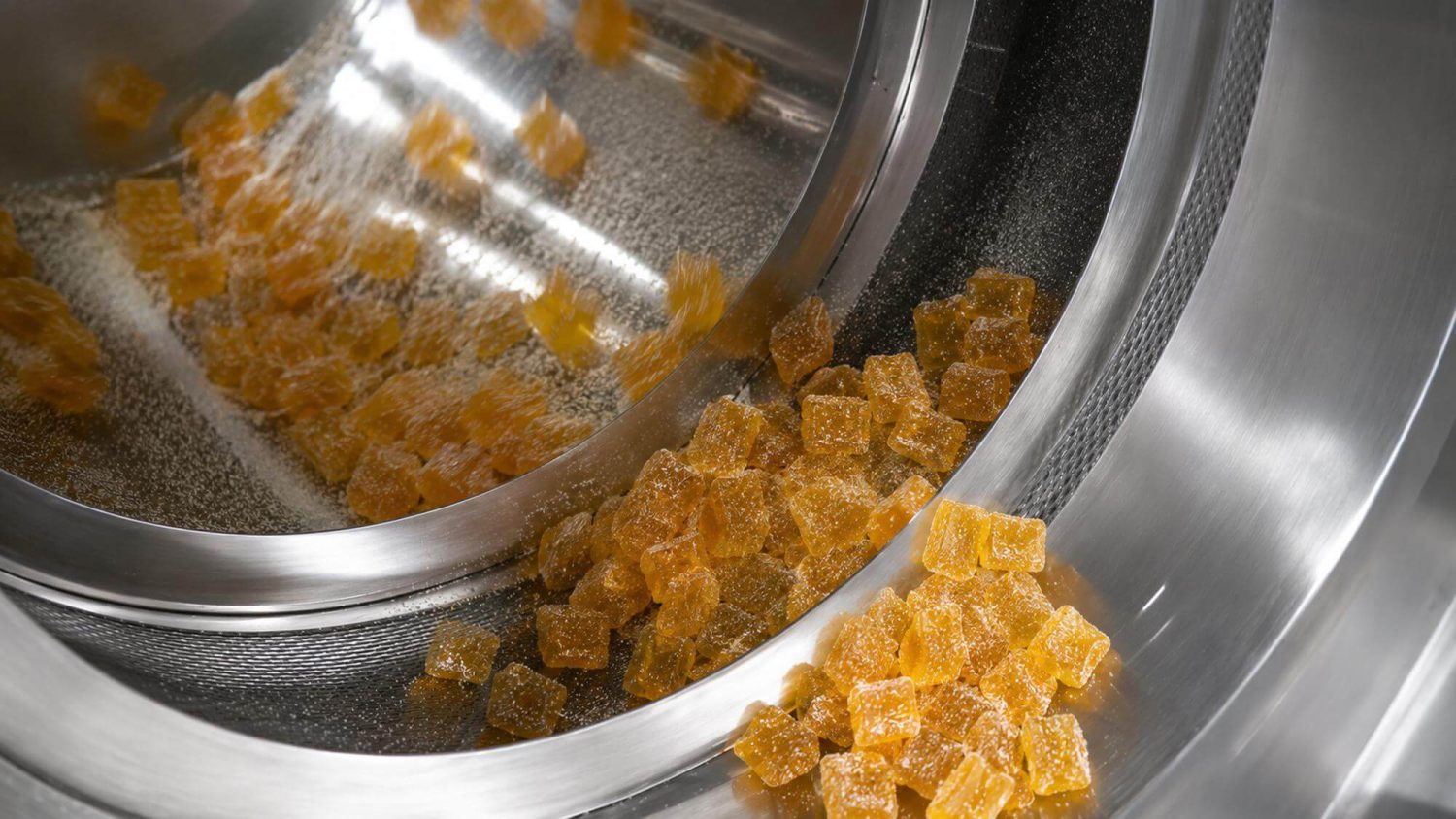
Surface coating should not be used to cover up a gummy that is already too sticky. If the stickiness comes from too much moisture or the wrong formula, adding more oil or sugar will not fix the real issue.
The right finish depends on the product. Some gummies need only a light surface treatment, while others may need no extra coating before conditioning.
How the Gelling System Changes the Process
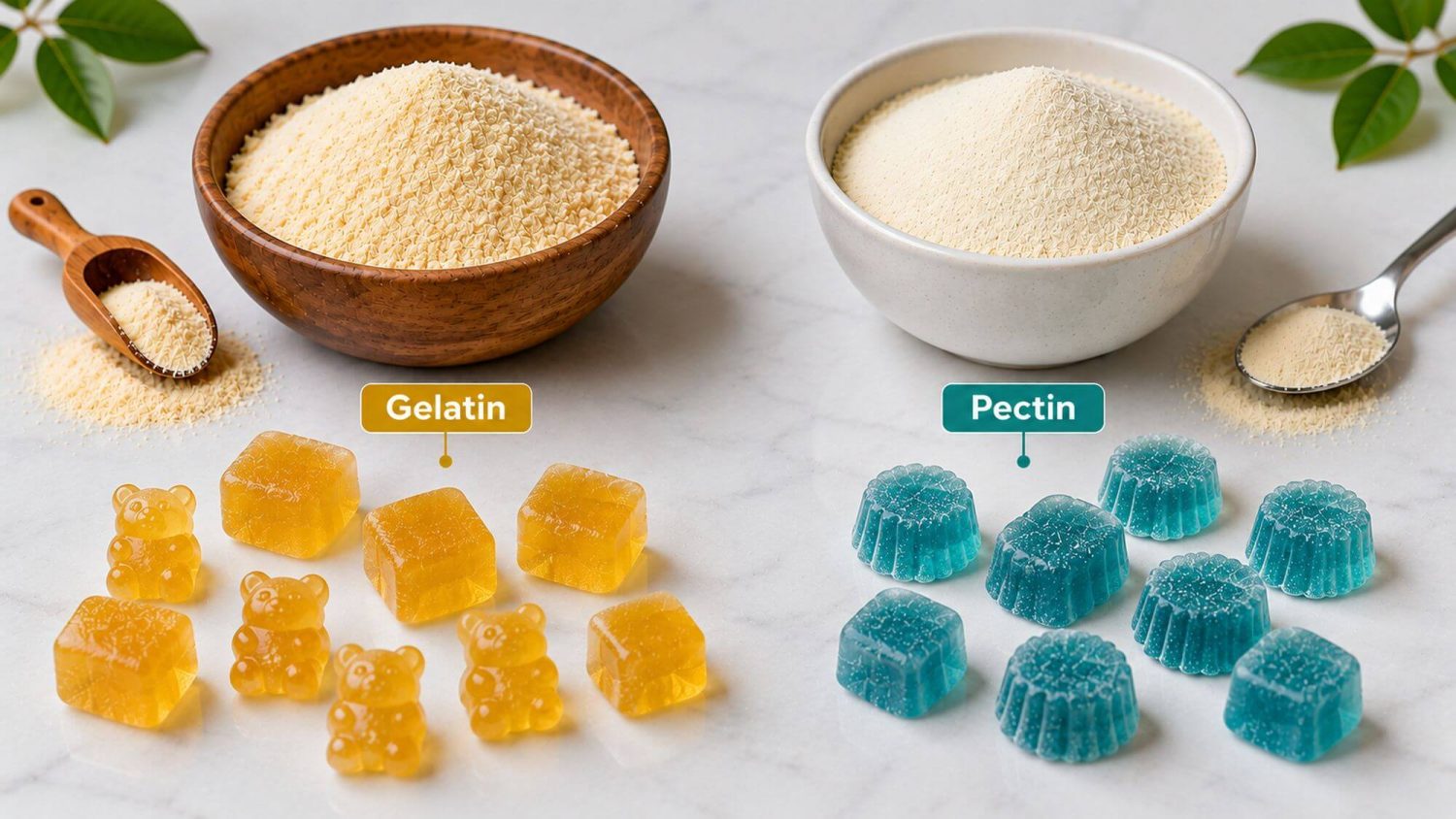
Gelatin and pectin are two of the most common gelling agents used in gummies. The choice affects more than the final texture. It also changes how the gummy mass needs to be prepared, cooked, deposited, and set during production.
What Changes When Gelatin Is Used
Gelatin needs enough time to hydrate before it can form a consistent gel. During production, the gummy mass is kept warm so it stays fluid enough to process. As it cools, the gelatin starts to set and gives the gummy its chewy texture.
Gelatin has a fairly clear response to temperature, but the process time can still vary a lot. Traditional starch-molded gummies may need a longer setting and drying period. Newer fast-setting gelatin formulas can set much faster and may work well with shorter starchless processes.
Why Pectin Needs a Tighter Processing Window
Many pectin gummy formulas become less forgiving when the final pH and solids conditions are reached. After the acid goes in, the gummy mass may begin to thicken quickly.
This means the time between final mixing and depositing needs tighter control. If the pectin mass starts gelling inside the depositor, the nozzles may partially clog. The fill weights can also become uneven.
The type of pectin also matters, so there is no single processing condition that works for every pectin gummy. You also cannot turn a gelatin formula into a pectin formula by simply swapping the gelling agent and leaving the rest of the process the same.
Gummy Manufacturing Process Controls That Matter Most
Commercial gummy production needs each batch to behave in a similar way. A few key measurements are especially useful. They show whether the gummy mass has reached the right condition for the next stage.
Cooking Temperature Is Only Part of the Picture
Reaching the target temperature does not always mean the gummy mass is fully cooked. You also need to check whether it has the right concentration.
°Brix gives a quick way to check the soluble solids and see whether enough water has been cooked out. The gummy mass should also not stay hot for longer than necessary, especially when the formula contains heat-sensitive ingredients.
USDA also notes that sugars, acids, pectin, minerals, and other dissolved ingredients can affect the °Brix reading. So one °Brix value cannot be used as a universal target for every gummy formula. It needs to be interpreted together with the recipe, cooking temperature, and the final solids level you want to reach.
pH Needs to Match the Gelling System
pH is an important process control because it can change how the gummy mass sets.
For high-methoxyl pectin, Cargill notes that gel formation usually needs more than 60% soluble solids and a pH of about 2.8-3.5. Once acid brings the gummy mass into this range, gelation can speed up and leave less time for depositing.
Gelatin sets mainly as it cools, so pH does not control the depositing window in the same way as pectin. But research shows food acids in the formula can still change gelatin gel strength and gelling behavior.
So the right pH depends on the gelling system and the formula you are using.
Viscosity Shows Whether the Mass Is Still Depositable
Viscosity matters because it tells you how easily the gummy mass can move through the depositor. If the mass gets too thick, it may flow more slowly and the molds may not fill evenly. That can lead to weight differences or incomplete gummies. If the mass sets too early, nozzles can block.
The right viscosity depends on the formula and temperature. Trials help you find the viscosity range that works best for clean depositing. If you’re working on an automatic line, sensors can help monitor it. Experienced operators can also spot when the gummy mass looks too thick or too thin by watching how it flows.
Moisture Loss and Water Activity Need Separate Checks
During conditioning, moisture content helps show how much water the gummies have lost. It also gives you a good idea of whether the texture is getting close to the final target. It is commonly measured by drying a gummy sample and calculating the weight loss.
Water activity (aw) tells you how much water in the gummy is still available for microorganisms to use. In general, a lower aw makes it harder for microbes to grow, which helps improve shelf stability.
Research on gummy candies also shows that aw depends on the sugar profile and other ingredients that bind water. So two gummies can have similar moisture content but still end up with different aw values.
Why a Lab Gummy Formula May Change at Production Scale
A gummy formula that works well in a small test batch may not give the same result after scale-up. The ingredients can stay the same, but larger batches may change how heat, moisture, ingredients, and the gummy mass move through the process. Commercial gummy making machines need to control these variables consistently across every stage of the production process.
| What changes | Small lab batch | Commercial production |
|---|---|---|
| Heating and cooling | A small batch usually heats and cools more evenly. | A larger batch can have bigger temperature differences from one area to another. |
| Moisture removal | It is easier to see how much water is being cooked off and make small adjustments. | Evaporation changes with batch size, cooking time, and equipment, so the same recipe may not reach the same final solids in the same way. |
| Mixing | Ingredients can be mixed quite quickly. | It may take longer to spread ingredients evenly through a larger mass, especially for low-dose ingredients. |
| Post-cook additions | Acids, flavors, colors, or actives can usually be mixed in quickly. | Late-added ingredients need to spread evenly before the gummy mass starts to thicken. |
| Flow before depositing | The gummy mass is usually handled soon after cooking. | Transfer and holding time can cool the mass and make it thicker before it reaches the depositor. |
| Depositing | A small batch can be poured into molds quickly. | Commercial depositing needs stable flow so each gummy gets the right amount. |
| Setting and conditioning | A small number of gummies are relatively easy to manage. | Large numbers of gummies need more consistent cooling, holding, and conditioning conditions from batch to batch. |
5 Common Gummy Manufacturing Problems and Quick Fixes
1. Gummies do not set properly.
The problem may come from the formula or an earlier process step. The gelling agent may not have been prepared properly. The gummy mass may have missed the right solids level or pH.
Quick fix: For pectin gummies, verify °Brix and pH first. Then adjust the cooking endpoint or acid dosing. For gelatin gummies, check gelatin hydration and the cooling conditions.
2. The Mass thickens before depositing is finished.
This usually means the gummy mass is cooling too much or starting to set too early. With pectin, the acid may be added too soon.
Quick fix: Check that heated lines or insulation are working properly. Keep the gummy mass at the right temperature. Reduce unnecessary holding time. If pectin sets too soon, review when you add the acid.
3. Gummies stay sticky after conditioning.
Gummies may still contain too much moisture. The conditioning time may be too short. This can also happen when the conditioning room is too humid. The formula’s sugar balance may be off.
Quick fix: Check the formula’s moisture content and water activity. Check whether the conditioning room humidity is correct. If the room conditions are correct, extend the conditioning time.
4. Gummies become too hard.
Overcooking or losing too much water during conditioning can make gummies firmer. They may also harden if the conditioning room is too dry.
Quick fix: Check the final °Brix and the conditioning endpoint. Shorten the conditioning time or adjust the room humidity.
5. Piece weight or active content is uneven.
The gummy mass may not flow smoothly, so some molds receive uneven filling. Poor mixing may also affect the active-ingredient dose in each functional gummy.
Quick fix: Check the gummy mass viscosity and depositing consistency. Fix any flow or mixing problems first.
Key Takeaways
- The commercial gummy manufacturing process involves more than cooking and molding. Each step needs to bring the gummy mass into the right condition for what comes next.
- Gelatin and pectin need different processing conditions, especially during the stages of depositing and setting.
- Cooking also cannot be judged by temperature alone. °Brix, pH, viscosity, moisture content, and water activity also help keep the process under control.
- A formula that works in a small batch may behave differently in commercial production. Because heating, mixing, flow, and moisture removal may change.
- Many gummy problems can be traced back to the formula or to what happened during cooking, depositing, or conditioning.
References
- U.S. Department of Agriculture, Agricultural Marketing Service. Technical Procedures Manual. May 2025.
- Cargill. Pectin: Creating a Yummy Gummy.
- Zhou, Q., et al. Effects of Acidulants on the Rheological Properties of Gelatin Extracted from the Skin of Tilapia (Oreochromis mossambicus). Foods, 2022, 11(18), 2812.
- Vojvodić Cebin, A., Bunić, M., Mandura Jarić, A., Šeremet, D., & Komes, D. Physicochemical and Sensory Stability Evaluation of Gummy Candies Fortified with Mountain Germander Extract and Prebiotics. Polymers, 2024, 16(2), 259.


