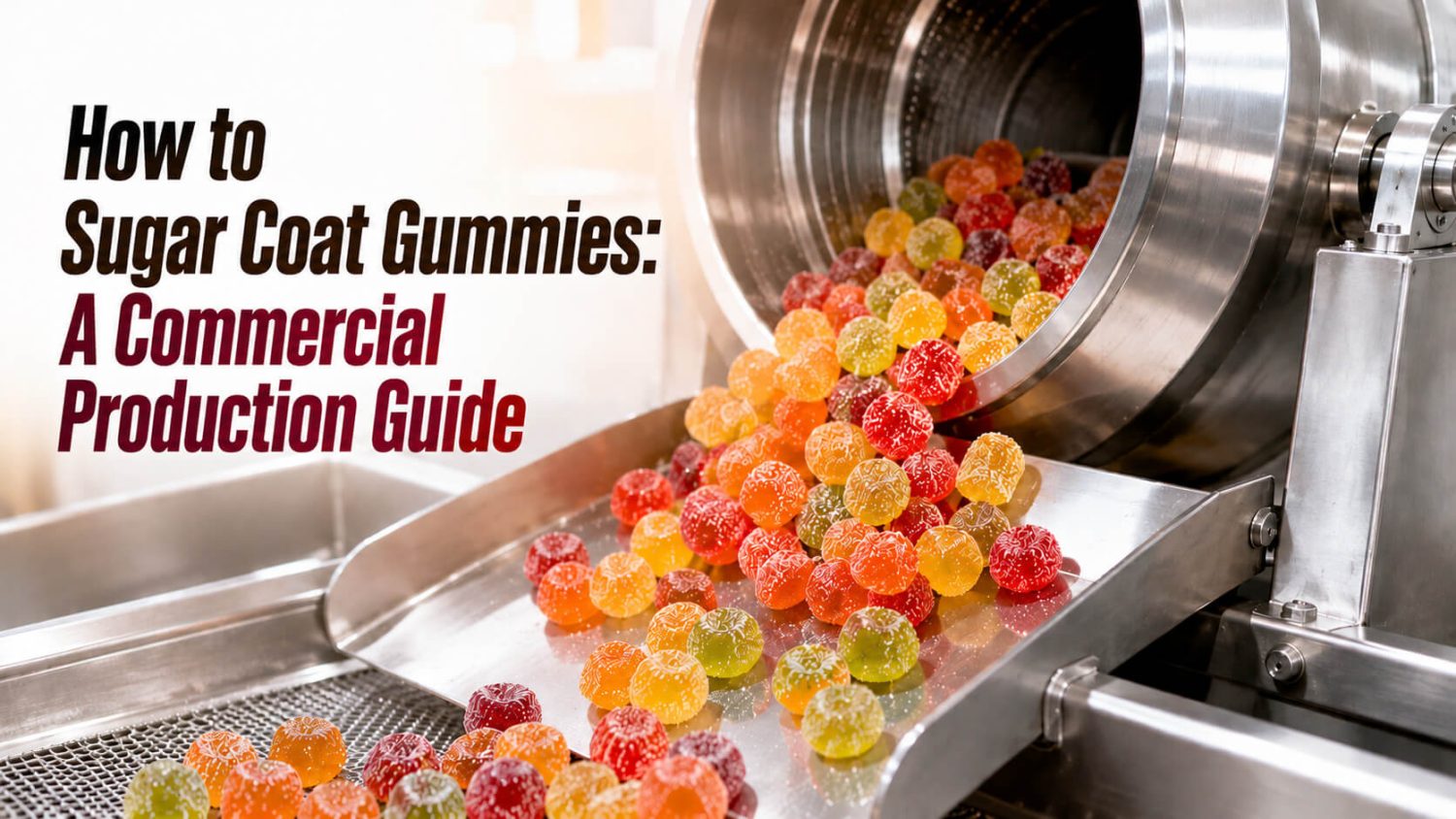
Gummies are always popular among adults and children. To improve taste, texture, appearance, and surface handling, they are usually coated with sweet, sour, or other flavored coatings. Gummies can have different types of coatings based on the product. The most common is sugar coating, which adds sweetness and texture. If you are interested in sugar coating gummies, a clear understanding is necessary.
What Is Sugar Coating or Sugar Sanding?
Sugar coating, in the context of gummies, is the process of applying a layer of sugar crystals to the surface of the product. For gummies and other confectionery products, this process is often called sugar sanding or sugar tumbling. During processing, the gummies tumble in a rotating drum while granulated sugar is added. The sugar crystals come into contact with all sides of the product and form a fairly even surface layer. Sugar sanding is different from sugar panning, which is used to build a hard sugar shell. It leaves a visible crystalline surface, not a continuous hard film. Depending on the formula and target product, manufacturers can use a sweet sugar coating on its own, or combine sugar with food acids to create a sour coating.
To avoid confusion, the terms below are explained as they are used in this article.
- Sugar coating: A general term for adding a sugar-based coating to the surface of gummies. In gummy production, it usually means coating the surface with dry sugar crystals. In other industries or contexts, it may also refer to syrup coating or a hard sugar shell.
- Sugar sanding: The process of coating gummies with dry sugar granules. It creates a visible layer of sugar crystals on the surface, not a hard candy shell.
- Sugar tumbling: A common method used for sugar sanding. The gummies tumble in a rotating drum while granulated sugar is added, so the sugar coats the surface evenly.
- Sugar panning: A process that builds a hard or smooth sugar shell by repeatedly adding syrup, drying, and polishing. It is different from sugar sanding.
For clarity, “sugar coating” and “sugar sanding” in this article both refer to coating the surface of gummies with dry granulated sugar or sugar crystals. They do not refer to syrup coating or a hard sugar shell.
Benefits of Sugar Sanding
Sugar sanding is not an unnecessary step. It serves several purposes.
- Adds Flavor
- The sugar sanding gives gummies a more immediate sweetness on the surface. Even when the gummy candy with sugar coating is just held in the mouth, the sweetness from the outer sugar crystals comes through first. Food acids can also be added to the sugar layer to make sour gummies and give the product a wider flavor profile.
- Adds Texture
- Sugar crystals add a light crunch and fine graininess to the surface of the gummy. This contrasts with the gummy’s soft, springy chew and gives the overall texture more depth.
- Improves Visual Appeal
- An even layer of sugar crystals coats the gummy surface and gives it a fine sugared texture. Under light, the crystals have a subtle sparkle, making the gummies look cleaner, fresher, and more appetizing.
- Reduces Surface Sticking
- A dry, granular sugar layer separates the gummy surfaces and reduces direct contact between pieces. This is a common way to help reduce sticking in gummies.
When Are Gummies Ready for Sugar Coating?
The quality of sugar sanding does not depend only on the coating equipment or the sugar itself. Before gummies enter the sanding step, they need to be in the right condition for sugar crystals to stick: fully set, clean on the surface, at a moderate temperature, and slightly tacky but not wet. If the gummies are too soft, too wet, too dry, or too hot, or if too much starch or oil film remains on the surface, the sugar may coat unevenly, fall off, clump, or cause sticking later on.
1. Gummies Should Be Properly Set
Before sugar sanding, gummies should be mostly gelled and firm enough to handle tumbling in a coating drum, as well as movement on a vibrating conveyor. If the gummies are too soft or have not set well enough, you may see issues such as:
- Misshapen gummies
- Surface damage
- Gummies sticking together
- Uneven sugar coverage
2. Avoid Excess Residue on the Gummy Surface
Different forming methods can leave different types of residues on the gummy surface. For starch-molded gummies, avoid leaving too much starch on the surface after demolding. For deposited gummies, check for excess mold release oil or surface moisture before sugar sanding.
3. The Gummy Surface Should Be Slightly Tacky, but Not Wet
If the gummy surface is too dry, sugar crystals may not stick well. This can lead to poor sugar coverage or cause the crystals to fall off during shipping. If the surface is too wet, the sugar crystals may dissolve. This can cause the sanding sugar to clump or the gummies to stick together. Another article of ours explains in more detail why gummies stick together and how to stop gummy from sticking together.
Which Sugar Is Best for Coating Gummies?
Fine sugar is the most common choice for sugar sanding gummies, but other types of sugar or sugar-based blends can also be used depending on the desired texture, flavor, and visual effect.
| Sanding Material | Effect | What to Watch For |
|---|---|---|
| Standard white granulated sugar | The most common option; creates a classic sugar coating | Crystal size affects the texture and appearance |
| Coarse white sugar | Gives the surface a more visible, sparkly crystal look | Best for gummies where you want the sugar crystals to stand out |
| Fine granulated sugar | Creates a finer, more even surface | May dissolve more easily if the gummy surface is too wet |
| Sugar-acid blend | Creates a sweet-and-sour coating | Moisture needs to be well controlled |
| Powdered sugar | Gives a different mouthfeel; reduce surface stickiness; no clearly visible sugar-crystal texture. | Not ideal for products that need a pronounced sugar-crystal texture. |
How to Sugar Coat Gummies in Commercial Production
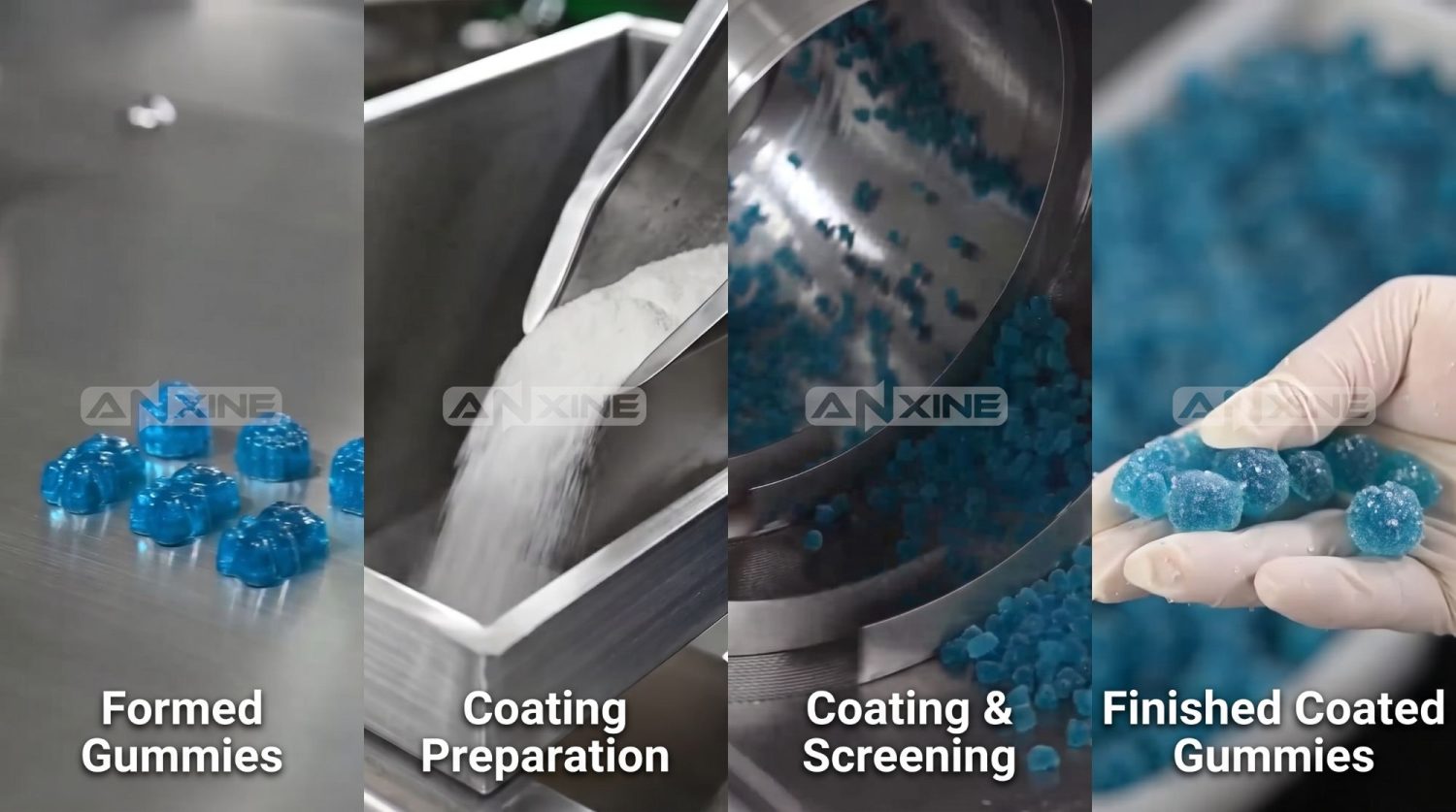
The gummy sugar-coating process can vary from one manufacturer to another, but the basic workflow is generally similar. It can usually be divided into the following seven steps.
Step 1: Gummy Setting and Inspection
First, make sure the gummies have completed the required resting, drying, or curing process after demolding, and that they are ready for sugar coating. Any gummies that are broken, badly misshapen, or heavily stuck together should be removed, as they can affect the evenness of the coating in the next step.
Step 2: Prepare the Coating Material
The coating material should meet the following requirements:
- Dry
- Good flowability
- Uniform particle size
- Aligned with the target flavor and texture
The final formula should be set through product development and stability testing, rather than relying only on a generic formula.
Step 3: Create the Right Surface Tackiness
Some gummies are naturally tacky enough for sugar coating and can be coated directly. Others may need syrup, a water-based binder, or another method to help the sugar crystals stick to the surface. The right amount and application method should also be determined through testing.
Step 4: Add Sugar While the Gummies Are Tumbling
After the gummies enter a rotating coating pan, drum, or continuous sugar-sprinkling system, the equipment starts to turn. The coating material is then added gradually, so the gummies can be evenly covered with sugar crystals as they tumble.
Key factors that affect the coating result include:
- Gummy feed rate
- Coating material feed rate
- Drum or coating pan speed
- Batch load
- Other related settings
These settings should also be tested and adjusted based on the actual coating results for the product.
Step 5: Remove Excess Coating Material
During sugar coating, slightly more sugar is usually added than the amount needed to adhere to the gummies. This helps create an even coating, but it also leaves some excess sugar crystals. These excess sugar crystals should be separated promptly. If they remain in the equipment, they can build up and affect coating uniformity. In drum-type coating equipment, excess sugar is usually removed through screens, collection troughs, or similar devices. If the separated sugar is clean, dry, and in good condition, it can be reused after passing quality checks. If it has absorbed moisture, formed lumps, or become contaminated, it should be discarded.
Step 6: Set the Sugar Coating
After sugar coating, gummies need a short setting period before packaging. This may involve resting, airflow, cooling, or light drying, depending on the product formula and process requirements. This step helps the sugar crystals adhere more firmly to the gummy surface. It also reduces the risk of sugar loss, sticking, and clumping during packaging and transport. The minimum setting time should also be confirmed through actual testing.
Step 7: Pre-Packaging Inspection
Before final packaging, check the condition of the finished gummies. Key points include whether the sugar coating is even, whether there is visible clumping, whether the coating is too loose, and whether any gummies are damaged or cracked.
What Equipment Do You Need for Gummy Production and Sugar Coating?
There is a series of gummy-making machines used for production and coating. Some key equipment includes:
Melting Pot
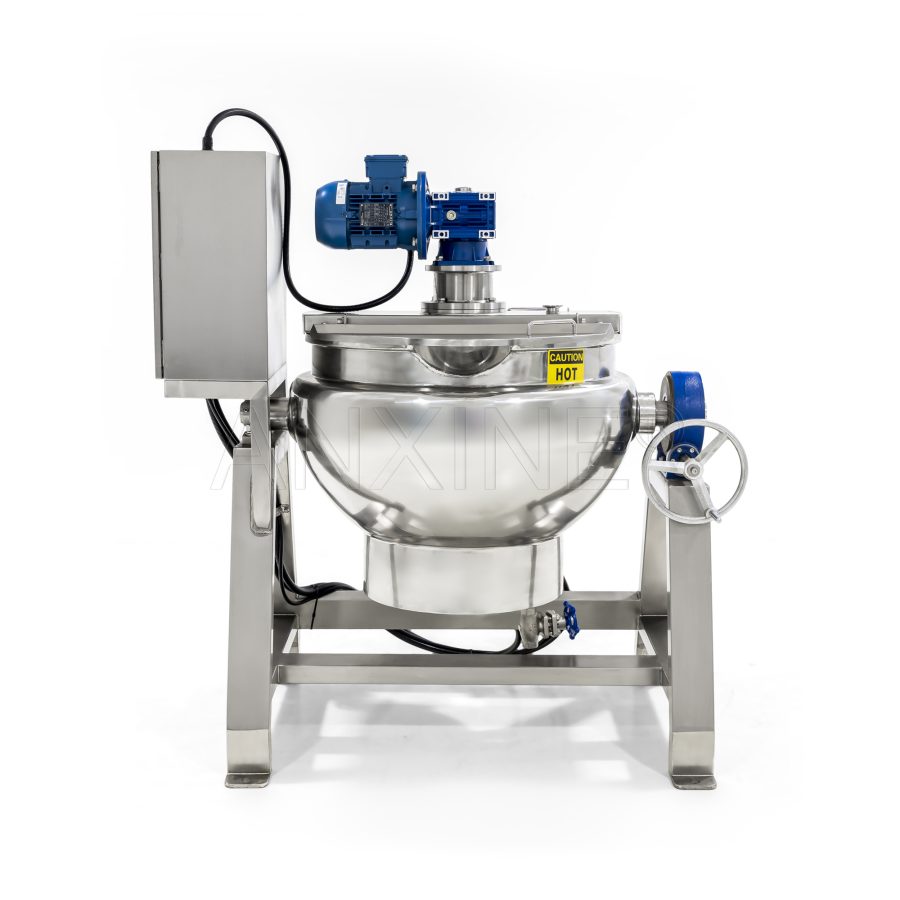
A melting pot is an important part of gummy candy manufacturing equipment. It is used for heating and melting raw ingredients such as sugar and glucose syrup. Gentle heating in the pot turns these ingredients into a smooth liquid base. This can later be shaped into gummies or candies. This device supports temperature control. A mixing system inside the pot also helps blend flavors, colors, and other additives evenly.
Depositor
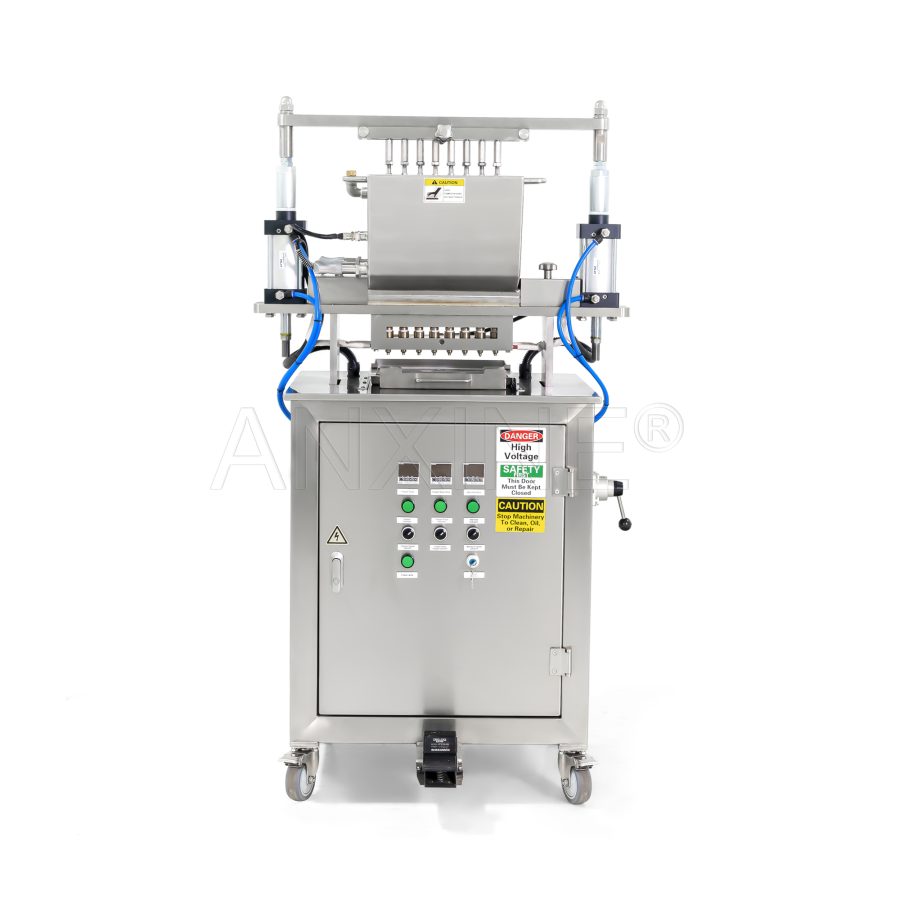
A depositor could fill liquid gummy or candy mixture into molds. It uses nozzles to release the right amount of syrup into each mold cavity. You can adjust the setting to control filling speed. Accurate depositing ensures that every gummy has the same weight and form.
Demolding machine
This removes finished gummies from their molds after cooling. Smooth operation prevents sticking, tearing, or breaking. Many gummy manufacturers use an automatic demolding machine. It reduces waste and improves efficiency.
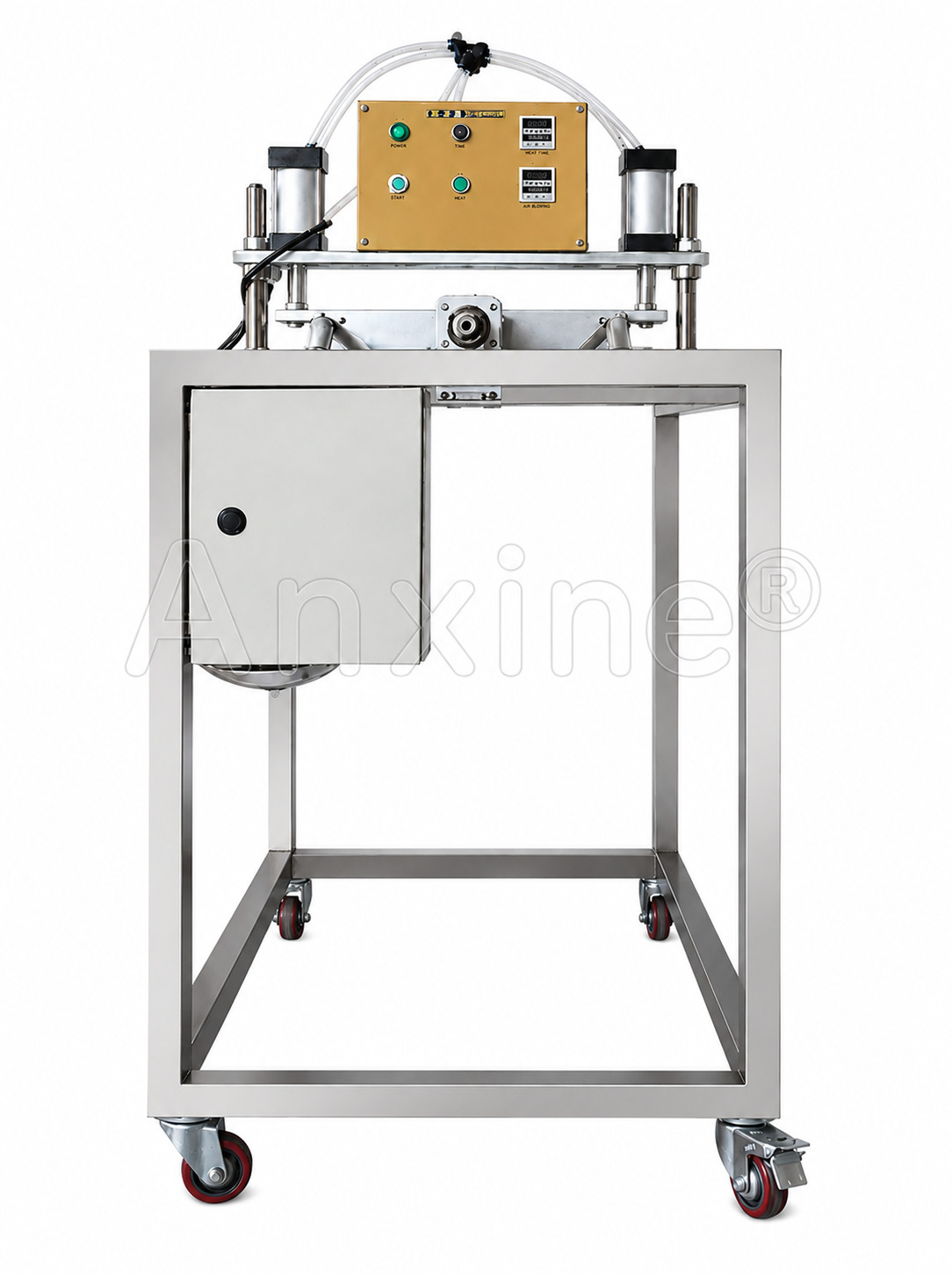
Coating pan
A coating pan has a round and tilted shape that keeps gummies moving while it rotates. Constant tumbling allows sugar and binder to reach all sides evenly. An adjustable speed system controls how fast the gummies move.
Automatic Gummy Depositing and Coating Line
Together, this gummy production line covers the core steps in gummy production and post-processing, including ingredient melting, accurate depositing, cooling and forming, demolding, and later sugar sanding or oil coating. In commercial production, many gummy equipment suppliers combine these core steps into one continuous line to increase automation. For example, the fully automatic servo gummy depositor shown in the video below can run the process continuously—from depositing the gummy mass to cooling and forming, demolding, and sugar coating.
Five Common Sugar-Coating Problems and How to Solve Them
When you conduct sugar coating, it is possible to meet many troubles. Here are some common problems for your reference. After you know how to handle them, production efficiency could be greatly improved.
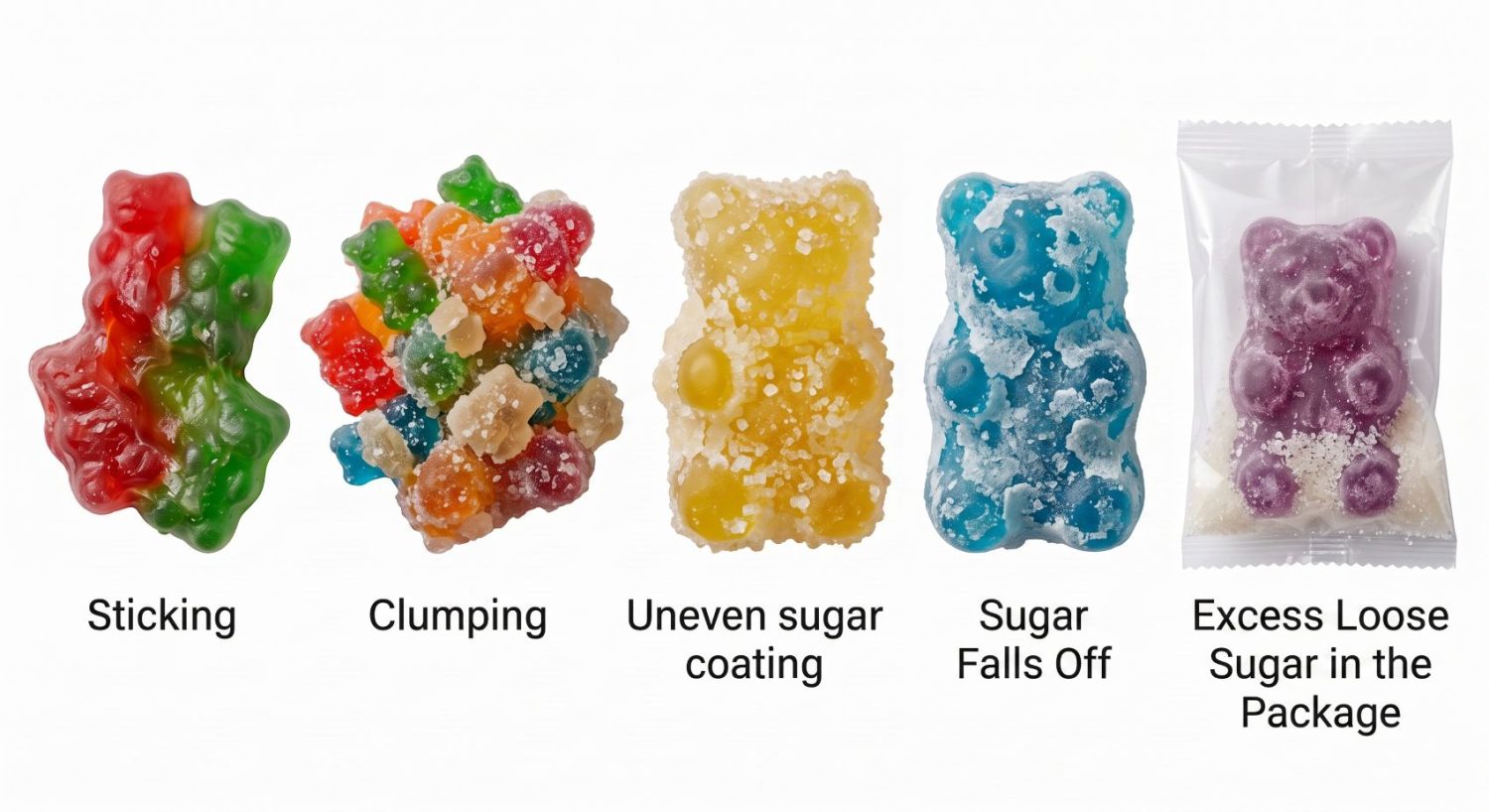
Gummies Sticking Together During Sugar Coating
One common problem during sugar coating is that gummies stick together. This is because the gummies are too wet or the sugar layer has not dried properly. When sticking, they create clumps that are hard to separate and may ruin the batch. To avoid this, gummies should be properly set and conditioned before coating. The surface should not be wet. It should have controlled tack, or use a validated binder system, so the sugar can adhere evenly.
Clumping Problems
This problem may occur if too much binder is used or if the sugar is damp. Clumps make the coating rough and uneven, and they can stick to the pan or other gummies. To prevent this, the binder should be sprayed lightly and evenly, not over-applied. Also, you need to keep the production area’s humidity low.
Uneven Sugar Coating
Sometimes, you may find some gummies have too much sugar while others have too little. This makes the final product look patchy and less appealing. It is usually because the pan rotation is too fast or too slow, or when sugar is added too quickly.
To solve it, you should control the pan speed to ensure smooth tumbling and add sugar gradually in small amounts. To keep the sugar coating consistent, adjust the gummy feed rate, sugar feed rate, binder level if used, drum speed, batch load, and removal of excess sugar based on production trial results.
Sugar Falls Off, Dissolves, or Looks Patchy
Sugar coating problems can have different causes. If the gummy surface is too dry or not tacky enough, the sugar layer will not stick well and may fall off easily. If the surface is too wet, or if too much binder is used, the sugar may dissolve or clump. The surface may also look patchy, with darker and lighter areas. If the surrounding humidity is too high, coated gummies may pick up moisture again. This can make them sticky, cause clumping, or affect their appearance. In production, trials should be run to fine-tune key factors: binder level, sugar particle size, resting time after coating, and moisture protection in the packaging.
Excess Loose Sugar in the Package
If too much loose sugar collects at the bottom of the bag after sugar coating, it is usually caused by too much sugar, sugar crystals that are too fine, not enough coating time, or packaging before the sugar layer has set. Before packaging, remove excess sugar by screening or gentle tumbling. Adjust the sugar application rate, sugar crystal size, and resting time to help the coating become more stable.
How to Choose a Commercial Gummy Sugar Coating Setup
When choosing gummy coating equipment, don’t look only at the specifications provided by the supplier. Start by understanding your own production needs. The equipment should match your existing line in terms of capacity, process requirements, and upstream and downstream steps. This helps keep production continuous and stable.
Here are the key factors to consider when choosing gummy coating equipment:
| Factor | Questions to Ask When Choosing Gummy Coating Equipment |
|---|---|
| Capacity needs | Can it keep up with the actual gummy output, so it doesn’t become a bottleneck in the line? |
| Gummy formula | Can it handle the different textures and surface properties of gelatin, pectin, and functional gummies? |
| Gummy size and shape | Can it run gummies of different sizes, thicknesses, shapes, and detail levels consistently? Do special shapes need a trial run? |
| Coating type | Does it support the required process, such as dry sugar, sour powder, oil, syrup, wax, or other liquid coatings? |
| Cleaning and changeover | Is it easy to remove residues such as sugar, sour powder, flavors, and colors? Is disassembly, cleaning, and changeover simple? |
| Line integration | Can it connect smoothly with cooking, depositing, cooling, demolding, drying, inspection, and packaging? |
No matter what equipment or manufacturing process is used, gummy candy manufacturers must take all reasonable steps to prevent contamination from any source during production. This is critical. Before building or setting up a production line, companies should first understand the regulations, industry standards, and compliance requirements that apply in the target market. This helps identify potential risks early and take steps to avoid them.
Using the U.S. market as an example, the following are selected official regulatory resources and FDA references for general reference only. Traditional gummy candies and gummy dietary supplements may be subject to different regulatory requirements. Manufacturers should verify the rules and requirements that apply to their specific product category.
- U.S. Food and Drug Administration (FDA). Investigations Operations Manual.
- U.S. Food and Drug Administration (FDA). Guidance & Regulation for Food and Dietary Supplements.
- Electronic Code of Federal Regulations (eCFR). 21 CFR Part 111—Current Good Manufacturing Practice in Manufacturing, Packaging, Labeling, or Holding Operations for Dietary Supplements.
- Electronic Code of Federal Regulations (eCFR). 21 CFR Part 117—Current Good Manufacturing Practice, Hazard Analysis, and Risk-Based Preventive Controls for Human Food.


