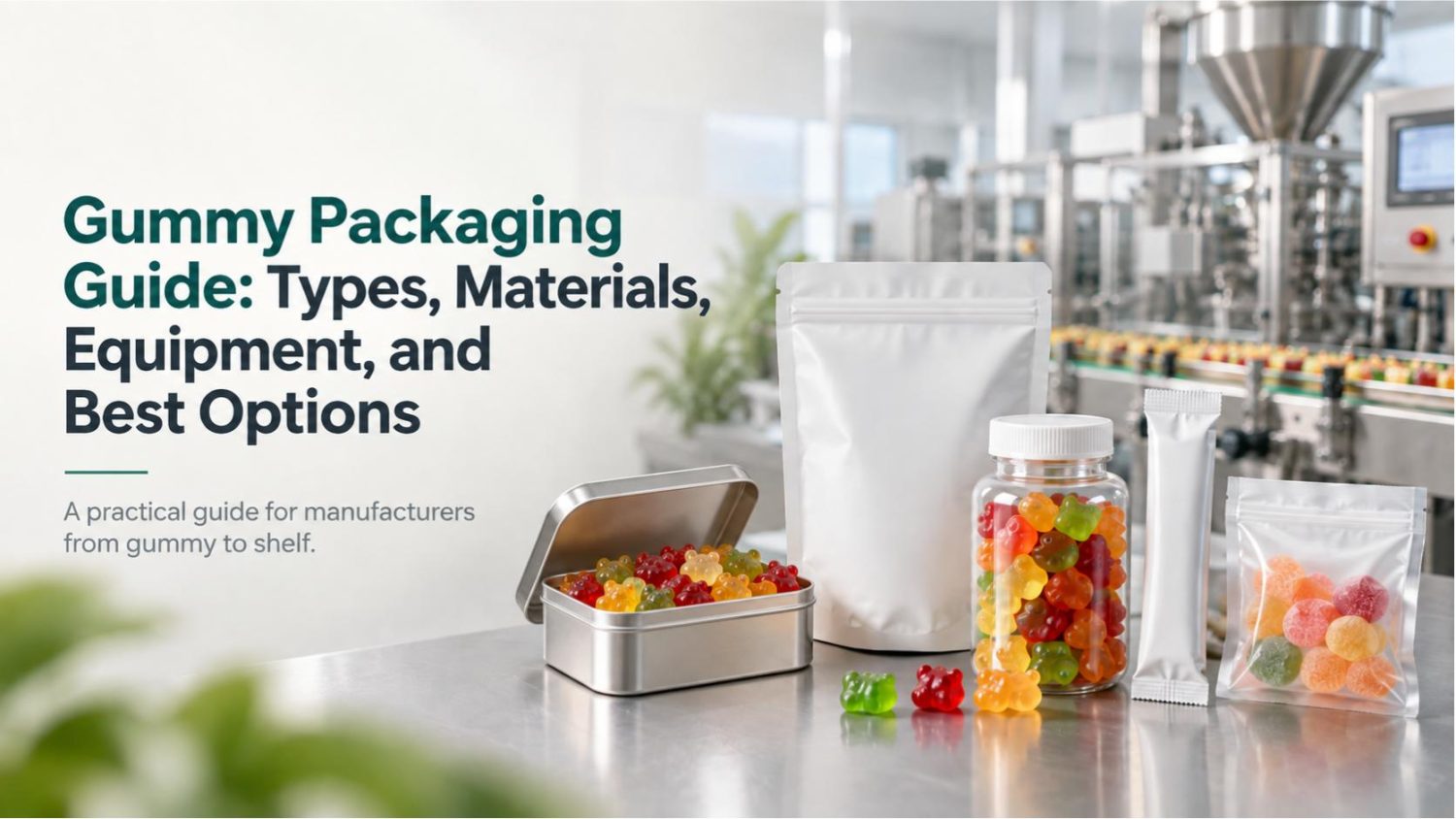
Gummy packaging does more than hold the product. It also needs to protect against moisture, oxygen, light, contamination, and crushing, while supporting production efficiency and equipment compatibility. Because every gummy product has different needs. This article will help you understand common package types, material choices, packaging requirements, and line setup so you can find a better fit for real production.
What Is the Best Packaging for Gummies?
There is no “best” packaging for gummies, only the most suitable one. Different gummies are produced for different purposes and target users, so they require different levels of product protection and user-friendly packaging design. In addition, the gummy packaging needs to keep costs under control and remain practical for real production. The best gummy packaging needs to balance all of those factors.
To find the right packaging for your gummy product, you need to know the different types of gummy packaging first. The table below gives you a quick comparison. Hope this helps with your decision.
Table 1. Common Primary Packaging for Gummies
| Comparison Dimension | Reference Image | Usage Pattern | Sealing | Portability | Shelf Display | Packaging Process |
|---|---|---|---|---|---|---|
| Stand-up Pouch | 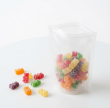 |
Multi-serve; repeated use | Film, heat seal, and zipper | Lightweight, fits in a bag | Large front panel | Filled by weight or count, then heat sealed |
| Sachet / Stick Pack | 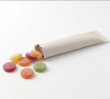 |
Single-serve or small portion | Individual heat seal | Very portable, pocket-friendly | Small display area, often with outer box or pouch | Dosed by portion, then heat sealed |
| Plastic Bottle |  |
Multi-serve | Cap, neck seal | Suitable for desk, bag, or car | Strong 3D presence, clear label space | Filled by count or weight, then capped |
| Glass Jar |  |
Multi-serve | Lid seal and rigid body | Less convenient for carrying | Product visibility and premium feel | Filled, then capped or lidded |
| Metal Tin | 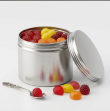 |
Multi-serve | Lid, with optional inner liner | Compact and easy to store | Full surface for branding | Filled, then lidded or sealed |
| Blister Pack | 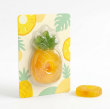 |
Individual pieces or portions | Each cavity sealed separately | Carried as a sheet or in units | Unit-based display, often with carton | Formed, filled, and sealed in-line |
So, what is the best packaging for gummies? You need to see whether it protects the product, is easy for consumers to use, and works well in production. When you weigh all of these factors together, the packaging you choose will be a better fit.
What Should Gummy Packaging Protect Against?
Gummies are mainly made with gelling agents, sweeteners, water, acidulants, flavors, and colors. Some functional gummies also include vitamins, minerals, or other nutrients to provide a specific texture, flavor, and function. To ensure the product meets quality standards throughout its shelf life, the packaging needs to address moisture barrier properties, oxygen barrier performance, light protection, protection against contamination, seal integrity, and food-contact safety and regulatory compliance. Below are the main requirements and purposes of gummies packaging.
Table 2. Gummy Packaging Requirements and Purposes
| Packaging Requirement | Main Purpose |
|---|---|
| Moisture barrier | Prevents moisture uptake, moisture loss, sticking, and texture changes |
| Oxygen barrier | Slows oxidation and some quality deterioration |
| Light protection | Reduces the effect of light on sensitive ingredients |
| Contamination protection | Protects against contamination from microorganisms, foreign matter, and dust |
| Seal integrity | Keeps the package sealed during storage and transport |
| Food-contact safety | Confirms that the packaging materials meet food-contact requirements |
Although gummy packaging serves a similar purpose, food gummies and dietary supplement gummies do not have the same packaging requirements. In the U.S. market, dietary supplements must meet the rules for supplement gummy packaging.
Packaging Protection for Food Gummies
For food gummies, packaging should be safe for food contact. It should also help protect the product during storage, transport, and retail display. In the U.S., packaging materials for food gummies may need to comply with FDA food-contact requirements. FDA defines food-contact substances as substances used in materials for manufacturing, packing, packaging, transporting, or holding food. This means that bottles, films, liners, closures, coatings, inks, and adhesives intended to contact food may need to be reviewed for food-contact compliance.
Food gummy packaging should mainly protect against:
- Harmful migration: Packaging materials should not create a risk of harmful substances leaching into the food.
- Contamination: Packaging should block microbes, dust, and other foreign matter.
- Moisture changes: When gummies absorb moisture, they can become sticky; if they lose moisture, they may harden.
- Oxygen and light: These can affect the quality of gummies.
- Physical damage and seal failure: Packaging should stay intact during normal shipping and handling, and remain sealed.
Relevant Regulations and Guidance
- FDA — Packaging & Food Contact Substances
- FDA / 21 CFR Part 117 — Current Good Manufacturing Practice, Hazard Analysis, and Risk-Based Preventive Controls for Human Food
Packaging Protection for Dietary Supplement Gummies
Dietary supplement gummies are, in simple terms, dietary supplements in gummy form. However, their formulations and regulatory requirements can differ from those of conventional food gummies, so packaging plays an important role in protecting the product and maintaining the quality of its active ingredients. Common products include vitamin, melatonin, probiotic, and mineral gummies.
In the United States, dietary supplement gummies are subject to FDA requirements, including the current good manufacturing practice (CGMP) requirements in 21 CFR Part 111. These requirements address areas such as manufacturing, packaging, labeling, and storage operations.
Compared with food gummies, dietary supplement gummy packaging may focus more on the following areas:
- Protection of active ingredients: Vitamins, probiotics, minerals, and herbal ingredients can be sensitive to moisture, oxygen, heat, and light.
- Potency throughout shelf life: The product should maintain its intended strength through the end of its shelf life.
- Strict label control: This helps prevent product mix-ups and labeling errors.
- Packaging material compatibility: Materials that contact the supplement should not react with it or affect its safety or quality.
Relevant Regulations and Guidance
- FDA / 21 CFR Part 111 — Current Good Manufacturing Practice in Manufacturing, Packaging, Labeling, Or Holding Operations for Dietary Supplements
Note: The information above is not a complete summary of applicable regulations and is for reference only.
Common Packaging Materials for Gummies
To choose the right packaging for your gummies, you also need to understand the materials commonly used for gummy products. The table below shows materials often used in four common types of gummy packaging, helping you choose the best packaging material for gummies.
| Packaging Type | Material / Structure | Suitable Applications |
|---|---|---|
| Plastic bottles | PET | Standard vitamin gummies; supplement gummies; candy gummies |
| HDPE | Supplement gummies sensitive to moisture or light | |
| PP | Caps; closures; jars; some rigid containers | |
| Flexible pouches | PET/PE | Standard gummy pouch packaging |
| BOPP/PE | Candy gummies; short- to medium-shelf-life products | |
| PET/Al/PE | Gummies requiring stronger moisture; oxygen; and light protection | |
| Other multilayer laminates | Customized gummy packaging applications | |
| Glass containers | Glass bottles / jars | Premium gummies; specialty supplement gummies; gift packaging |
| With PP / HDPE plastic closures | Reclosable glass bottle or jar packaging | |
| Blister packaging | PVC/PVdC | Single-dose gummies; specialty gummy formats |
| PVC/PCTFE | Moisture-sensitive gummies requiring individual protection | |
| Cold-form aluminum laminate; e.g. OPA/Al/PVC | Single-dose gummies requiring high protection | |
| Aluminum foil lidding | Lidding material for blister packs |
Please note that material type is not the only factor that determines packaging performance. For example, in flexible packaging, performance depends on the full laminate structure, material thickness, the heat-seal layer, the sealing method, and manufacturing quality.
How Are Gummies Packaged Commercially?
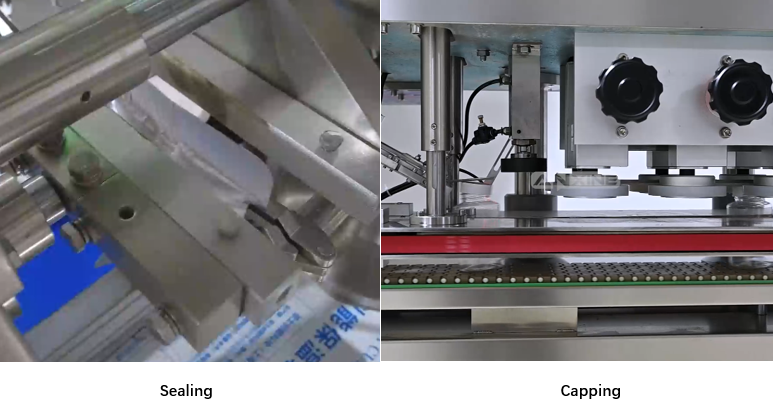
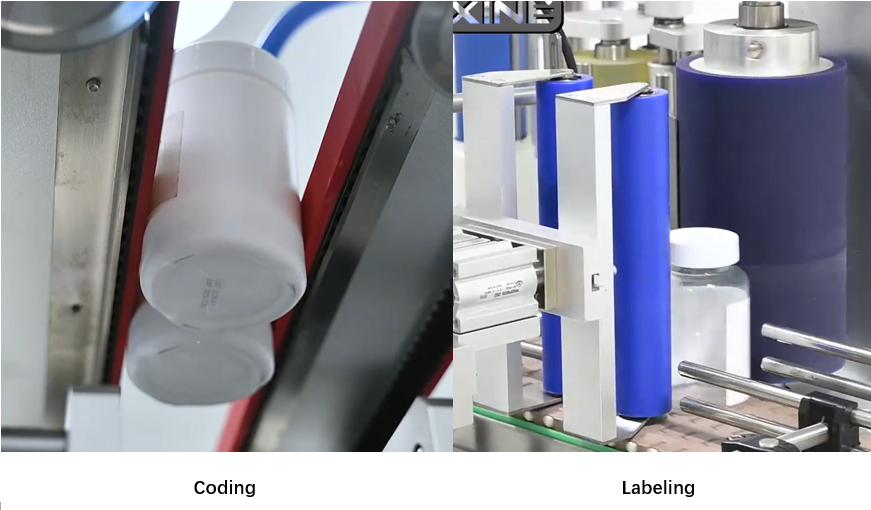
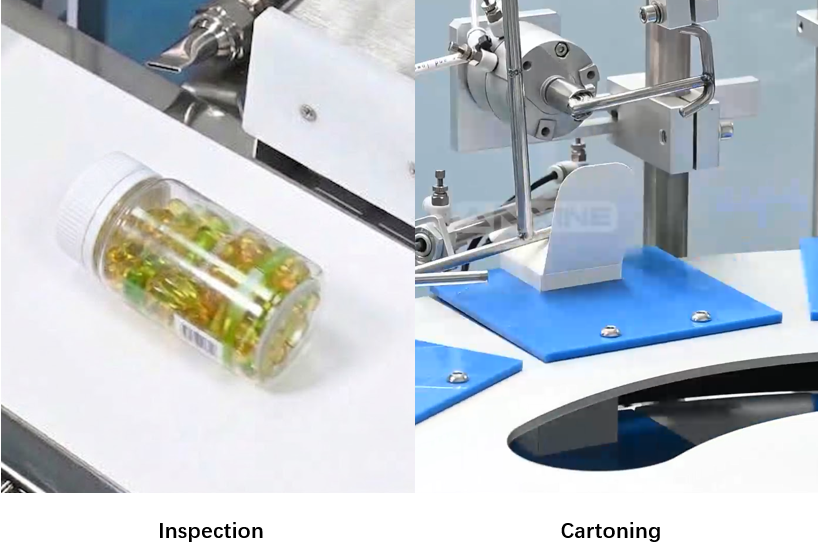
Understanding how gummies are packaged commercially helps you better evaluate packaging formats, materials, and equipment setup. The photos below show a real production line and clearly highlight the key steps from counting and filling to sealing.
1. Prepare Gummies for Packaging
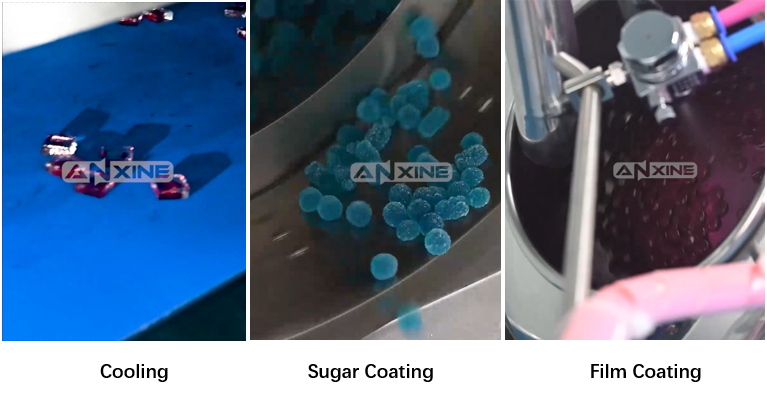
Before packaging, gummies often go through conditioning to improve surface quality and work better on automated packaging lines. Depending on the product, this may include cooling, drying, sugar coating, film coating, and polishing. Otherwise, if gummies are too warm, too moist, or sticky, they may clump together or stick to hoppers or conveyors.
2. Count or Weight
Count
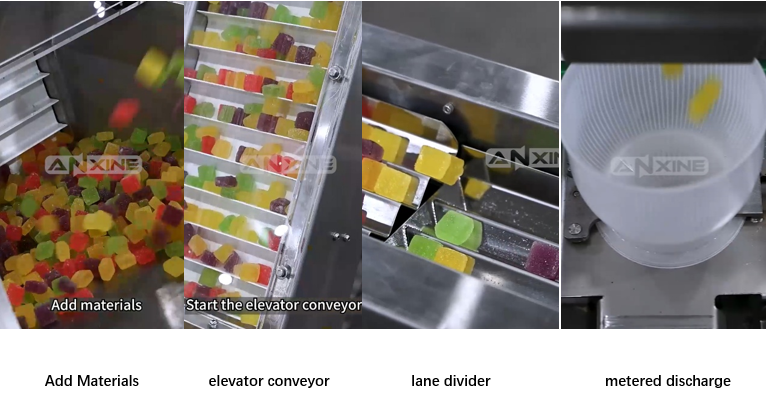
Soft gummies are first fed through a sorting and conveying system so they can be separated as much as possible into single pieces. They then pass one by one through a detection point, where the gummy counting machine uses a photoelectric sensor or a vision system to identify each piece. This counting method is best suited for gummy products packed by a fixed piece count.
Weight
When gummies enter the weighing hopper or combination weigher, the load cell monitors the weight in real time. The machine then automatically adjusts the feed rate based on the target weight. This method is better for gummies sold by net weight, such as 100 g per bag or 200 g per bottle.
3. Fill
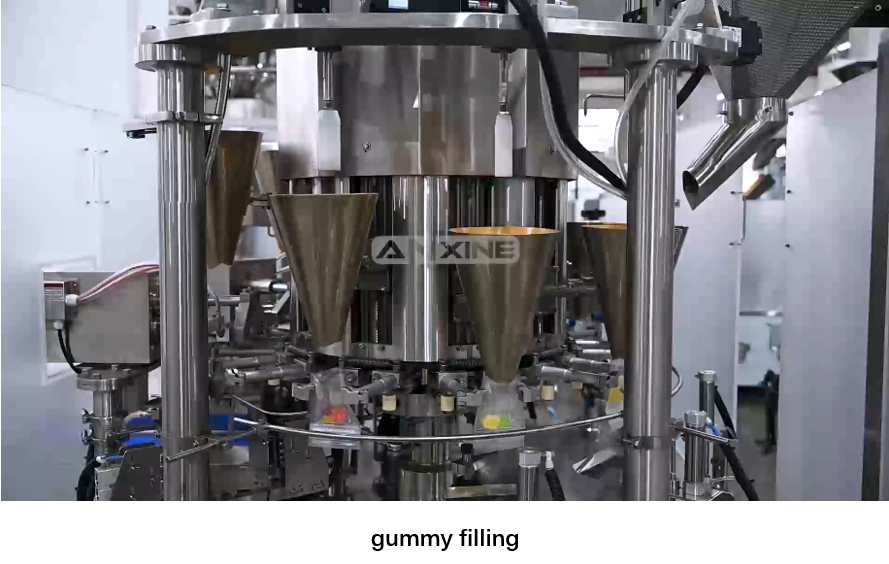
After counting or weighing, the gummies move through a discharge chute or filling head into the final package, such as a bag, bottle, or jar.
4. Seal or Cap
After filling, gummies should be sealed or capped right away to protect product quality. Bagged products are usually heat sealed, while bottles or jars are closed with a capping machine that places and tightens the cap. A proper seal has a direct impact on shelf life and shipping stability.
5. Label and Code
Labels are used to show the brand, product name, package size, and ingredient information. Coding is usually used to print the production date, batch number, and expiration date for traceability. Depending on the package type, labeling may be applied to bottles, bags, or the top of the package. Coding is often done with inkjet, laser, or thermal transfer systems. Clear and accurate labels and codes help improve product identification and make inventory control and quality tracking easier.
6. Inspection and Cartoning
After packaging, the products still go through a final inspection and packing step. This usually includes checks on weight, seal integrity, label placement, and code clarity. Some lines also use metal detectors or vision systems to remove defective products directly on the line. In practice, quality checks are not limited to the end of the process, since key inspection points are built into the packaging line. Products that pass inspection are packed in the required quantities, either by hand or with automated packing equipment.
How to Choose Packaging for Your Gummies
Choosing packaging for gummies requires careful consideration of the product, pack size, shipping and storage conditions, target market requirements, and production line compatibility.
Step 1: Gummy Type and Formula
When choosing gummy packaging, don’t start with the material. Start with the product type, then look at the gummy formula. For example, food gummies care more about cost, appearance, and preserving taste and flavor. Dietary supplement gummies place more weight on protecting the ingredients and product performance.
You also need to consider the formula itself, such as whether the gummies are sugar-coated, absorb moisture easily, or contain oils. These factors affect packaging requirements for barrier protection, anti-stick performance, and sealing. In the end, the right packaging should be chosen based on actual packaging test results.
Step 2: Serving Size and Pack Count
The amount of product sold in each package immediately narrows the options.
For example:
- a single daily serving may fit a sachet;
- a 30- or 60-count supplement may fit a bottle;
- a larger candy pack may suit a resealable pouch.
The desired count or weight also determines the type of dosing equipment required.
Step 3: Distribution and Storage
Packaging should be considered together with the entire supply chain.
- Will the product be sold in humid regions?
- Will it experience warm transport conditions?
- Is the package likely to be compressed during shipping?
- Will consumers open the package repeatedly?
- How long does the product need to remain stable?
These questions can be more important than the appearance of the package.
Step 4: Consumer and Market Requirements
Consumer-focused packaging can be a real advantage in a competitive market. For food gummies, shelf appeal, ease of use, and portability can all help attract consumers. If the product will be opened more than once, the packaging should also have good resealability. For gummy supplements with specific benefits, the packaging also needs features that help prevent accidental ingestion, such as child-resistant design.
Step 5: Packaging Line Compatibility
Packaging suitability for automated production should be evaluated before the package is finalized, not after. Production lines have specific limits for package size, material, filling method, throughput, and equipment integration. When the package and the line are well matched, production runs more smoothly and less time and material are wasted on later changes.
What Equipment Is Used for Gummy Packaging?
Different packaging formats require different gummy packaging equipment.
| Packaging Format | Typical Equipment |
|---|---|
| Bottle | Bottle Handling & Preparation Machine; Capping & Sealing Machine; Induction Cap Sealer; |
| Premade pouch | Horizontal Premade Pouch Filling machine; Rotary Premade Pouch Filling machine; |
| Formed pouch | Vertical Form Fill Seal Machine |
| Carton | Turntable Cartoning Machine; Horizontal Automatic Cartoning Machine; |
| Auxiliary Equipment | Feeder Conveyor; Labeling Machine; Inspection Equipment; |
The equipment listed above are only the core components. In practice, setting up a production line requires integrating machines with different functions. Space is limited here, so we will not go into more detail. If you would like to learn more about machine specifications, please refer to Anxine’s product catalog. Please note that the catalog does not include all of Anxine’s packaging machinery. For more information, you can also contact Anxine’s team. We will provide more equipment information you need.
Common Gummy Packaging Problems
Several packaging problems are not caused by the package alone.
| Problem | Possible packaging-related cause |
|---|---|
| Soft candy sticks together | The package does not block moisture well, or the candy was not fully cooled before filling. |
| Soft candy becomes hard | The package seal is weak, allowing moisture to escape. |
| Seal cracks or does not hold | Seal settings are off, or the seal area is contaminated. |
| Soft candy is damaged during filling | The filling process causes too much impact, or the drop height is too high. |
| Wrong number of pieces in the package | Dosing is inaccurate, or clumps affect counting. |
| Label is crooked or missing | Label placement is off, or the package surface is not clean. |
| Package bends or loses shape during transport | The package does not provide enough support, or the case packing is not done well. |
Manufacturers should identify whether a problem originates from formulation, conditioning, packaging material, machinery, or storage before changing the package itself.