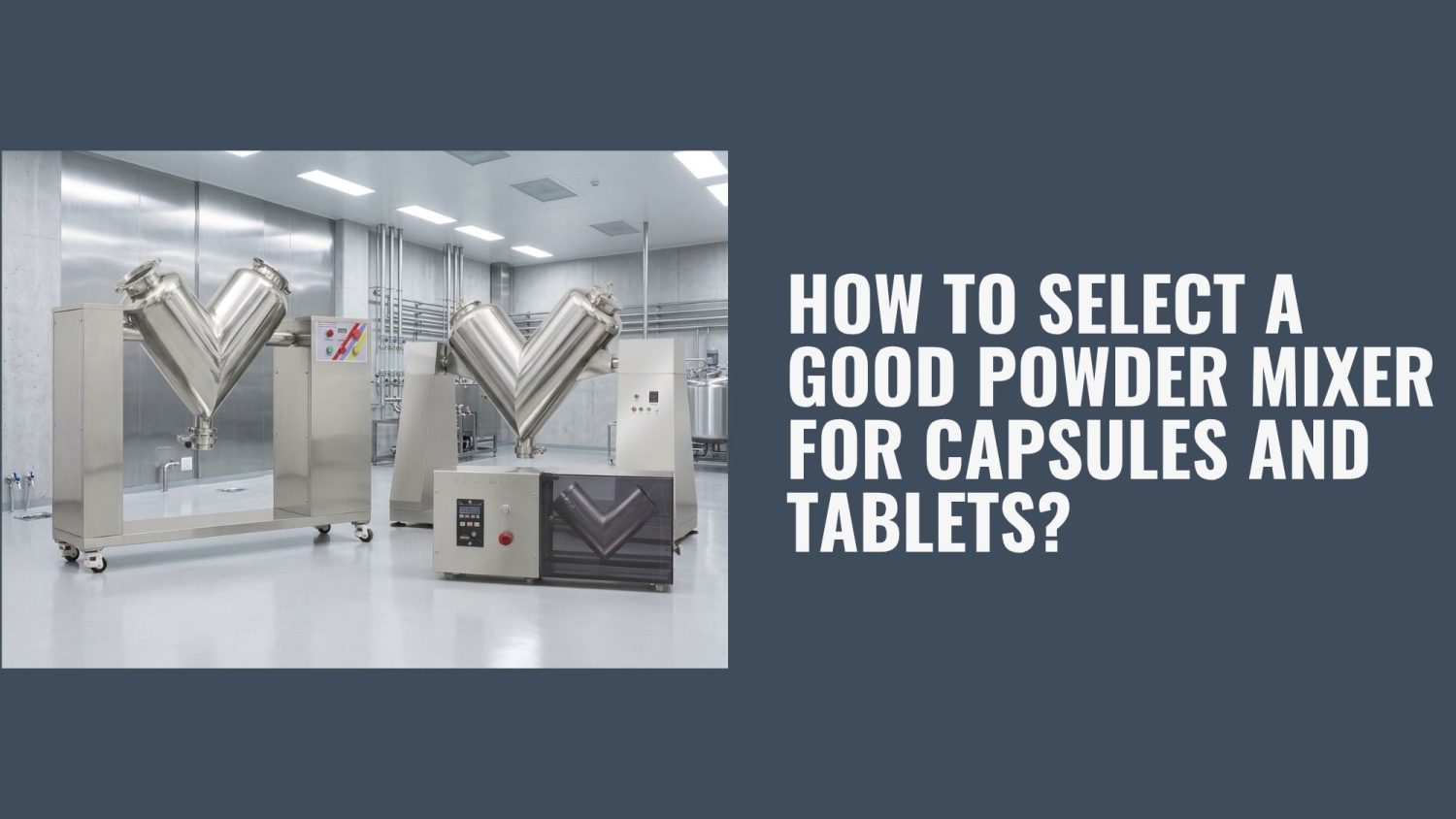
If you want to buy a powder mixer, many factors need to be considered. A mixer that works well for one product may fail with another. Problems like uneven mixing may appear after installation. Thus, a careful selection is important. It makes your production smooth and efficient. Here are some selection tips.
Know your material properties
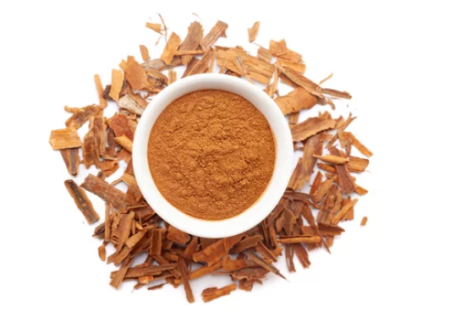
A powder blender should match the material, because different powders behave in different ways during mixing. If these properties are not considered at the beginning, even a high-quality machine may not produce well. The following factors help you have a clear understanding.
Particle size
Particle size directly affects how materials move and mix inside the machine. Fine powders usually tend to stick together and form agglomerates. This makes uniform mixing more difficult and requires stronger mixing. Larger particles can move more easily and spread quickly. But when mixed with much smaller powders, they may separate. Smaller particles go down, and larger ones stay above. This makes the mix uneven.
Flowability
Flowability describes how easily powders move. This directly impacts the mixing performance. Free-flowing powders move quickly and distribute well in many types of mixers. These materials usually require gentle mixing to avoid separation. Cohesive powders behave differently. They may stick to the mixer wall or form lumps during processing. This slows down the mixing movement and reduces efficiency. Therefore, the mixer should provide enough force to break agglomerates and keep the material in motion. Otherwise, dead zones may appear, and some areas will not mix properly.
Density
Density differences often cause separation during mixing. Heavy particles tend to move downward, while lighter particles rise to the top. It leads to uneven distribution in the same batch. In this case, the mixer should have a balanced movement pattern. It aims to keep all components in motion at the same time and reduce the chance of layering.
Moisture sensitivity
Some materials are sensitive to moisture. When liquid is added, they react quickly. If the liquid is not evenly distributed, the material may become sticky or form lumps. Meanwhile, it is also important to prevent unwanted humidity from the environment during mixing.
Demanded product scale
Batch size and production scale directly affect the choice of mixer design and capacity.
- In lab-scale production, batch sizes are small. Flexibility is more important than capacity. The mixer should be easy to use for frequent material changes.
- In pilot-scale production, the goal is to test whether the process can be scaled up. The mixer should produce similar mixing results as large production equipment. Otherwise, a formula that works well in pilot scale may fail in large-scale production.
- In large production, large batch size and stable output are the main focus. The mixer should be able to handle high volume while keeping consistent mixing quality.
One common mistake is selecting a mixer based only on maximum capacity. In real use, the effective working volume is usually lower. This is a key factor you need to consider.
Gentle blending vs intensive mixing
Different products require different levels of mixing force. Gentle blending works well when materials already have similar properties and uniformity. This includes
- The particle size is similar.
- The density difference is small.
- No strong agglomeration.
Intensive mixing is needed when materials are difficult to combine. This is used when
- Fine powders form lumps.
- Materials tend to stick or cluster.
Stronger mixing could break agglomerates and improve uniformity. Without enough force, the mixture may look uniform on the surface but remain uneven inside.
Mixing speed
Don’t choose powder mixing equipment with the highest speed to pursue high efficiency. Mixing speed directly affects how particles move, collide, and distribute. The correct speed is set based on material type and the required mixing volume. Because manufacturers always need to handle different powders, machines that allow adjustment of speed are increasingly popular. This makes it possible to start with a lower speed for material distribution and then increase the speed for final homogenization. It also reduces damage to sensitive materials.
Easy cleaning and changeover
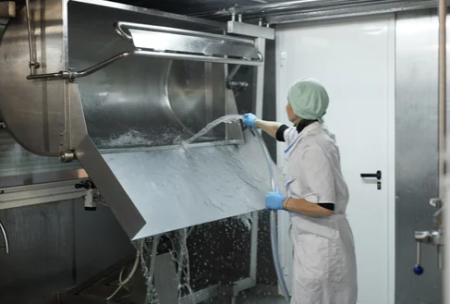
Cleaning and material changeover are often ignored during equipment selection, but they have a direct impact on production efficiency and safety. Mixers are rarely used for only one product. Different batches or formulas often require frequent changing. If cleaning takes too long or it is difficult to complete, production time and contamination risk would increase. Here are two common cleaning methods for your reference.
Manual cleaning
This is the most common method in many powder mixing machines. Operators open or disassemble the mixer easily and clean parts with tools like brushes. This method is flexible and does not require complex system design. It works well for small to medium production or when product changeover is not frequent. However, manual cleaning depends heavily on the operator’s work. It makes detailed and careful cleaning necessary.
CIP
CIP stands for clean-in-place. It is a built-in cleaning system of the equipment. It can be used to
- Set cleaning programs.
- Add cleaning liquids such as acid, alkali, or water.
- Automatically circulate and spray or rinse the internal parts of the equipment.
This method is more consistent because the cleaning process follows a defined cycle. It reduces human error and improves cleaning. CIP is often used in industries with strict hygiene requirements, such as pharmaceuticals, food, and nutraceuticals. However, CIP systems require more complex equipment design. The cost is much higher.
Smooth integration with other equipment
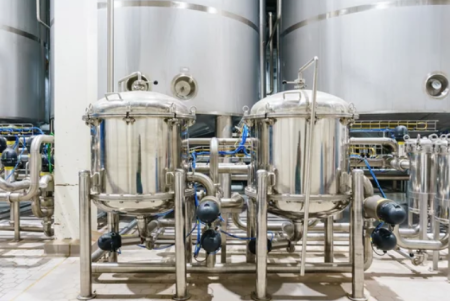
Powder mixers are a key part of a full production line. If the mixers do not match the line, problems such as material blockage, uneven flow, or long waiting time can happen. They always integrate with the following equipment.
- Granulators
- Capsule filling machines
- Tablet presses
- Pouch filling equipment
- Bottle filling machines
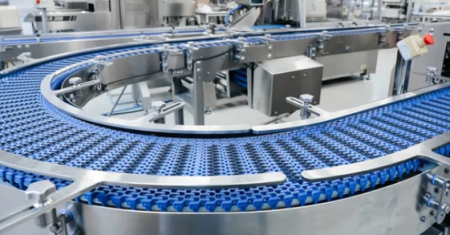
The discharge design of the mixer must match the next step. If discharge is not smooth, material may block at the outlet or separate during transfer. This can affect both efficiency and quality. In some production lines, buffer systems or transfer conveyors are added between machines to improve stability.
Check compliance

To safely use your mixing machine, the equipment should meet related regulations like GMP and FDA. Different markets and areas require different certifications. Common requirements include:
- GMP global standards. They focus on a clean production environment, process control, documentation and traceability.
- CE marking in the EU market. It shows that the machine meets EU requirements for safety, health protection, and environmental standards.
- The FDA regulation in the US. It means materials in contact with the product must be safe and equipment design should support hygienic production.
You can ask your supplier to provide related documents to prove the compliance. Without proper documentation, equipment may fail qualification and delay your production.
Consider your budget and long-term cost
The machine should match your budget, but it also needs to meet basic production requirements. For companies with a limited budget, the focus should be on essential performance, not extra features. The mixer should at least reach the required mixing uniformity and handle your batch size stably. Some advanced functions, like full automation, may not be necessary in the early stage. A simpler machine can still work well if it matches the process.
In addition, energy consumption should be considered. A long-term operating cost in continuous production. Mixers with higher power or longer mixing time will consume more energy per batch. If the process runs multiple batches per day, the total energy cost becomes significant over time.
What type of powder mixers can you choose from Anxine?
Anxine offers different types and sizes of powder mixers to meet various production needs. They include V blenders, 3D mixers, ribbon blenders, trough mixers and cone blenders. Each features different applications and advantages. You can check their specifications to see which one suits you better.
| Model | Max. Working Volume (L) | Materials | Rotational Speed (r/min) | Motor Power (kW) |
|---|---|---|---|---|
| V blender | 0.4-20, 40-1200 | Free-flowing powders | 8-20 | 0.15-11.0 |
| 3D mixer | 0.9-450 | Free-flowing powders | 10-25 | 0.05-5.5 |
| Ribbon blender | 50-1800 | Sticky, cohesive, or wet powders | 33-58 | 2.2-18.5 |
| Trough Mixer | 10-500 | Sticky, cohesive, or wet powders | 24 | 0.55-7.5 |
| Cone blender | 100-2500 | free-flowing powders | 3-15 | 1.1-18.5 |
Anxine powder mixing machines are widely used in the pharma, food, cosmetic and chemical manufacturing. We also provide comprehensive 1-year after-sales support. It includes free replacement parts, efficient shipping and no-cost on-site service. Our technicians can assist you directly at your facility for better mixing performance.


