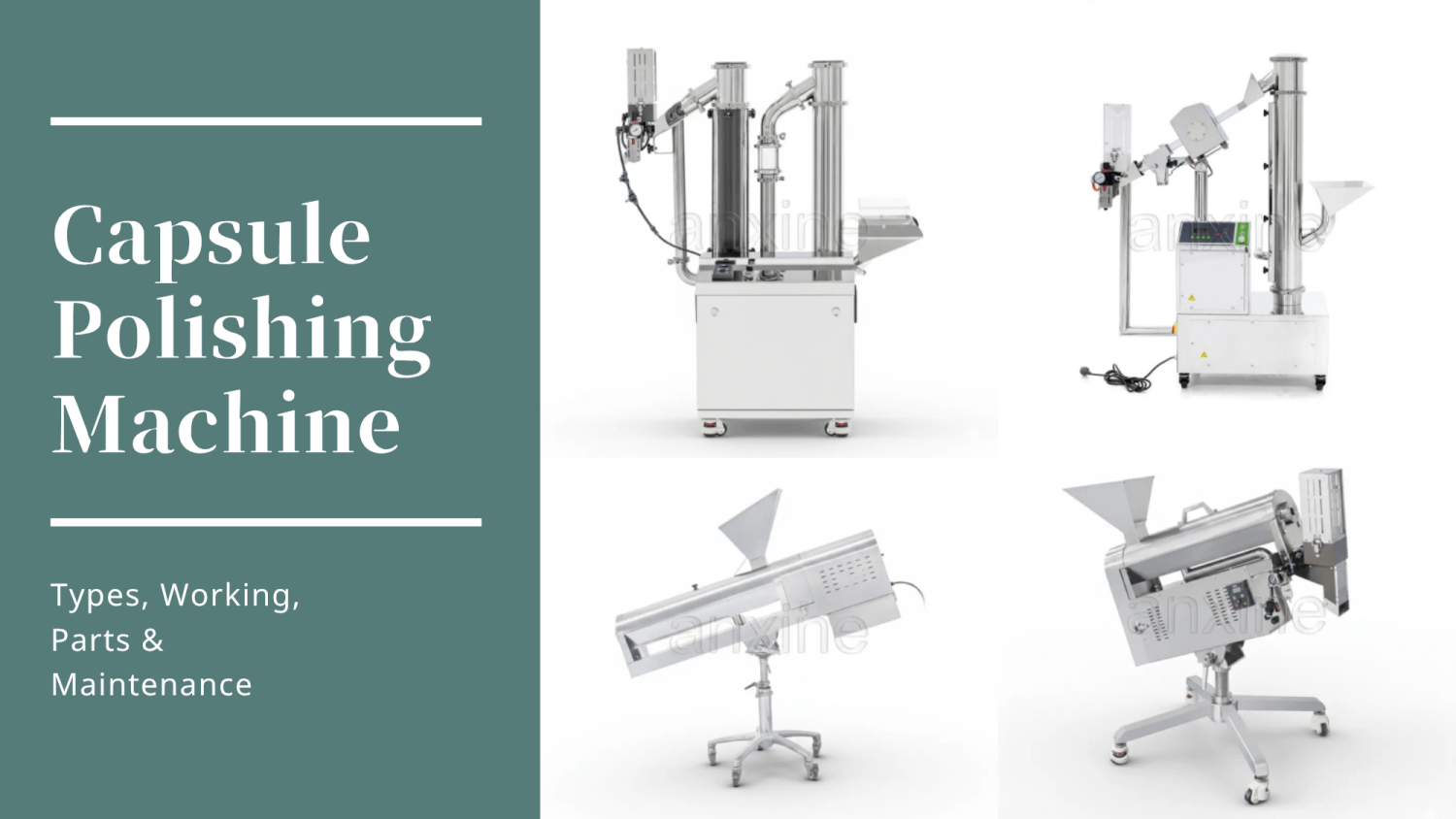
Capsules should be clean and smooth before they go to packaging. Dust, powder, or small particles on the surface can affect the quality and capsule appearance. A capsule polisher solves this problem. It removes extra powder and improves the finish of each capsule. Then, the final product looks better.
What are capsule polishing machines?
The capsule polishing machine is used to clean the pills and improve the appearance of the capsules before packaging. After filling, some powder often sticks to the outside of the capsules. This can make them look dusty or uneven. In some cases, the loose powder can also affect weight control or create dust in the packaging area. A capsule polisher solves this problem easily. It usually has a rotating brush to remove the powder and makes the capsules smooth. Meanwhile, a vacuum system collects the removed powder.
Benefits of capsule polishing machines
In daily production, capsule polishing equipment is often placed between the capsule filling machine and the packaging machine. It has several advantages in production.
- Better capsule appearance. Capsules are cleaner, smoother, and more uniform. It is important for both quality and attraction.
- Improved safety and hygiene. The machine collects powder with a vacuum system. Less dust in the air means a cleaner working environment.
- Stable packaging process. Clean capsules move more smoothly during the counting and packaging process. This avoids jams or errors.
- Time and labor saving. It reduces manual effort and improves efficiency.
Applications
Capsule polishing machines are used in many industries that require clean capsules.
- Pharmaceutical area. It requires capsules to be polished to meet hygiene standards.
- Supplement industry. They are used for vitamins, herbal products, and nutraceutical capsules to improve appearance.
- Food application. Some functional foods are in capsule form, and they need the polishing machine to help keep products neat and presentable.
What are the key parts of a capsule polishing machine?
A capsule polishing machine depends on several key parts to polish the capsules smoothly, such as brushes, shafts, motors, etc. Different models have various part assembly. Here introduces you to the ACP-100 capsule polisher to know the main functional parts.
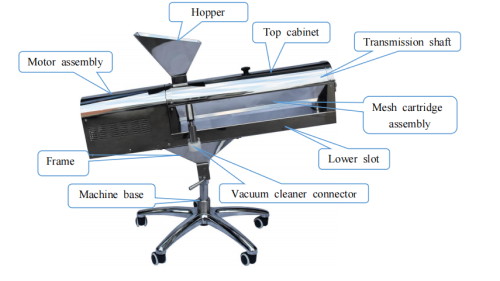
Powder hopper
Capsules enter the machine through the hopper. In many cases, the manufacturer connects it to the outlet of the capsule filling machine. If not, you need to feed it manually. It guides capsules into the polishing section steadily. Therefore, the machine can run smoothly.
Mesh cartridge assembly
This is the core working structure. It is a cylindrical mesh unit that holds the capsules during polishing. The mesh allows fine powder and debris to pass through. It is connected to the brush and designed for easy removal. This feature makes cleaning and maintenance more convenient.
Brush
The brush is placed inside the mesh cartridge and rotates continuously during operation. It gently pushes capsules forward while rubbing their surface to remove the powder. The spiral structure moves capsules from the inlet to the outlet.
Transmission shaft
This part connects the motor to the brush and mesh cartridge. It transfers power and keeps the internal parts rotating at a stable speed. A secure connection between the motor shaft and cartridge shaft is important for smooth operation. Also, it prevents vibration or uneven polishing.
Motor
The motor assembly provides the driving force for the whole machine. It usually includes a power switch, motor control, and speed adjustment knob. The speed can be adjusted through an inverter. It allows the machine to handle different capsule types and keep stable performance during operation.
Vacuum system
The vacuum is used to remove the dust and residue. During polishing, the removed powder, broken capsule parts, and loose materials are collected through this system. This improves cleanliness in the production area.
Outlet
The outlet is located at the end of the mesh cartridge. After polishing, capsules are discharged from this point in a continuous flow. It ensures smooth of capsules, and allows easy connection to the next process, such as inspection, counting, or packaging.
Machine base
The overall structure supports all components and keeps the machine stable. It is usually made of stainless steel. The base may include rollers, so the machine can be moved easily when needed.
What are the common types of capsule polishing equipment?
Capsule polishing machines come in a few common types, mainly based on structure and how they are used in production.
Horizontal capsule polisher
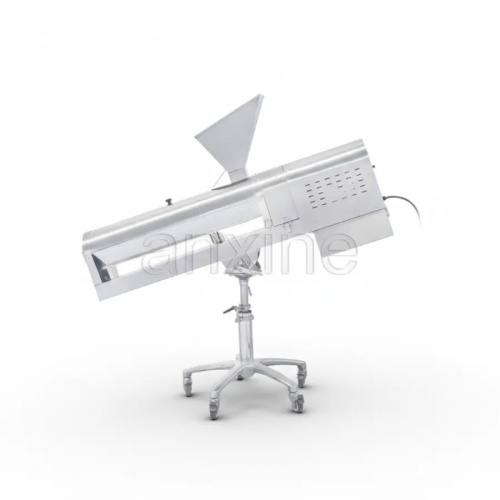
This is the most basic and common polishing type. In this design, the mesh cartridge is placed horizontally, and capsules move from one end to the other while the brush rotates inside. This type is widely used because it is simple, stable, and easy to operate. Moreover, it could easily connect with capsule filling machines for continuous production.
Vertical capsule polisher
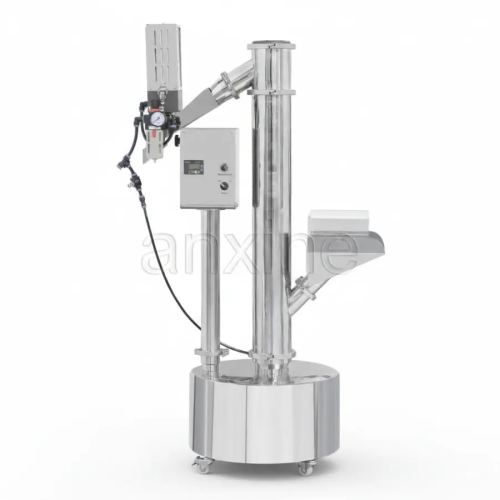
The vertical capsule polisher is another popular type. It is installed in an upright position, and capsules move upward or downward during the polishing process. This design features high output and saves floor space. It can also connect easily with upstream and downstream equipment. For example, it supports direct connection to a capsule filling machine. So, it can automatically transfer capsules to higher-position equipment, such as a counting machine.
With the market demand growing, there is a upgraded model of vertical capsule polisher. That is a double uphill elevating capsule polisher. It features a dual-channel design, allowing two lines to be polished at the same time. Its capacity is higher compared to other vertical capsule polishers. This type is suitable for large-scale production lines.
Capsule polisher with sorter
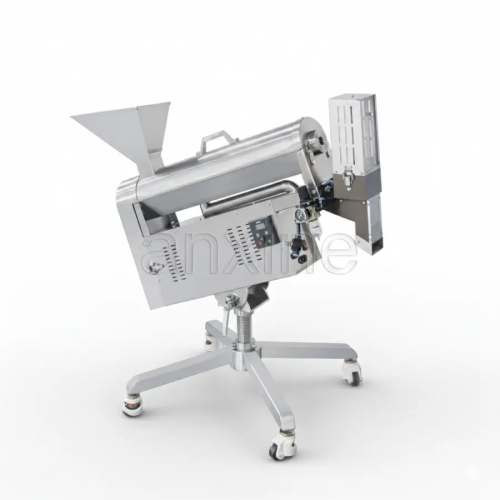
Some capsule polishers with a sorter combine polishing and simple sorting in one unit. During operation, broken capsules, empty capsules, or lighter particles are removed through airflow or simple separation structures. This reduces manual inspection and improves overall product quality.
Capsule polisher with a metal detector
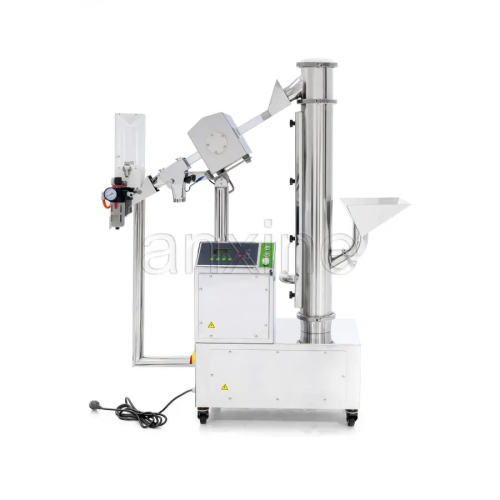
This type is an integrated machine that combines capsule polishing with metal detection. After capsules are cleaned and dedusted in the polishing section, they pass directly through a metal detector built into the device. Then, it checks for metal contamination such as iron, stainless steel, or other metallic particles that may enter during production.
This capsule polisher with a metal detector is commonly used in production lines with higher safety and quality requirements. It is especially suitable for applications where strict contamination control is required, like pharmaceutical products.
What is the process of capsule polishing?
The polishing process starts from capsule feeding to brush cleaning, removing extra powders or dust. The main working principle is as follows.
Feeding: capsules enter the hopper.
Filled capsules are poured into the hopper at the top of the machine. Then, they enter the polishing section in a steady flow. Proper feeding makes that capsules are evenly distributed and prevents clogging at the inlet.
Capsule transfer: brush drives capsules into the mesh cartridge.
A rotating brush pulls the capsules from the hopper into the mesh cartridge. The brush not only transports the capsules forward but also keeps them in motion. Therefore, they do not stay in one place or pile up.
Polishing: surface cleaning.
Inside the mesh cartridge, the brush continues to rotate and gently rubs the capsules. As capsules roll and move forward, the powder on the surface is removed from all sides. The mesh structure allows particles to pass through while keeping the capsules inside.
Dedusting: vacuum removal.
At the same time, a vacuum system pulls out the removed powder, small fragments, and loose materials through the mesh. This step keeps the machine clean and reduces dust in the working area. It creates a stable production environment.
Discharge: capsule outlet
After polishing, the capsules are pushed to the outlet by the brush. They are then processed for the next stage, such as inspection, counting, or packaging.
You can check the video to see how to operate the capsule polisher easily.
How to select a suitable capsule polishing machine for your business?
A suitable capsule polishing machine is not just about picking a model. It is related to many factors.
- Match your output. The capacity of the equipment should meet your daily demand needs. If the capacity is too low, it will slow down the whole production line. If it is too high, it may increase the cost when no benefit is gained.
- Compatibility. The polishing equipment should support all capsule sizes you use. It should also work well with different materials like gelatin or HPMC capsules to avoid damage.
- Smooth integration. If you need to connect the capsule polisher to your production line, check the possibility.
- GMP compliance. The machine should meet GMP standards to ensure hygiene and compliance with pharmaceutical regulations.
How to maintain a capsule polishing machine for better performance?
Regular maintenance is important to keep good performance and smooth running. It includes regular cleaning, lubrication or inspection for key parts like the brush. The maintenance could be conducted daily, weekly and monthly. The cleaning and lubrication of crucial parts usually require daily maintenance. The following popular maintenance tips are for your reference.
- Surface cleaning. Remove dust and powder from the machine surfaces, hopper, and outlet after each use to prevent contamination.
- Brush care. Check the polishing brush for wear. You need to replace it if the bristles are damaged or bent, because it affects polishing quality.
- Bearing protection. Wipe bearings clean and apply food-grade anti-rust oil to protect from corrosion.
- Lubrication. Apply a suitable lubricant to moving parts according to the manufacturer’s instructions.
- Regular inspection. You’d better perform a full check of electrical parts, switches, and safety grounding at least once a month.