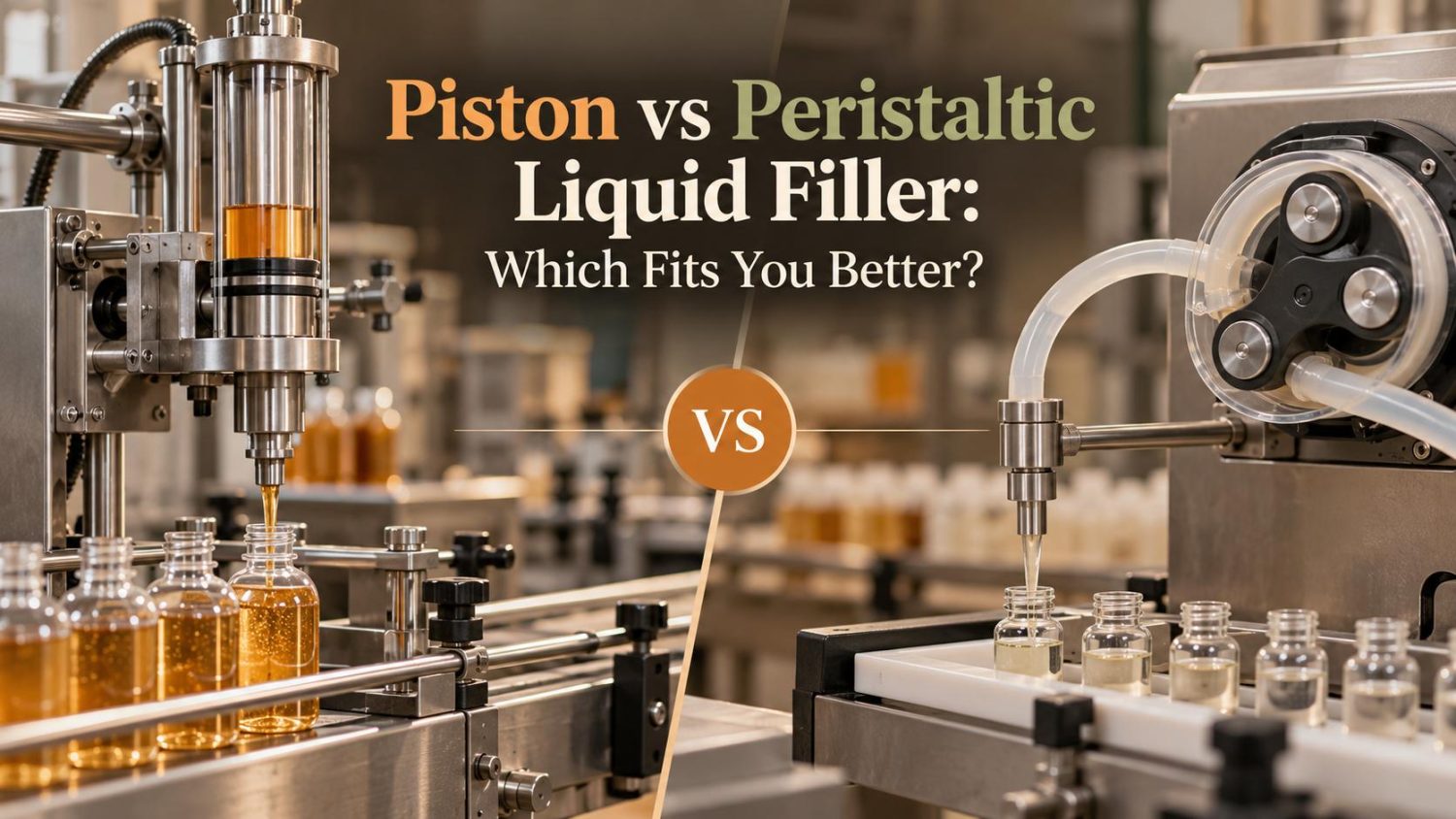
When you choose a liquid filling machine, the suitable filling pump is usually a key consideration. It directly affects filling accuracy and quality. There are two popular pump options in the current market: piston fillers and peristaltic pump fillers. Both use volumetric filling methods to control liquid dosage, but they handle products differently. Factors, such as liquid viscosity, product sensitivity or filling volume, should be considered for your production. This article explains the key differences between piston and peristaltic pump fillers, including their working principles, advantages, and disadvantages. With a good understanding of their differences, you can make a more suitable choice for your liquid filling machine.
How does a piston filling machine work?
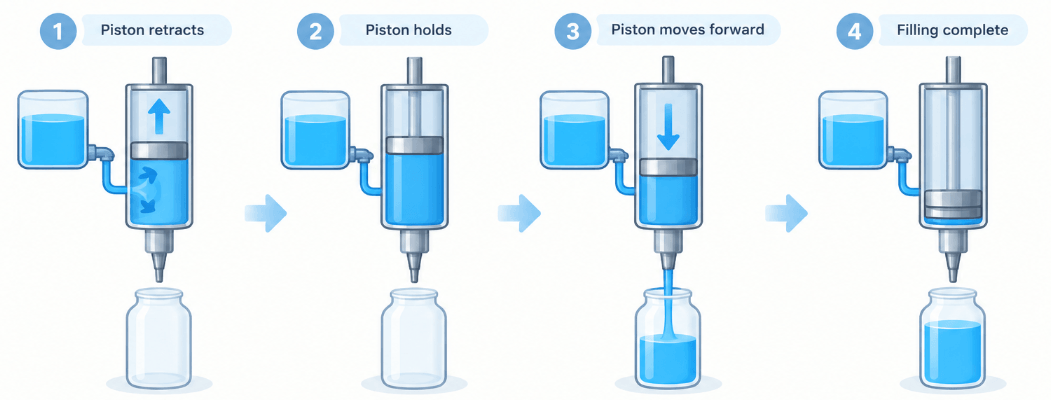
A piston filling machine depends on the movement of a piston to measure and dispense a required volume of liquid product. It relies on mechanical displacement. The working principle is similar to a syringe. When the piston moves backward, product is drawn into the cylinder. When the piston moves forward, the product is pushed out through the filling nozzle. The filling volume mainly depends on the cylinder capacity and piston stroke length. You can adjust the stroke distance or change the cylinder size to determine the filling volume. This makes piston fillers suitable for different products and container sizes.
Advantages: This design features simple and repeatable dosing for different products and industries. It can also be configured with different cylinder sizes, filling nozzles, and contact materials to meet different requirements.
Disadvantages: Piston fillers usually have many product-contact components, such as cylinders, pistons, and valves. Therefore, you need to have a careful consideration of maintenance requirements and product compatibility when selecting this filling system.
How does a peristaltic pump filler work?
This machine has a flexible tube and rotating rollers to transfer and dispense liquid products. First, the liquid material is transferred from a tank and enters the flexible tube connected to the pump. Inside the pump head, rollers rotate and press against the flexible tube. When a roller squeezes the tube, it creates a closed section inside the tubing. The liquid in front of this squeezed area is pushed forward as the compression point moves along the tube. As the rollers continue moving, they repeatedly compress and release the tube. This continuous squeezing action transfers liquid from the inlet side to the outlet side.
Advantages: It features a simple fluid path. The product mainly contacts the inside of the tubing. So, manufacturers can make easy product changeover and cleaning in some applications.
Disadvantages: Repeated compression may affect tube performance after long operation, so it is necessary to replace worn tubes in time. The tubes should also be compatible with the liquid product, especially for formulations that may interact with tubing materials.
Piston vs Peristaltic Pump Filler: key differences
Piston fillers and peristaltic pump fillers have different working principles to transfer and dispense products. These differences can affect how they perform under different production conditions. The following table lists the key differences to help you do a quick check.
| Factor | Piston filler | Peristaltic pump filler |
|---|---|---|
| Working principle | Mechanical displacement | Tube compression |
| Typical application | Medium-high viscosity liquids, pastes, suspensions | Low-medium viscosity sensitive liquids |
| Product contact | Cylinder, piston, valve, seals, and nozzle | Mainly the inner surface of the tubing |
| Cleaning | More complex | Easier |
| Changeover | Longer | Faster |
| Shear effect | Higher potential | Lower |
| Consumables | Lower | Tubing replacement needed |
| Production scale | Often used for longer runs, larger fill volumes | Suitable for smaller batches or frequent changeovers |
| Sterile applications | Depends on design | Common choice |
What product are they suitable for filling?
The choice between a piston filler and a peristaltic pump filler depends on many factors. The first you should consider is liquid viscosity.
Piston fillers are suitable for higher-viscosity liquids.

Piston fillers are often used for thicker liquids. They can move the product through direct mechanical displacement. During filling, the piston pushes the product from the cylinder to the container. This pushing force moves liquids that flow slowly or require more pressure to transfer. Common examples include
- Syrups.
- Suspensions.
- Gels.
- Cream-like products.
For these products, gravity or lower-pressure pumping methods may not provide enough flow stability. Piston movement can offer a stronger force for transferring.
Peristaltic pump fillers are better for lower-viscosity liquids.
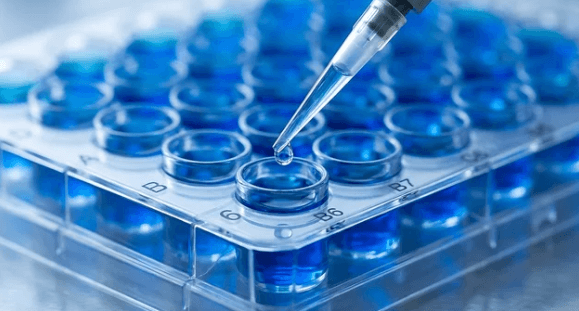
This design moves the liquid forward through the tubing by squeezing. Thus, it is more ideal for liquids that can flow easily through the tube and don’t need high transfer force. Common applications include
- Aqueous solutions.
- Eye drops.
- Some pharmaceutical liquids.
However, as liquid viscosity increases, the resistance to flow inside the tubing also increases. For highly viscous products, manufacturers may need to evaluate tubing size, pump speed, and system configuration to maintain stable filling performance.
Which is suitable for sensitive liquids?
For pharmaceutical liquids, manufacturers should also consider how the filling process may affect product quality. Important factors include shear sensitivity, foaming tendency, protein stability and chemical compatibility. Then, you can know whether the required pump design is suitable or not. It helps you understand potential risks during filling and select a type that matches the product requirements.
| Product concern | Why it matters | What to evaluate |
|---|---|---|
| Shear sensitivity | Mechanical movement and pressure changes during filling may affect some sensitive formulations. | Filling pressure, pump movement, and product stability after filling |
| Foaming tendency | Air bubbles or unsuitable filling conditions may affect filling consistency. | Filling speed, nozzle design, and pump settings |
| Sensitive ingredients (e.g., proteins) | Some active ingredients may lose stability under some processing conditions. | Product stability before and after the filling process |
| Material compatibility | Product may interact with tubing, seals, or other contact parts. | Compatibility between formulation and product-contact materials. |
Which design is easier for changeover and cleaning?
Cleaning requirements and changeover frequency are also important factors when selecting a liquid filling machine. Different designs can affect how easily the equipment can be cleaned, maintained, and prepared for the next batch.
Frequent product changes for peristaltic pump fillers
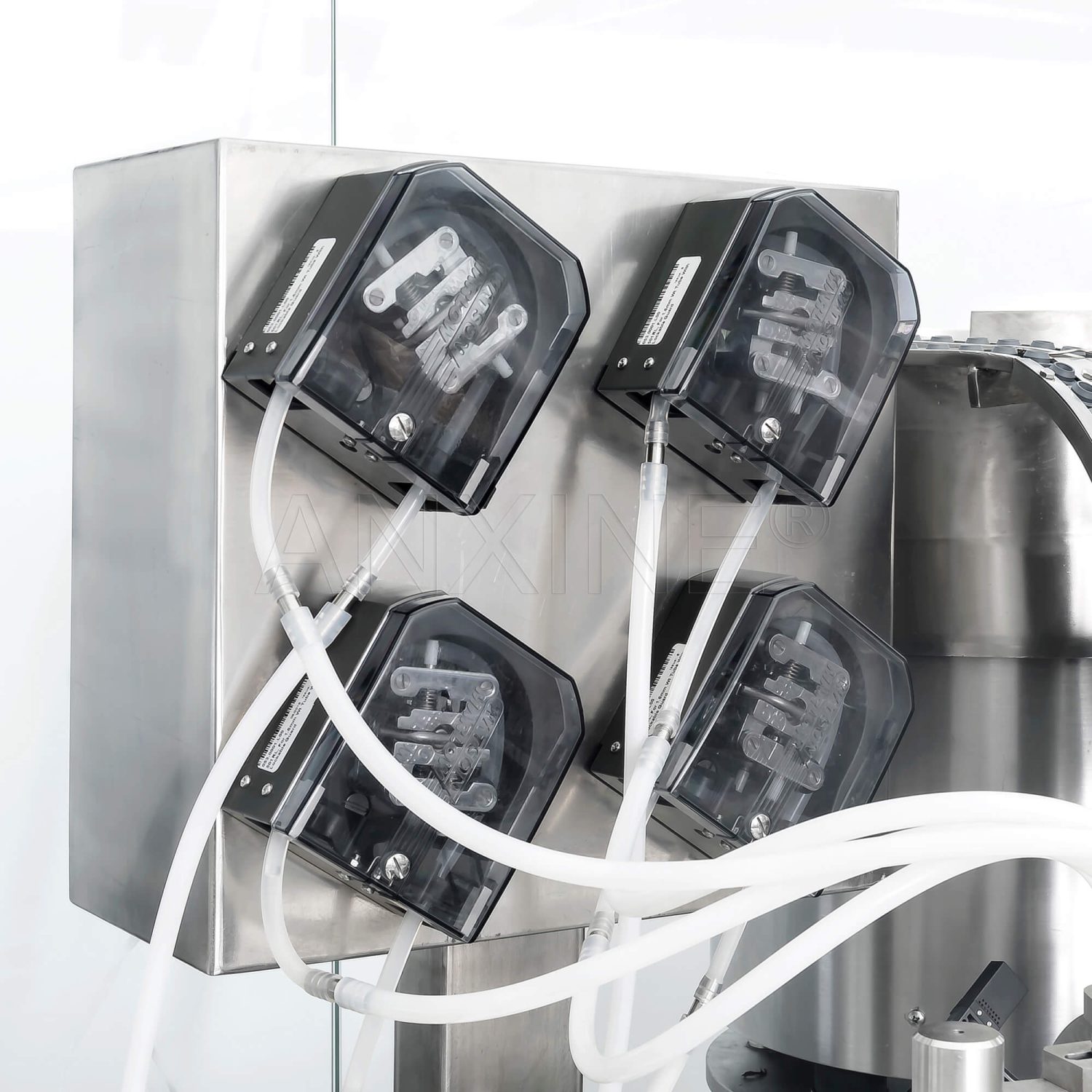
If you produce multiple types of products or small batches, peristaltic pump fillers may be a better choice. During the peristaltic pump filling process, the product mainly contacts the inner surface of the tubing. So, you just need to clean or replace the tube rather than multiple internal pump components. This can simplify some changeover procedures. However, tubing selection and replacement frequency still need to be considered based on product compatibility and operating conditions.
Long production runs
For continuous production with fewer product changes, piston fillers can be more suitable. Compared to a peristaltic pump, it usually has more components that contact products, such as
- Cylinder.
- Piston.
- Valves.
These parts may require regular cleaning and maintenance to keep stable operation, especially in multi-product production. Depending on the design, these parts may require disassembly, cleaning, inspection, or seal replacement. Some hygienic systems may support quick disassembly, CIP, or SIP to reduce manual cleaning work.
What production scale do you need?
Different filling mechanisms also influence filling volume and production scale.
Peristaltic liquid fillers are more flexible for small-volume filling.
Peristaltic pump fillers feature easier adjustment for filling volume. The volume is mainly controlled by
- Pump rotation speed.
- Tubing size.
- Pump running time.
If the filling volume needs to be changed, the machine can usually be adjusted by changing the parameters. This can provide more flexibility when handling different products or container sizes. In contrast, piston fillers control filling volume through the cylinder size and piston stroke length. The adjustment is then more complex.
Piston fillers are often considered for larger-volume filling.
If you have high-volume production, piston fillers may be better. Each piston stroke moves a preset amount of product for filling. For small changes in filling volume, like 60 mL to 80 mL, it is common to adjust the stroke path with the same cylinder. However, if the target filling volume changes a lot, it may not be suitable to adjust only the piston stroke. For example, if you want to change the filling volume from 50 mL to 500 mL, it may require a larger cylinder. Otherwise, dosing control and accuracy would be affected. Most cylinder sizes can be customized to meet specific requirements. But the suitable configuration should be discussed with your supplier in detail.
Which type costs more?
It is usually one of the most concerning factors. The total cost usually includes the initial investment and the operating cost. For initial cost, it includes the cost required to purchase and install the filling equipment. It may be affected by machine design, automation level, number of filling heads, components and other options. A peristaltic pump filler often has a simpler structure than a piston filler. You may think the price is also lower. However, the actual machine price depends on the machine configuration. If you add special functions to a peristaltic filler, its price may be higher than a common piston filler.
After installation, operating costs become an important consideration. These may include
| Factor | Examples |
|---|---|
| Cleaning | Time and labor required for cleaning procedures |
| Maintenance | Inspection, calibration and replacement of worn components |
| Consumables | Tubing, seals, valves, and other replaceable parts |
| Downtime | Production loss caused by maintenance or changeover |
Before purchasing, you’d better ask yourself
- How often is cleaning required?
- How frequently do parts need replacement?
- How much labor is needed?
- How does downtime affect production?
Then, you may have a rough calculation of the total cost and compared it with your budget to see which type suits you better.


