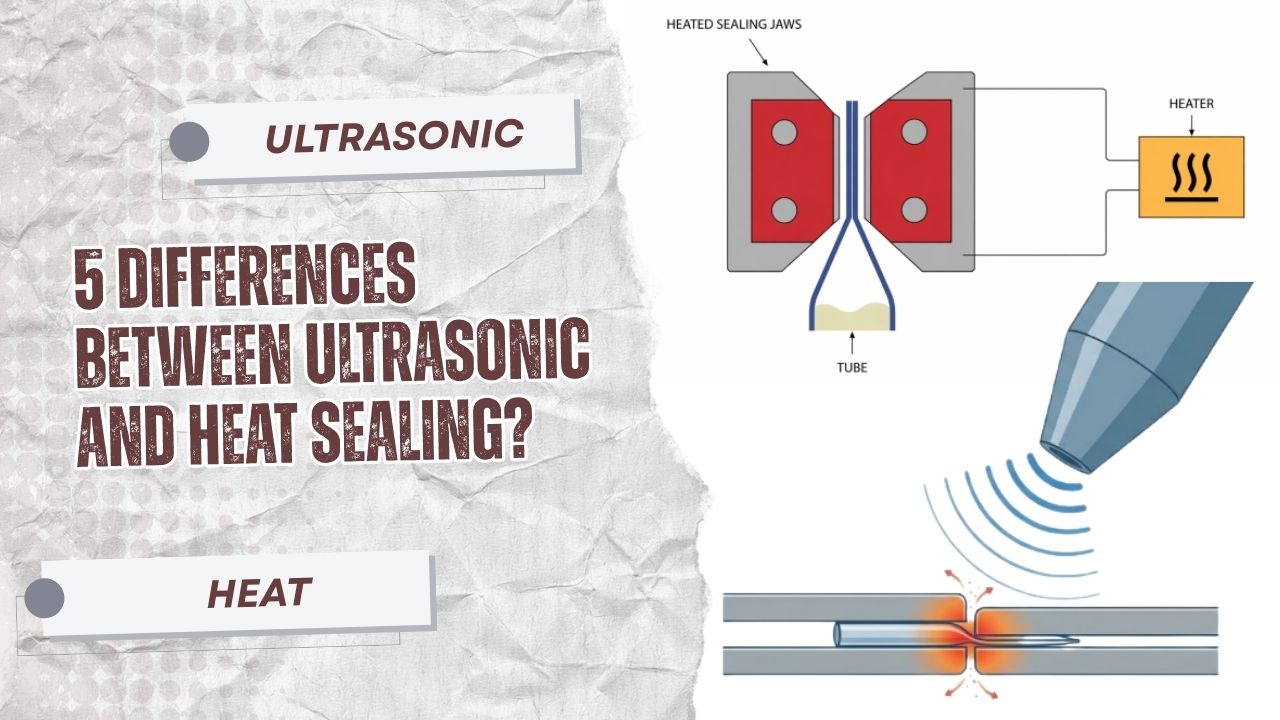
Sealing is a key process in packaging and tube production. It closes the package after filling and prevents the product from air, moisture, dust, and leakage. In many industries, sealing quality directly affects product quality, transportation, and storage. Ultrasonic sealing and heat sealing are two popular sealing methods in packaging production. They have different features and applications. If you want to produce high-quality products with good sealing, a clear understanding of these two methods is necessary.
What Is the Ultrasonic Sealing Method?
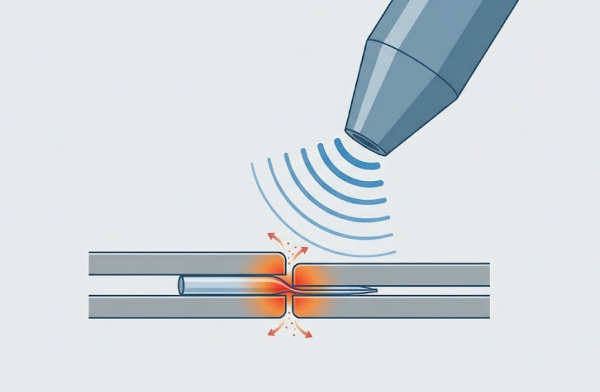
Ultrasonic sealing features high-frequency vibration to seal thermoplastic materials together. During the sealing process, an ultrasonic system transfers vibration energy to the sealing area. Meanwhile, sealing jaws apply pressure to the material. The vibration creates friction inside the material. It generates heat and forms the seal. This sealing method creates clean sealing. Though there may be some small amounts of product residue, it won’t affect the sealing quality. This is important for products such as creams, gels, ointments, and food paste.
Ultrasonic sealing is widely used for plastic tubes, laminated tubes, medical and food packaging. It can produce clean and stable seals with less heat exposure.
What Is Heat Sealing in Packaging?
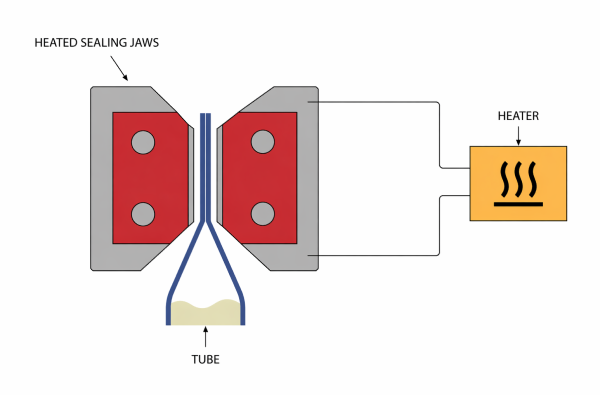
Heat sealing seals the package with heat and pressure. During the sealing process, heated sealing jaws or bars press against the material surface and melt the sealing layer. After cooling, the materials seal together and form a tight seal. Heat sealing is simple and ideal for many materials, such as plastic films, laminated films, aluminum foil laminates, and pouches. It is commonly used in food packaging, pharmaceutical packaging, cosmetic tubes, and sachets.
However, sealing temperature and cooling time must be carefully controlled. Excess heat may cause burn marks, material deformation, or damage.
What Are the Differences Between Ultrasonic Sealing and Heat Sealing?
Besides the working principle, these two sealing methods have other differences you should note.
Sealing Speed
It is a key factor in packaging production. Sealing speed directly affects output capacity and overall production efficiency. In high-volume industries, even small differences can greatly affect daily production. Ultrasonic sealing is generally faster than heat sealing. Because the heat sealing usually requires several stages during the sealing cycle. The sealing jaws first reach the required temperature, then apply pressure for a certain time to melt the material surface. Finally, the material is cooled to make a tight seal.
Heat sealing requires a slower speed. If the production speed is too high, the seal may not be stable. It can increase the risk of weak sealing or leakage. In addition, heat sealing is not suitable for consistent high-speed production. It may have temperature fluctuations during long operating periods, especially at very high speeds. This can affect seal appearance and strength.
Seal Strength
Strong seal strength keeps the bags or pouches still closed tightly during storage and transportation. Both ultrasonic sealing and heat sealing can produce strong seals. But their performance depends on material type and production conditions. For most plastic films and tubes, heat sealing usually provides higher seal strength. The material surface could fully melt and bond together under heat and pressure. It is mainly used for thick laminates.
Ultrasonic sealing generally provides more stable and consistent seal strength in high-speed production. The vibration energy creates localized sealing. This reduces weak seals caused by uneven heating or insufficient cooling time. Ultrasonic sealing also performs better when small amounts of powder residue stick to the sealing area. In heat sealing, contamination causes improper sealing. Ultrasonic vibration can often push minor contamination away from the sealing zone and make the materials sealed tightly.
Material
Heat sealing is ideal for many materials. It could process many packaging types, suitable for both thin and thick materials. It is commonly used for
- Plastic materials, such as PE, PP, PET, and PVC.
- Laminated films.
- Aluminum foil laminates.
Ultrasonic sealing is suitable for thermoplastic materials that allow high-frequency vibration. Common examples include
- PE and PP.
- Laminated tubes.
- Plastic films.
The technology is especially suitable for tube sealing and lightweight packaging. However, ultrasonic sealing has more material limitations. Very thick materials, rigid laminates, or some high-density multilayer structures may not work well. In these cases, the seal may become loose. Materials with high aluminum content can also slow down ultrasonic sealing efficiency. Because metal layers affect vibration transfer.
Energy Cost
Ultrasonic sealing usually uses less electricity than heat sealing. It only needs high power during the sealing cycle. On the other hand, the heating bars or sealing jaws must stay at a fixed temperature throughout production. Even when the machine stops or runs at a lower speed, the heating system continues using electricity to maintain the temperature. In continuous operation, ultrasonic sealing machines are often more energy-efficient. Heat sealing methods lose heat continuously, especially in high-temperature applications.
Cooling requirements also influence energy use. Heat sealing may require an extra cooling device to make the seal stable. Ultrasonic sealing usually needs less cooling time. It can reduce overall machine energy demand. However, actual power consumption also depends on material thickness and production speed. For a small batch, this difference may not be very large. In large-scale production, ultrasonic sealing can be more effective in terms of energy consumption.
Equipment and Maintenance Cost
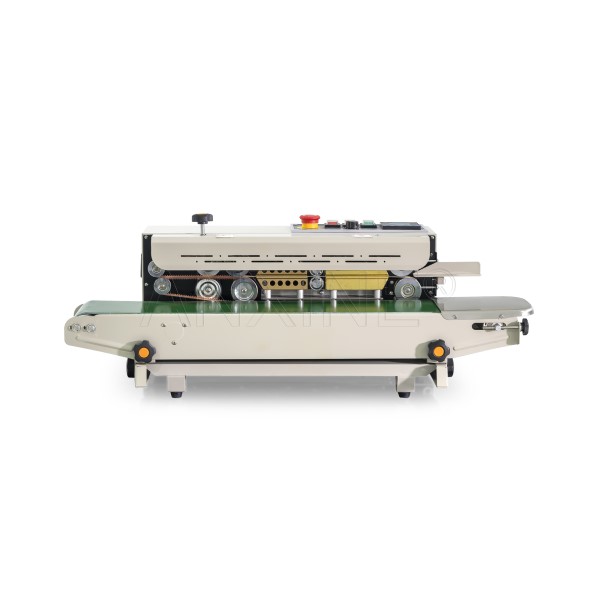
Equipment cost is an important factor when choosing between ultrasonic and heat sealing. Heat sealing equipment usually has a lower cost. The structure is simple. It mainly includes heating elements, sealing jaws, temperature controllers, and pressure systems. There are many types available at different prices. If you are a startup, a band sealer is a good choice. For example, the Anxine band sealer CFR-900 could achieve 12 m/min with film thickness from 0.03 to 0.8 mm.
Ultrasonic sealing equipment normally has a higher budget. The machine requires extra parts such as an ultrasonic generator, converter, booster, and horn. These parts increase machine complexity and manufacturing cost. Precision adjustment is also more important in ultrasonic equipment. It can further increase the equipment price.
Maintenance requirements also differ. Heat sealing machines are easier to maintain. The structure is simpler, and replacement parts are widely available. Ultrasonic sealing equipment usually needs more careful maintenance. The ultrasonic components must remain proper to keep a stable sealing performance. Vibration instability and frequency mismatch can affect sealing quality.
You can check the chart to see their main differences.
| Aspect | Ultrasonic sealing | Heat sealing |
|---|---|---|
| Seal strength | More stable sealing quality at high speed and with minor contamination. | Usually, stronger seals for thick materials and heavy-duty packaging. |
| Sealing speed | Faster sealing cycle with shorter processing time. | Slower because heating and cooling require more time. |
| Material compatibility | Best for thermoplastic materials and plastic tubes. | Ideal for films, laminates, and thick materials. |
| Equipment and maintenance cost | Higher machine cost and more technical maintenance requirements. | Lower machine cost and simple maintenance. |
| Energy cost | Lower power consumption during long production runs. | Higher electricity use because heating is needed continuously. |
| Best for | High-speed production and premium packaging applications. | General packaging and cost-sensitive production lines. |


