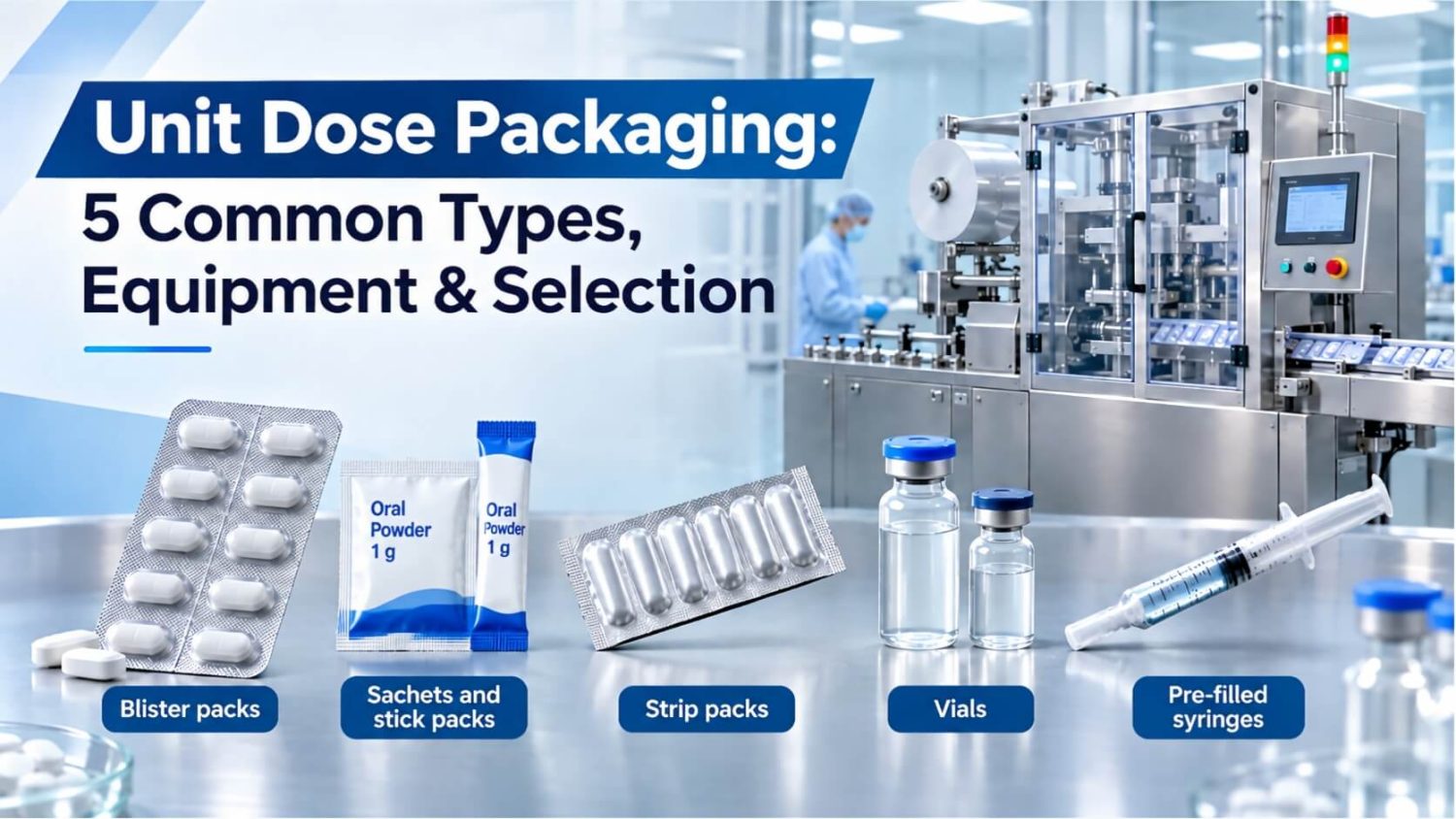
Unit dose packaing keeps a rapid growth in recent years. According to Fortune Business Insights, the global unit dose packaging market is expected to reach USD 40.48 billion in 2026 and grow to USD 78.88 billion by 2034. It is mainly driven by accurate dosing requirement and patient safety. Unit dose packaging is widely used for tablets, capsules, liquids and powders. If you are also interested in this packaging form, let’s have a deep dive.
What is unit dose packaging?

Unit dose packaging is used to pack a fixed amount of products like tablets individually for one use or one dose. So, the user does not need to measure, count, or take the product from a larger container each time. The key feature is individual portioning. Each package is prepared with a required quantity for consumption. It may contain one tablet or capsule or a specific volume of liquid or powders. Therefore, unit dose does not always mean one piece. Unit dose packaging is common in pharmaceutical and healthcare products. It is also used for supplements, personal-care products, and other products that are designed for single use. Common examples include blister packs, sachets, pouches, etc.
Advantages of unit dose packaging
There are many benefits to use unit dose packaging. It offers
- Accurate dosage. Each package contains a fixed amount of product. It provides a more consistent dose and avoid wrong consumption.
- Easier dose contro. Each package contains a specific dose, so users can easily identify how many doses remain.
- Easy to use. Users can simply open one package and take the product.
- Better portability. Unit dose packages are usually small and easy to carry. Users can take only the number of doses they need instead of carrying a full bottle or larger container.
In pharmaceutical industry, many medicines are packed by unit dose packaging. Here are 5 common types for your reference.
Blister packs
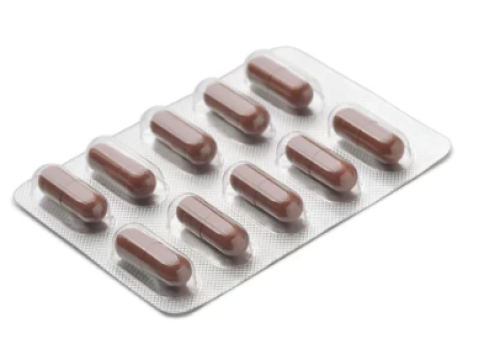
Blister packs are one of the most common forms for tablets and capsules. A typical blister pack has two main parts: cavities and a backing material. The cavity keeps each tablet or capsule in its own space. So, other unused dose remains protected until the package is opened. The level of protection depends on the materials used. Standard plastic blisters may provide basic protection, while structures such as Alu-Alu blisters can offer stronger protection against moisture, and air. Moreover, the size and numbers of cavities could be both customized to fit production needs.
Blister packaging also provides a clear way to check dose control. People can easily see how many doses have been used and how many remain. Printed information can also be added to the backing foil, such as the product name, batch number, or expiration date.
What equipment can be used to make blister packs?
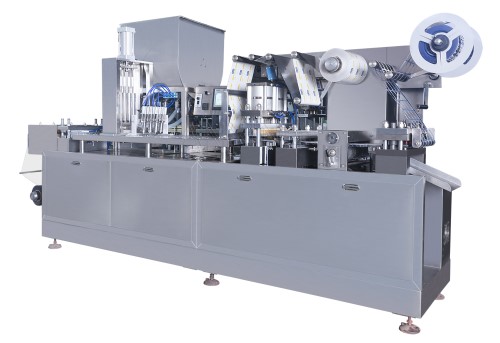
Blister packs are usually made with a blister packaging machine. The machine combines forming, product feeding, sealing, and cutting into one production line. A typical blister packaging process includes the following steps.
- Forming. A roll of forming material, such as PVC or aluminum, is heated and formed into cavities. The cavity size and shape must match the product.
- Product feeding. Tablets or capsules are delivered into the cavities through a feeding system. The machine needs to place the correct product into each cavity.
- Sealing. A backing foil is placed over the filled cavities and sealed with heat and pressure. Please note that different materials require different heat and pressure.
- Cutting and discharge. The sealed web is cut into individual blister cards or strips. The finished packs are then discharged for further inspection, cartoning, or other packaging steps.
When choosing a blister packing machine, manufacturers should consider the forming material, cavity size, sealing method and output capacity for smooth production. For tablets and capsules, the machine should match the product size and shape to avoid broken tablets or poor sealing. For moisture-sensitive drugs, the packaging material and sealing quality are especially important. Depending on production needs, manufacturers can choose semi-automatic models for small batches or fully automatic blister packing machines for large-volume production.
Sachets and stick packs
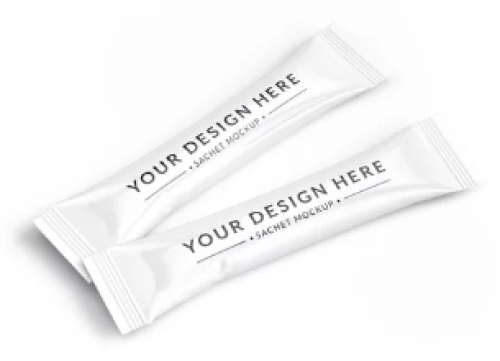
Sachets and stick packs are two common flexible unit dose packaging formats. Both can pack powders, granules, and liquids. They are easy to carry and convenient to open and pour. These two forms have a similar filling and sealing process. The main difference is their package shape and typical use.
Sachets are usually flat and rectangular. Their wide shape offers more flexibility in package size and filling volume. They are commonly used for powdered medicines, oral rehydration products, nutritional supplements, granules, and liquid products. Stick packs are narrow and elongated. They are especially common for products such as powdered supplements, drink mixes and granules. Stick packs can also be used for liquids when the product and packaging material are suitable.
The selection factors are based on product type, filling volume, package size, material, sealing requirements, etc. The final choice mainly depends on how the product needs to be filled, protected, transported, and used.
How to make sachets or stick packs?
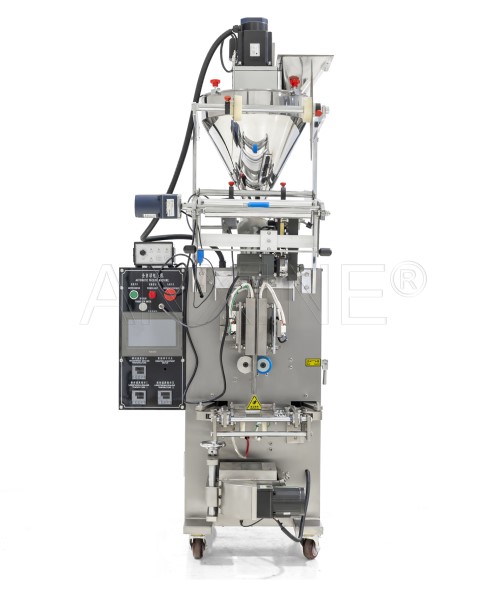
Sachets and stick packs are commonly produced by VFFS packaging machines. Some sachet formats can also be made with HFFS packaging machines, depending on the product, package size, and package design. Take the working of VFFS machines for example. The packaging film is fed from a roll into the machine in a vertical direction. Then, it is shaped into the form of sachets or stick packs. Next, a dosing system fills the required amount of powder, granules, or liquid into each package. After the filling is completed, the machine seals the package to keep the product protected. Finally, the sealed package is cut into individual sachets or stick packs. You may check the video to see how it works.
When you choose a bag filling machine, the filling system is important. It should be selected according to the product type. For example, powder medicines usually require an auger filling system, granules may use a volumetric cup filler, and liquids often need a pump filling system. Other selection factors include filling accuracy, sealing quality, film material, package size, etc. For pharmaceutical use, the contact parts should be easy to clean and made from suitable hygienic materials.
Strip packs
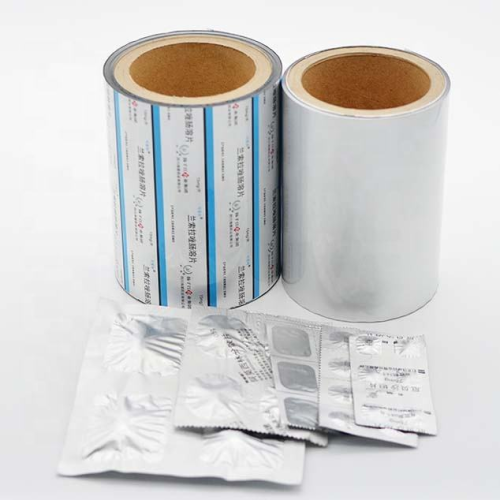
Strip packs are used to pack tablets or capsules individually. Each dose is sealed between two layers of packaging material, such as aluminum foil or laminated film. The sealed units can then be separated into individual doses for consumption. Strip packs do not need formed cavities. The integrated structure offers better protection than blister packs. Moreover, the size of the strip can be adjusted according to the product and the required dose. One strip can contain a single dose or several individually sealed doses.
How to make strip packs?
Strip packaging machines usually feed, align, seal, cut, and discharge the products automatically. When selecting one, key factors include film compatibility, sealing temperature control, cutting accuracy and output speed. For high-volume pharmaceutical production, automatic strip packing equipment can reduce manual handling and improve packaging consistency. For smaller production runs, semi-automatic machines may be more cost-effective.
Vials

Vials can be used for single-dose or multi-dose pharmaceutical products, including injectable liquids and powders for reconstitution. They are usually made from glass or plastic and are closed with a stopper and cap. During use, the rubber stopper is usually pierced with a sterile needle according to the product instructions. They are always used for vaccines, liquid medicines and some diagnostic products. According to the product and design, some vials can also be used multiple times.
How are vials made?
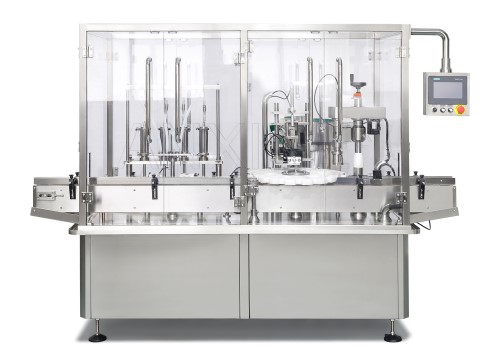
A complete vial filling line may include vial washing, sterilizing, filling, stoppering, capping, and labeling processes. During the making process, filling accuracy is especially important for unit-dose products. Now many models can achieve ±0.5% filling accuracy when equipped with precision peristaltic pump, such as Anxine CGZ-4. Besides, you need to consider filling volume range, container size, compatibility, and cleanliness requirements to make a smooth production. For sterile products, the machine should support hygienic or aseptic operation to reduce contamination risks.
You may check the video to see how a vial filling and capping machine works.
Pre-filled syringes
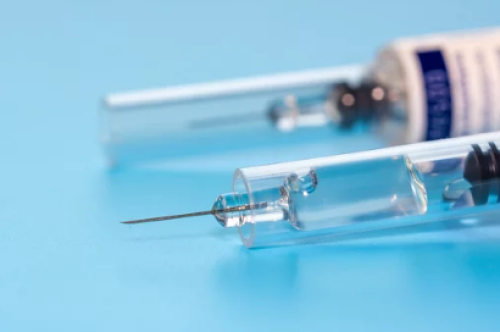
Pre-filled syringes (PFS) are another type of unit dose packaging used mainly for injectable medicines. Each syringe is filled with a fixed amount of medicine and sealed before it reaches the user. This means the dose is ready for administration without the need to draw the medicine from a vial first. It is often used for vaccines, biologic medicines, anticoagulants and other medicines supplied in ready-to-use doses. A pre-filled syringe usually consists of a barrel, plunger, stopper, and needle or needle connection. Glass and plastic are the two common materials used for the syringe barrel.
How to make pre-filled syringes?
Pre-filled syringe filling machines are designed to fill and seal single-dose injectable medicines in syringes. A good machine is based on syringe size, filling volume and production capacity. For the operation, you need to check filling accuracy, sterility control, plunger placement and needle protection. If you want to produce high-risk injectable products, automated filling can reduce manual contact and help improve dose consistency.
Here is the comparison of 5 common unit dose packaging type. You can have a quick glance about their differences.
| Packaging type | Best For | Structure | Typical use | Main equipment |
|---|---|---|---|---|
| Blister packs | Tablets, capsules | Product sits in individual cavities and is sealed with backing material | Prescription and OTC medicines | Blister packaging machine |
| Sachets and stick packs | Powders, granules, liquids | Flat or narrow package | Medicines, supplements, oral powders, liquids | VFFS or HFFS machine |
| Strip packs | Tablets, capsules | Product is sealed between two layers of film or foil. | solid oral medicines | trip packaging machine |
| Vials | Liquids, injectables, some powders | Rigid container with stopper and cap | Injectable medicines, and vaccines | Vial filling and capping machine |
| Pre-filled syringes | Injectable medicines | Medicine is pre-filled in a syringe and sealed. | Vaccines, biologics, anticoagulants, injectable medicines | Pre-filled syringe filling machine |
How to choose the right type to pack your products individually?
A good selection is affected by many factors. You’d better have a detailed consideration before choosing the packaging type and machine.
- Product type and dosage form. You need to know which pill type you want to make. Tablets, capsules, powders or liquids require different packaging formats and filling methods.
- Moisture and oxygen sensitivity. If your products are sensitive to moisture or oxygen, it is better to choose aluminum-based or other high-barrier materials. The package should provide the level of protection required by the product.
- Packaging material. The material should match both the product and the packaging process. You should check factors such as barrier performance, heat-sealing properties, product compatibility, and cost.
- Production volume. You need to match the machine capacity to your required production demand. Semi-automatic equipment may be suitable for smaller batches, while high-volume production usually requires fully automatic machines.
- Compliance. You need to carefully check if the packaging meets the regulatory requirements of your target market. It also includes requirements for packaging materials, labeling, product information, tamper evidence, and package integrity. The packaging machine should also support required coding, inspection, or other compliance demands.
Improve your packing efficiency with Anxine Machinery
A good packaging machine is as important as a suitable packaging type. It depends on your product type, package format, required output, and hygiene level. Anxine offers different pharmaceutical packaging machines, including blister packing machines, strip packing machines, HFFS packing machines, etc. Whether you need equipment for small-batch or high-speed automatic production, our team can help you choose a suitable solution to meet your specific demand.


