If you’re new to the pharma world, using blister packs for your products is a wise move. This type of packaging keeps your tablets and capsules clean, tamper-evident, and easy for patients to track their doses.
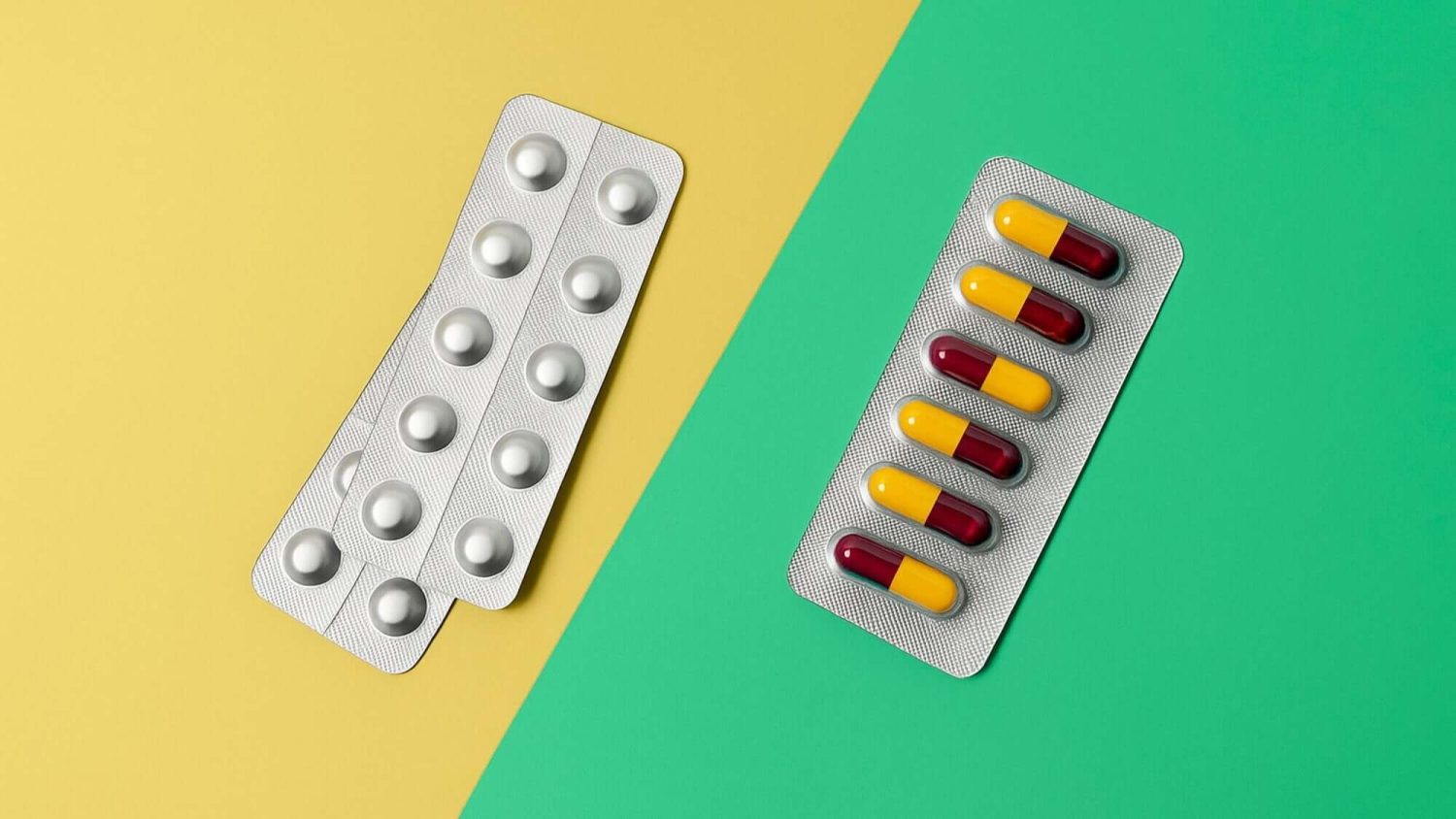
But you’ve probably noticed that not all blister packs look the same. Some blister packs are clear and see-through, while some have a metallic finish that hides what’s inside.
Those metallic ones are Alu-Alu blister packs. The transparent ones are standard Alu-PVC blister packs.
So which should you choose: Alu-Alu or Alu-PVC? Both are credible choices. Yet the protection level, cost, and ideal use cases are very different.
In this post, I’ll explain the key differences between them and help you decide which blister packaging is the better fit for your product. Let’s get started!
Why Are Blister Packs Widely Used in Pharma?
Today’s medicines are more sensitive than ever. Think about what happens after a tablet or capsule leaves the factory. They may face heat and humidity in trucks, bright retail lighting at pharmacies, or being forgotten on a bathroom shelf at home. Without proper packaging, they can lose strength quickly.
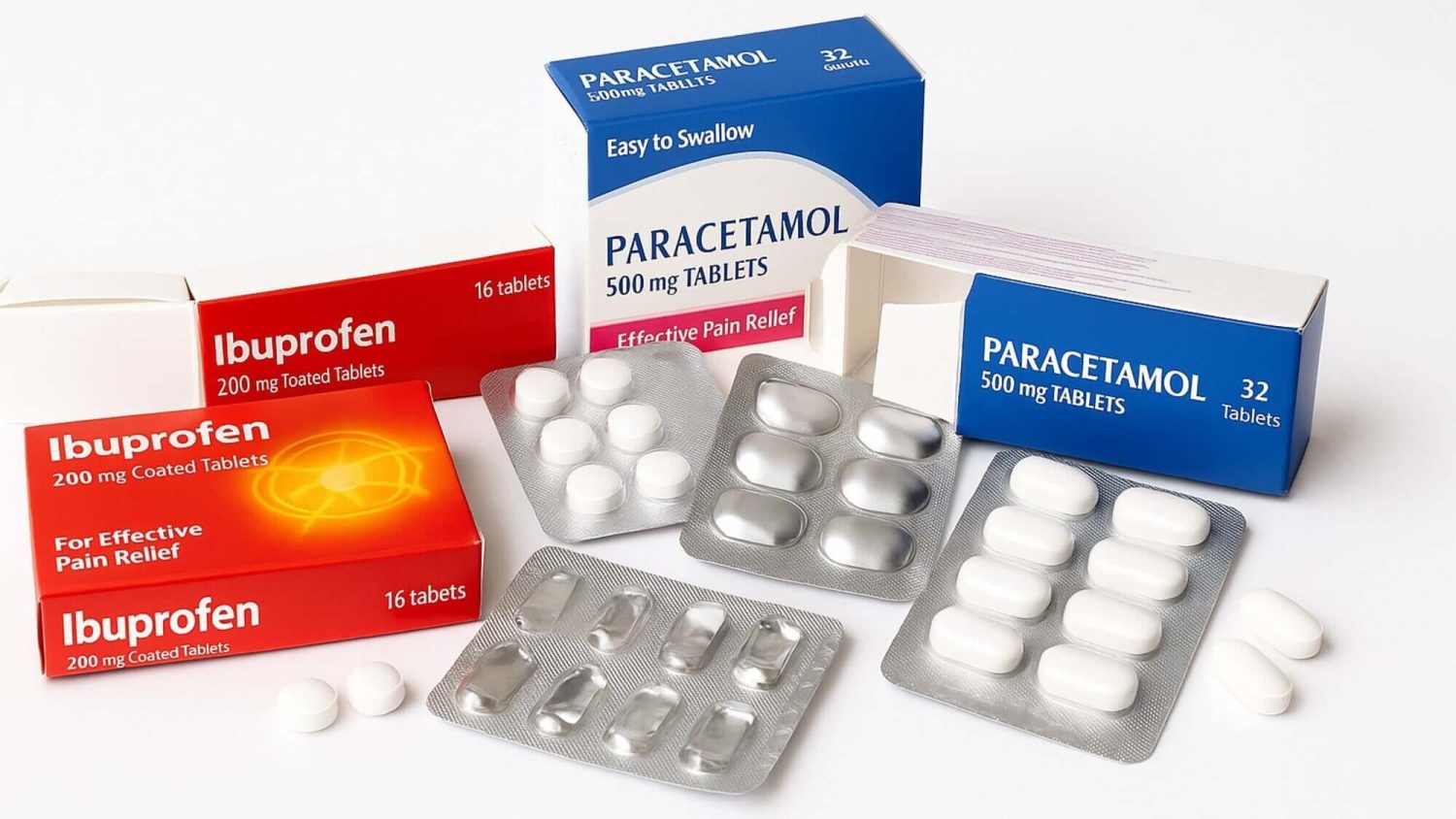
At the same time, consumers want packaging that is easy to open, safe, portable, and helps track daily doses. In a manufacturer’s shoes, they also need to keep costs reasonable.
Blister packaging checks all those boxes: convenience, protection, and cost-effectiveness. That’s why you see it everywhere in the pharmaceutical industry today.
Types of Pharmaceutical Blister Packaging
As we touched on above, there are two main formats of blister packaging in pharma.
| Type | Also Called | Structure | Barrier Level | Visibility | Cost |
|---|---|---|---|---|---|
| Alu-Alu Blister Pack | Cold-form blister | Aluminum + aluminum | Excellent | Opaque | Expensive |
| Alu-PVC Blister Pack | Standard blister packing, thermoformed blister | PVC + aluminum foil | Good | Transparent | Inexpensive |
In the next section, let’s look at each closely.
What Is Alu-Alu Packaging?
“Alu-Alu” stands for aluminum-aluminum. That means the blister pack uses aluminum-based materials on both sides.
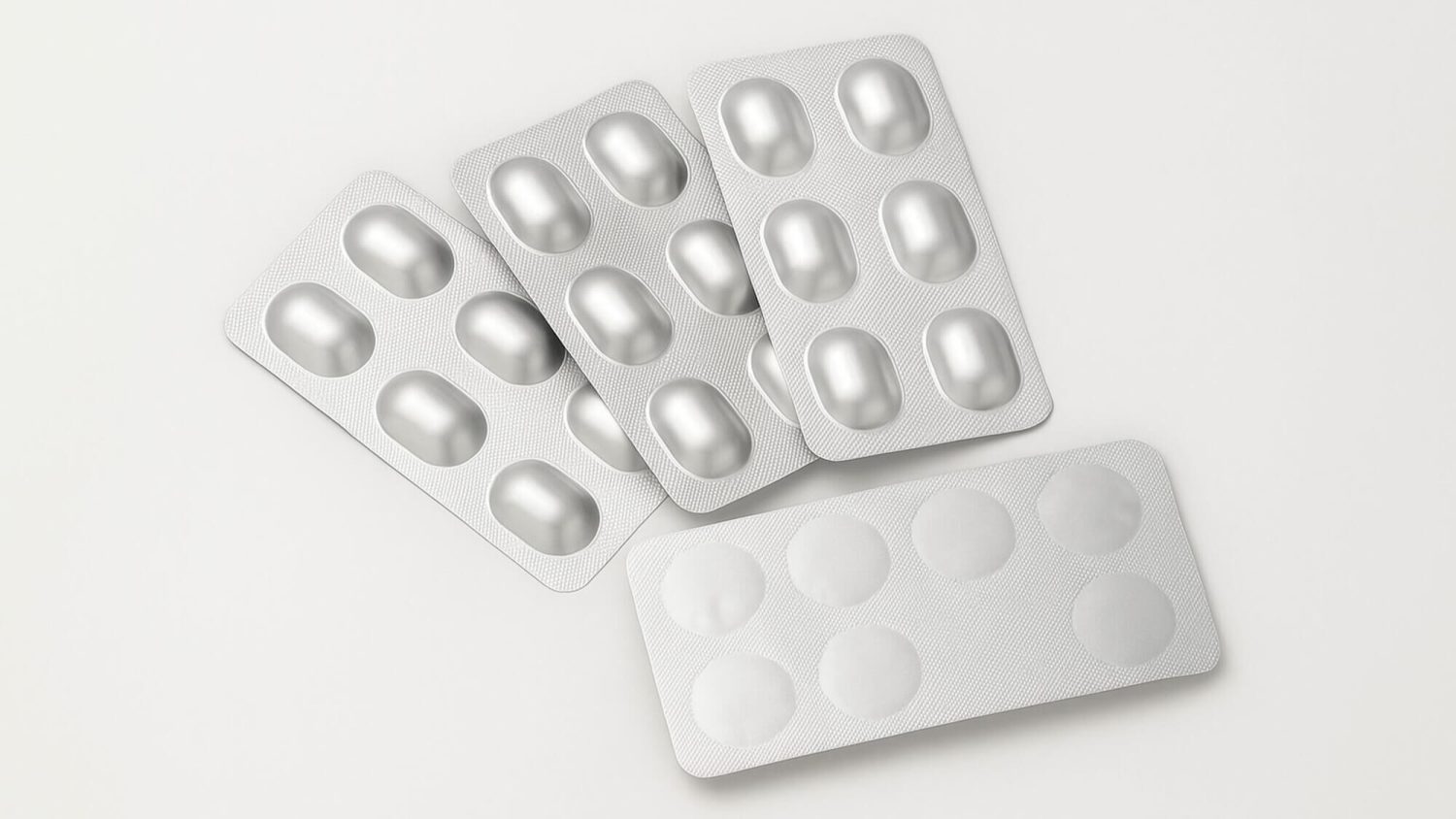
In real life, its blister cavities are formed by compressing a laminated aluminum film. It’s often a 3-layer foil of nylon/Alu/PVC. The pack’s backing is also aluminum foil.
Because the Alu-Alu packaging is all metal, the blisters are completely opaque. This blister pack gives a premium vibe.
How Is Alu-Alu Packaging Made?
We use a special process called cold forming to make Alu-Alu blisters. These laminate foils are shaped under high pressure instead of through traditional heating.
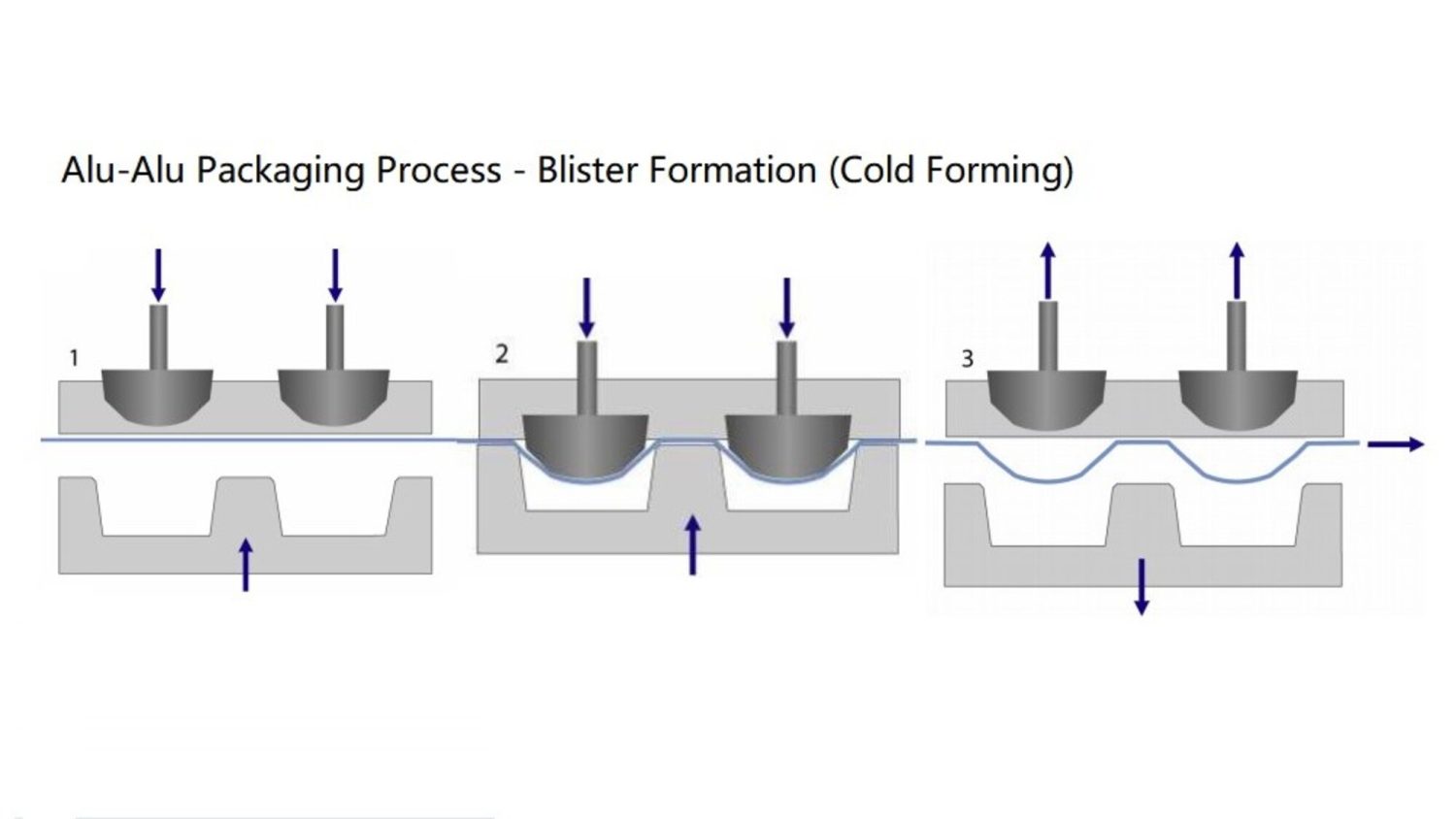
1. Cold forming the blister. The aluminum laminate is placed over a mold and pressed down to form pill-sized pockets. No heat is applied here.
2. Filling products. The formed sheet moves to the filling station and each pocket is filled with a tablet or capsule.
3. Heat sealing. The lidding aluminum foil seals the filled blisters using heat and pressure.
4. Perforation and punching. Individual pack sizes are cut and perforated for each tear-off use.
Advantages of Alu-Alu Blister Packing
- Alu-Alu blisters block 100% of moisture, oxygen, and light. No water vapor or air can seep through the foil layers.
- Products last much longer thanks to their impermeable seal, especially sensitive formulations.
- Laminate-made blister cavities are resistant to physical damage. They protect products from rough handling and transport.
- The robust Alu-Alu material is highly tamper-evident and child-resistant. It adds an extra layer of safety for products.
Disadvantages of Alu-Alu Blister Packing
- The biggest trade-off is its higher cost. Aluminum is pricier than plastic, and the cold-form process is slower. All of this makes Alu-Alu blisters more expensive to produce.
- Its opaque nature is a double-edged sword. It blocks light well, but it also means you can’t see the pill inside.
- Aluminum foil used in cold forming cannot bend into a sharp, 90-degree angle. This results in larger cavities, so an Alu-Alu blister card usually fits fewer pills than an Alu-PVC one.
- Laminate foils make it difficult to recycle the entire blister pack.
Applications of Alu-Alu Packaging
Because of its barrier power, Alu-Alu blister packing is chosen for:
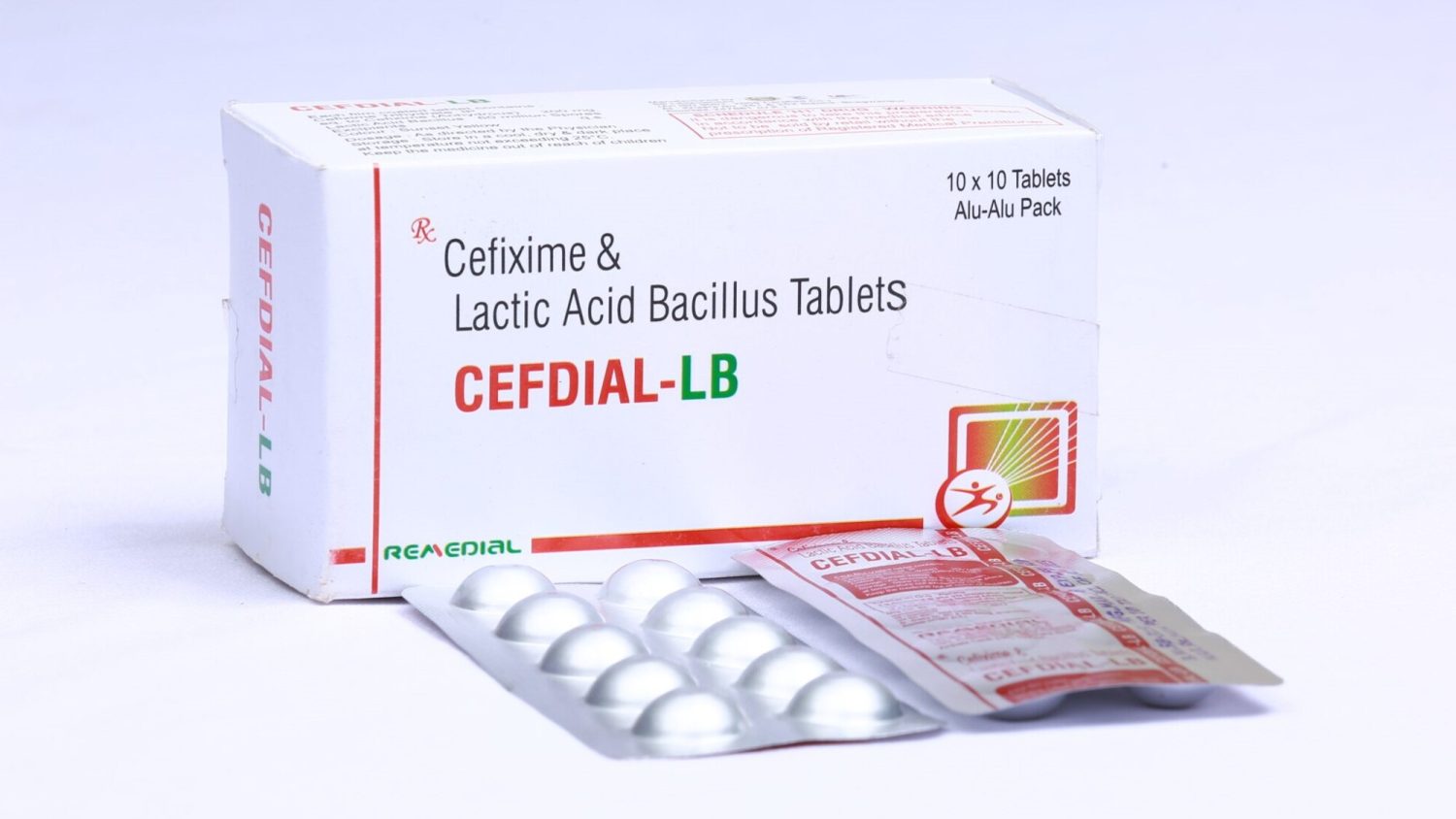
- Moisture-sensitive drugs like certain anti-inflammatory pills, antibiotics, and hormonal tablets
- Expensive vitamins or nutraceuticals
- Products that have to be transported or stored in humid tropical areas
What Is Alu-PVC Blister Packaging?
Alu-PVC blister packaging is the more everyday style of blister pack. You can find it in most OTC medicines.
As the name suggests, it’s a combination of aluminum and plastic. This packaging uses PVC film to form cavities and aluminum foil as the lidding material.
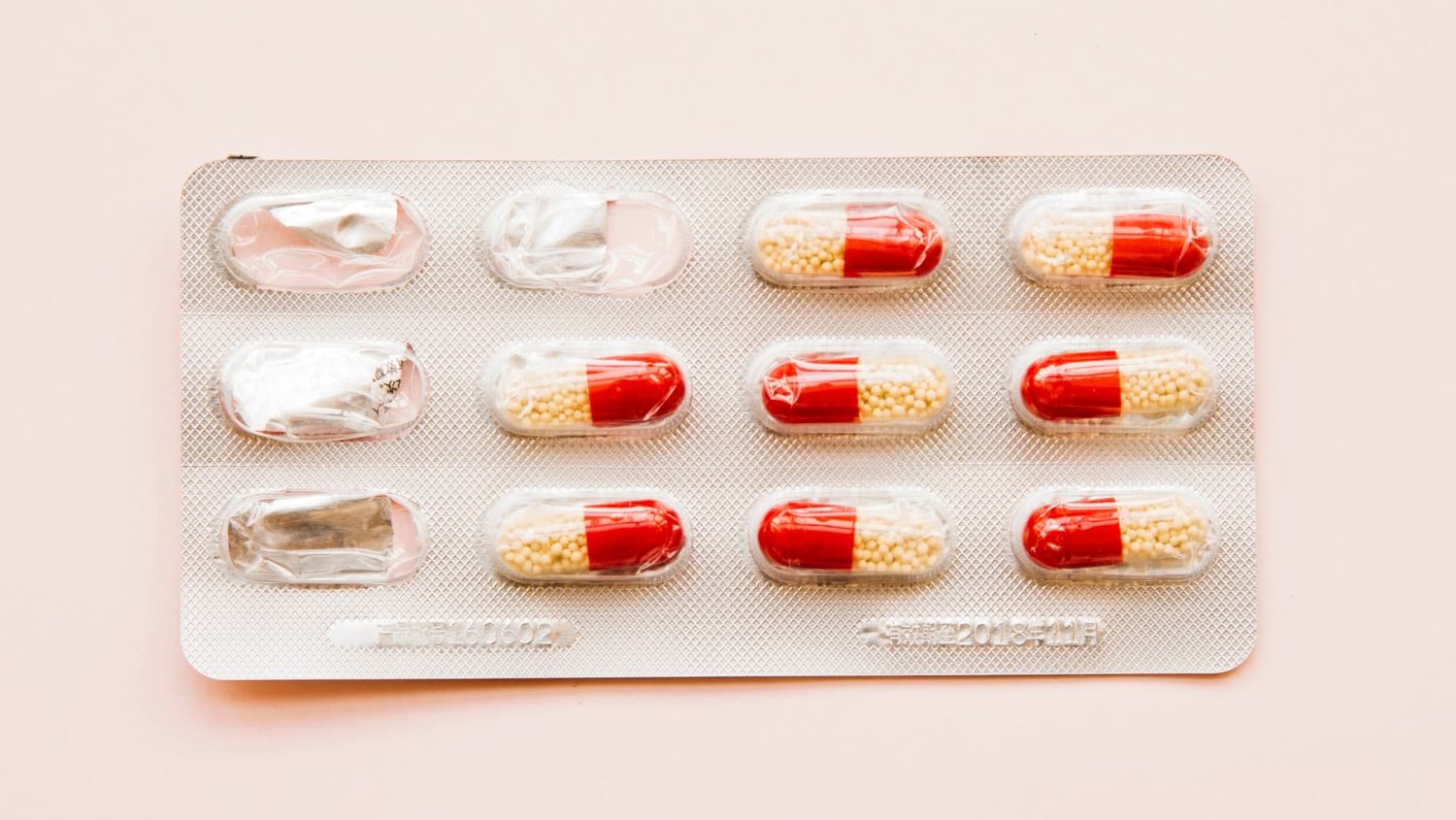
Alu-PVC blisters are popular because they’re economical to make and let you see the pills through the pack. So, they are a go-to choice for manufacturers and consumers alike.
How Alu-PVC Blister Packs Are Produced
Unlike Alu-Alu packaging, these blisters are created using the traditional thermoforming method.
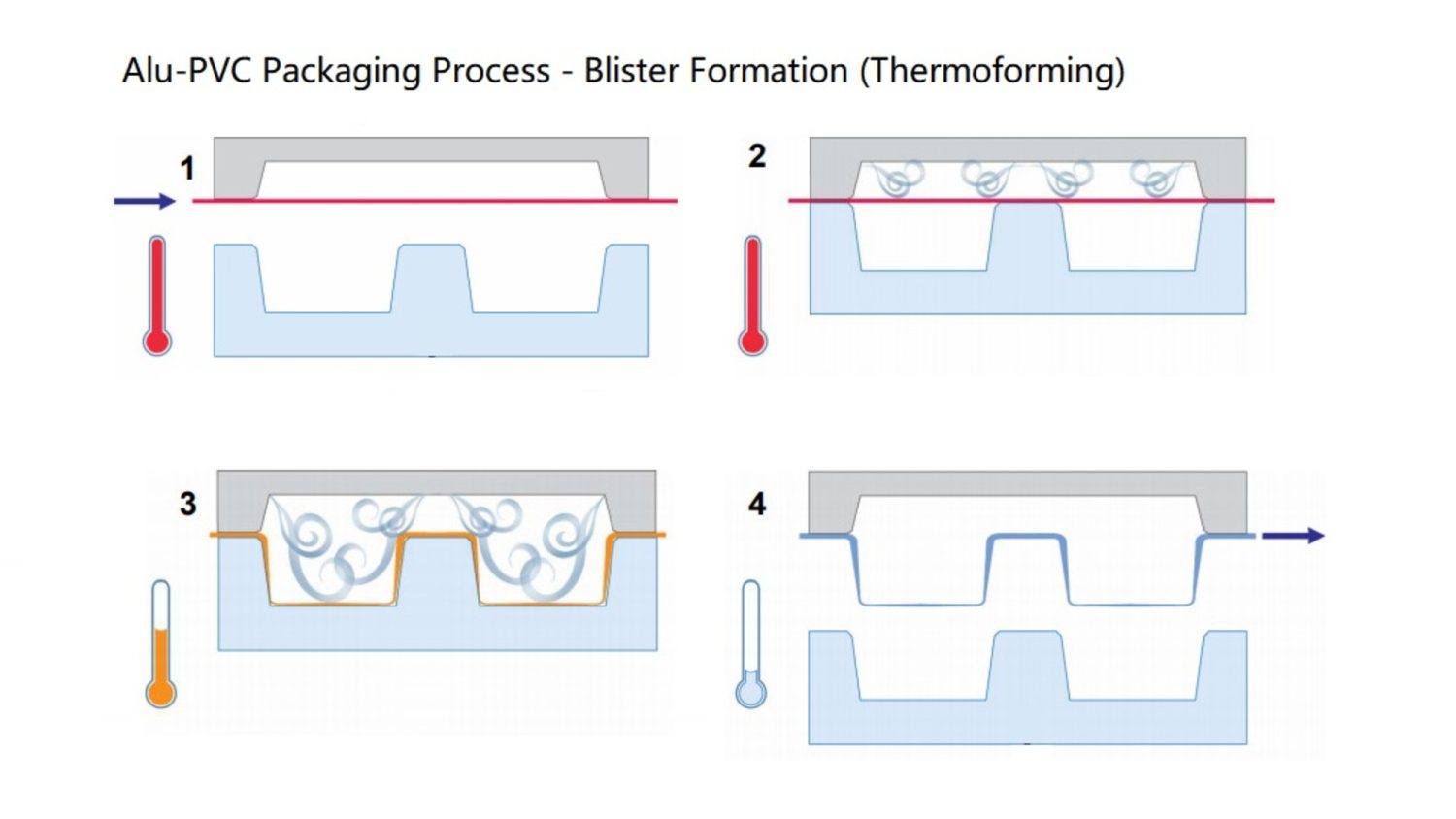
1. Heating the PVC film. Once introduced into the blister packaging machine, the transparent PVC film is warmed at the heating station until it’s soft and flexible.
2. Forming cavities. A vacuum or pressure is applied to mold the pliable plastic film into blister pockets.
3. Filling the pills. Tablets or capsules are placed into these cavities.
4. Sealing. These filled cavities are then sealed with a thin aluminum foil. Just like Alu-Alu blister forming, heat and pressure are used here as well.
5. Cutting into packs. The blister strip is punched into retail blister cards.
Advantages of Alu-PVC Packaging
- PVC is an inexpensive material. This lowers the manufacturing cost. Manufacturers love that, especially for large-scale runs.
- The see-through plastic film lets consumers see the pills directly. This is a big plus for quality control and consumer confidence.
- PVC is easy to thermoform, so it can be shaped into various cavity sizes and layouts. This helps make the most of each blister card.
- Though not 100% hermetic, Alu-PVC still keeps out a lot of moisture and air. For most everyday pills and supplements, it’s usually enough.
- Thermoforming PVC blisters is generally faster than cold forming Alu-Alu.
Disadvantages of Alu-PVC Packaging
- PVC film is semi-permeable, meaning the blister packs are not completely airtight. So they’re unsuitable for super-sensitive drugs and have a shorter shelf life.
- The material nature makes PVC cavities brittle under temperature changes or over time. And they’re more likely to crack compared to Alu-Alu blisters.
- PVC is recyclable, but it takes more work and energy than aluminum. Some regions are also tightening rules on PVC use. This could affect future packaging choices.
Applications of Alu-PVC Packaging
Alu-PVC packs are the go-to choice for most tablets and capsules on the market:
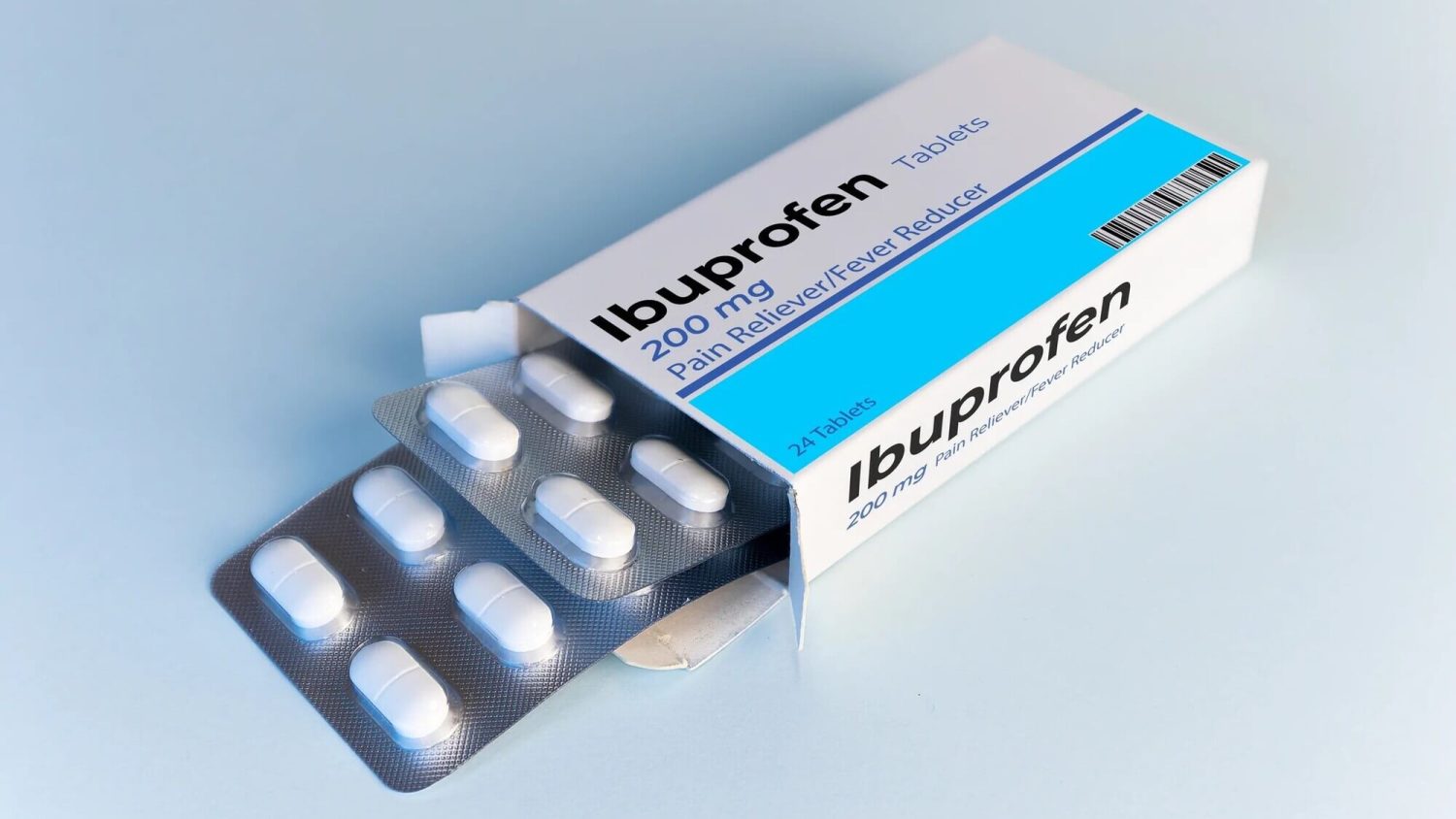
- Over-the-counter drugs like painkillers, antacids, and cold/flu tablets
- Many dietary supplements, like vitamins, minerals, and fish oils
- Any product that isn’t highly sensitive but is better for being visible to consumers
Alu-Alu vs. Alu-PVC: Which Should You Choose?
To make the choice clear, here’s a quick comparison of these two blister types:
| Feature | Alu-Alu Blister Pack | Alu-PVC Blister Pack |
|---|---|---|
| Base Material | Laminated aluminum | Polyvinyl chloride |
| Forming Technique | Cold forming: uses pressure | Thermoforming: uses heat |
| Production Speed & Machinery | Slower and needs special machines | Faster and can be produced on standard equipment |
| Product Visibility | No: opaque blisters | Yes: transparent blisters |
| Moisture & Oxygen Barrier | Nearly hermetic, 100% protection | Good, but not perfect due to permeability |
| Light Protection | Completely blocks light | Moderate, light can get in |
| Blister Size | Bulkier because aluminum foil for blisters cannot be folded into a sharp angle | Smaller and more compact |
| Shelf Life | Longer | Shorter |
| Cost | Higher: expensive material and costly manufacturing | Lower: budget-friendly material and economical production |
| Primary Use | Hygroscopic formulations, light-sensitive meds, and high-value drugs | Standard OTC and stable prescription drugs, vitamins |
Final Takeaways
- Blister packs are important in pharma. Both Alu-Alu and Alu-PVC protect tablets and capsules well.
- Alu-Alu packaging gives maximum protection to very sensitive or long-term products. The trade-off is higher cost, opaque packs, and slower production.
- Alu-PVC blister is a more common choice. It provides good barrier protection, enough for most meds and supplements. It’s economical, clear, and flexible.
- Match the blister packaging to the product. Produce sensitive drugs? Choose Alu-Alu. Want something cost-friendly and see-through? Alu-PVC is the best fit.


