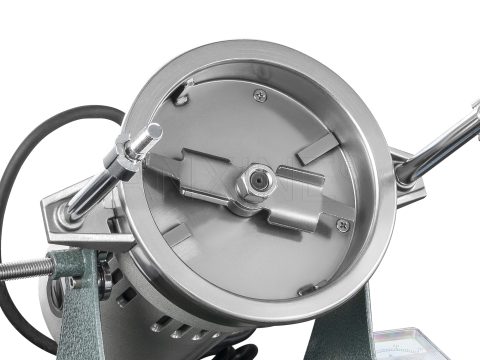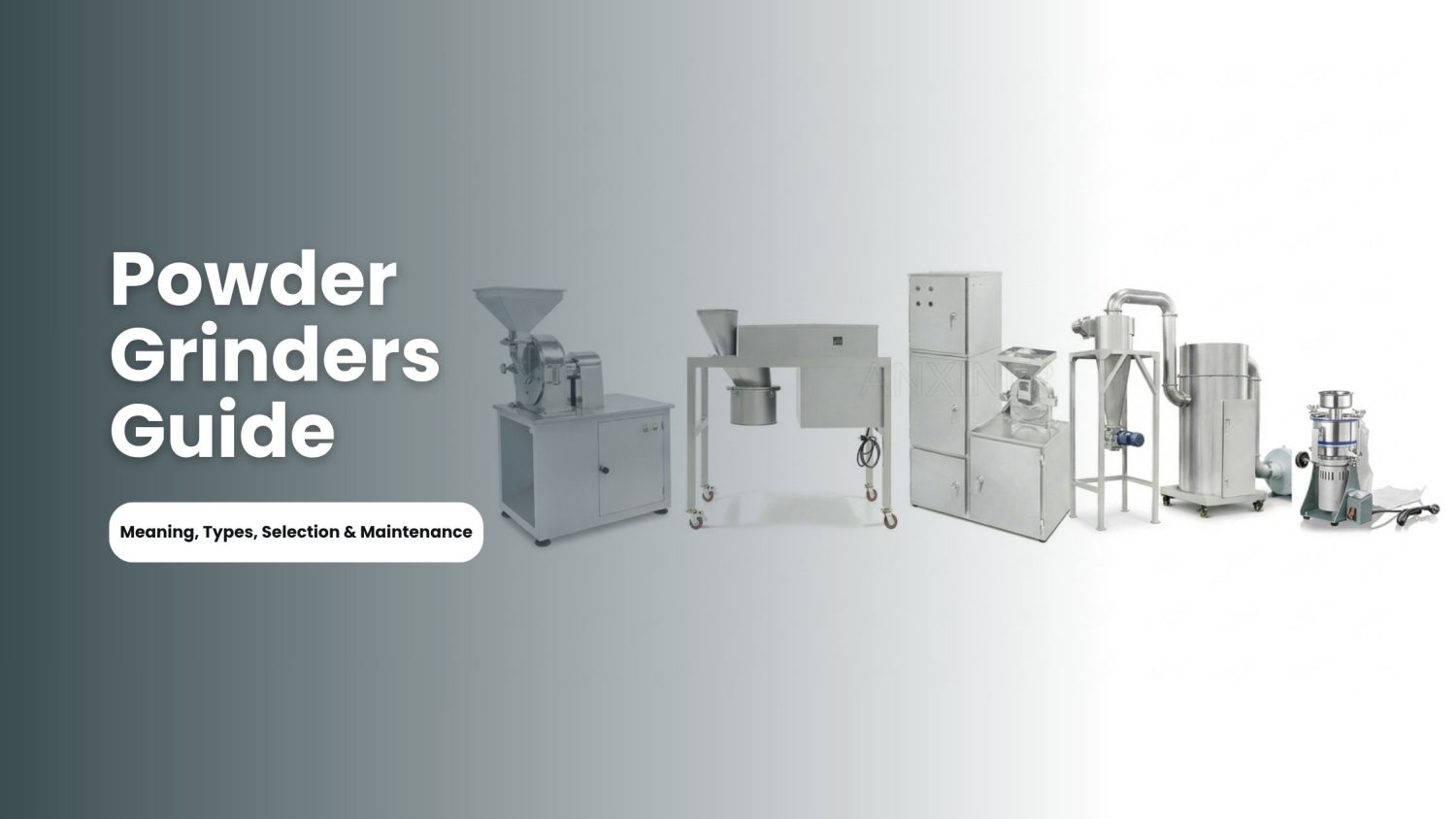
Many materials may be hard to process because of their large particle size. So powder grinders are needed to crush them into fine powder for use. From food and pharmaceuticals to chemicals and agriculture, it plays an important role in making materials easier to mix and process. This article helps you have a clear understanding of powder grinders and use them better.
What is a powder grinding machine?
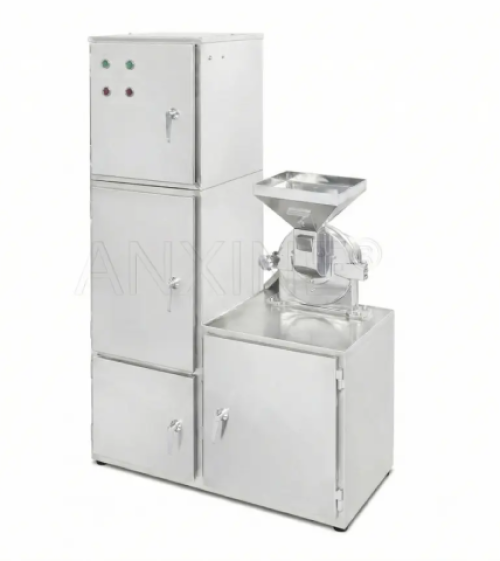
A powder grinder is a machine used to crush solid materials into fine powder or smaller particles, such as herbs, food and chemicals. Then the powders could be used for other processing, such as mixing or granulation. Powder grinders can process different types of solid materials, such as crystals, granules, or lumps. They use mechanical force to achieve size reduction. During grinding, the particle size could also be controlled by proper settings.
Benefits of powder grinders
It offers the following advantages.
- Improve mixing uniformity. Smaller particles mix more easily with other materials. Large pieces may cause segregation or uneven distribution.
- Improve processing performance. Powder or granules enter downstream equipment more smoothly, such as tablet presses and capsule filling machines.
- Achieve accurate dosing. In pharmaceutical and food production, powders could be more precisely measured than large particles.
- Better product quality. A more uniform particle size leads to more consistent content and effectiveness.
What is a grinder used for?
Powder grinding machines are used in many production areas.
- Pharmaceuticals. They are used to grind raw materials into fine powder for tablet compression, capsule filling, or granulation.
- Food processing. They produce flour, spice powder, sugar powder, and milk powder.
- The chemical industry. They process pigments, resins, and additives into fine particles for further use.
- Cosmetics. Powder grinders are used to produce fine powders for face powder or foundations.
- Agriculture. Many products need to be crushed for easier application and mixing, such as powdered fertilizers, pesticides, or feed additives.
What types of grinders should you know?
There are many types of powder grinding machines. Each has its advantages and features. Here are some common types for your reference.
Hammer mills
This type uses high-speed rotating hammer blades to crush materials into smaller particles. Hammer mills are suitable for dry and brittle materials, such as grains, spices, dried herbs and sugar. During the grinding process, the material is fed into a grinding chamber. Then it is repeatedly hit by the moving hammers. The main force comes from high-impact collisions, supported by shear and friction. After grinding, the particles pass through a screen to get the final particle size.
Hammer mills usually consist of a feeding system, a rotor with hammers, a grinding chamber, a screen, and a discharge outlet. The design makes it easy to clean and maintain. Particle size can be adjusted by changing the screen size and adjusting the rotor speed. The screen mesh could be customized to meet your needs.
Automatic Continuous Mill Herb Grinder WF Series
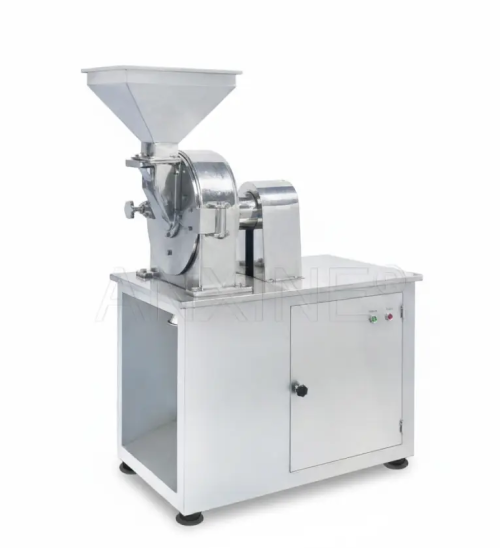
Anxine grinder WF series belongs to hammer mills. It features high speed and efficient material pulverization. All parts in contact with materials are made of stainless steel to meet GMP standards. The integrated cooling device maintains a stable operating temperature during high-speed operation. It could grind materials like herbs, medicines, ores, and chemicals.
Jet mills
This is a type of ultra-fine grinding equipment. It mainly uses high-speed compressed air or gas to break particles. Particles collide with each other at high speed inside a grinding chamber. This reduces them into a very fine powder. Because there is almost no mechanical contact, the heat is very low during the process.
During the crushing, materials are first fed into the grinding chamber. Then compressed air is injected through nozzles at very high speed. It creates strong airflow and particle acceleration. The particles are repeatedly collided and fractured until they become super fine. After grinding, fine powders are separated from coarse ones. They are then collected for further processing. Larger particles are sent back for further grinding.
Jet mills are mainly used for materials that require ultra-fine particle size and high purity. They are commonly applied in the medicine industry for drug content, in food industry for flavor powders, and in chemical areas for pigments. They are ideal for heat-sensitive, sticky, or high-purity materials.
CF-15 grinder for super fine powders
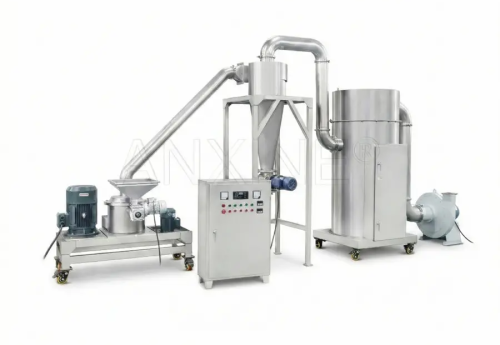
Anxine CF-15 is an ultra-fine grinding machine designed for dry materials. It combines air classification, high-speed shear, and pressure grinding to produce fine and uniform powders. The fineness ranges from 80 to 320 mesh, with a production capacity of 40 to 200 kg/h.
Cone mills
A cone mill is called a conical mill. It is a size reduction machine used to crush materials into uniform particles. It features gentle processing, low heat and uniform output. The machine uses screens or sieves to produce granules. This directly determines the output granule size.
A cone mill operates with three main parts: a rotor, a conical screen, and a housing. The working process is as follows.
- Material enters the chamber from the hopper.
- The rotor rotates at a speed you set.
- Particles are pushed against the conical screen.
- Size reduction happens through shear and mild impact.
- Only particles small enough pass through the screen.
- Larger particles stay inside until reduced further to meet the size requirement.
CFZ series
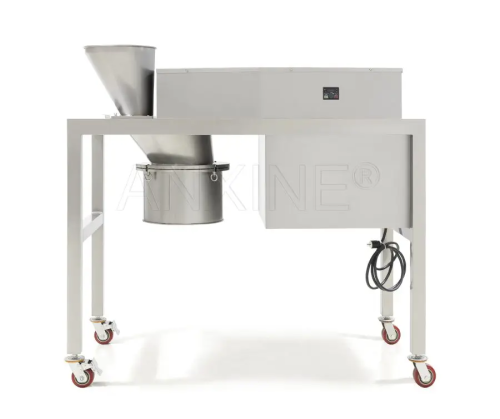
Anxine provides conical mills – CFZ series for crushing and granulation. It is available in 5 models with different capacities. The granularity is from 0.8 to 3.0mm. Moreover, the speed could be adjustable according to your production needs. The CFZ series supports grinding both dry and wet materials for various production.
Pin mills
A pin mill is a type of grinder that uses two rotating discs fitted with pins to grind materials into fine powder. One disc is fixed while the other rotates at high speed. When material enters the grinding chamber, it is repeatedly struck and sheared by the pins until it breaks into smaller particles.
Pin mills are mainly used for dry and brittle materials that need medium to fine grinding. Common types include sugar, spices, chemicals, and pharmaceutical powders. They are not ideal for sticky materials because these may cause buildup.
Ball mills
Ball mills are mainly used for fine to very fine grinding. They rotate a cylindrical drum that is filled with steel or ceramic balls. As the drum rotates, the balls move and fall inside the chamber. Then, the material is crushed through repeated impact and friction between the balls and the particles.
Ball mills can handle minerals, chemicals, pigments, and ceramics. In the pharmaceutical industry, it is always used in the lab for formulation development and pilot production.
How to select a suitable powder grinder for your business?
When choosing a powder grinder, some factors should be considered. Each affects the operation and final powder quality.
Material properties
The first consideration is material. Dry materials, like spices, are usually processed by hammer mills or pin mills. Hard materials may need a stronger grinding force, so ball mills are often used.
Demanded particle size
The fineness you need directly decides the machine type. For coarse to medium powder, hammer mills are usually enough. For finer and more uniform powder, around 80–300 mesh, pin mills are good choices. If you need ultra-fine powder at the micron level, jet mills are often the best option. They can reach very small particle sizes with better control.
Cleanliness
In the pharmaceutical and food industries, the machine must be easy to clean and meet GMP standards. So, most of the grinding machines feature simple structures and stainless-steel contact parts. Jet mills and some pin mills are often chosen when high purity and low contamination risk are required. Because they reduce material contact with mechanical parts.
Production capacity
Production capacity should match your daily output demand. It avoids overload or insufficiency and keeps the operation stable. If your pharma business just starts up, a small grinder may be better. Take Anxine powder grinder YF3-1 for example. Its output ranges from 2-20kg/h, and the fitness could be achieved from 0.5-1.0mm. This model produces super fine powders and features a compact design.
In addition, the working capacity of powder grinders influences matching with the downstream machines. The grinder capacity should match downstream machines such as mixing, granulation, or packaging equipment. If the grinder produces 200 kg/h, but the packaging machine can only handle 120 kg/h, material will start to accumulate. It causes many problems like blockage. So, a correct capacity is important if you have a production line.
How to maintain powder grinders?
Maintenance is important for operation and powder quality. Here are some tips for your reference.
Cleaning
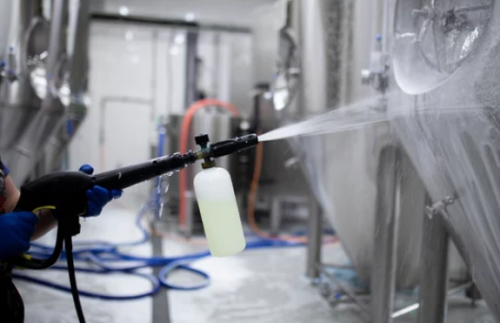
After finishing grinding, the grinding chamber, screen, and discharge area should be cleaned to remove residual powder. It could prevent material buildup, cross-contamination, and blockage.
Check key parts
Different machines have different wear parts. In hammer mills, hammers, liners, and screens gradually wear out. In pin mills, pins and discs need regular inspection. If the part has problems, you may need a new one to replace it. Otherwise, grinding efficiency would be lower and particle size may become unstable.
Lubrication
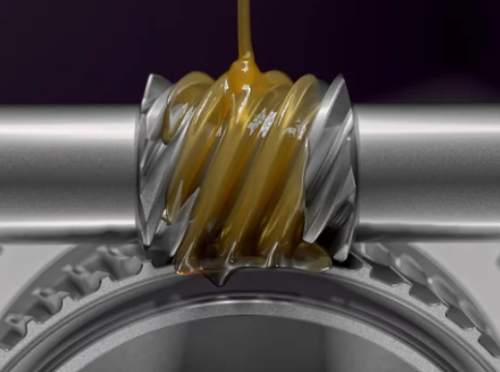
After the machine is used for a period of time, rotating parts, such as bearings and shafts, need lubrication. This reduces wear, prevents overheating, and avoids jamming. The lubrication oil is usually selected based on your manual guide. The machine should also be checked for vibration or noise. They often indicate mechanical imbalance or wear and you need to pay attention to them.
Check screen and airflow
If your grinders have screens, the screen should be checked for blockage or damage, since it directly affects output size. For air-based systems, airflow stability, cyclone separation, and dust collection should be checked for smooth operation.
Electrical check
Motors, control panels, and sensors should be inspected regularly. Stable power connections and correct operation settings avoid shutdowns and improve safety during continuous production.