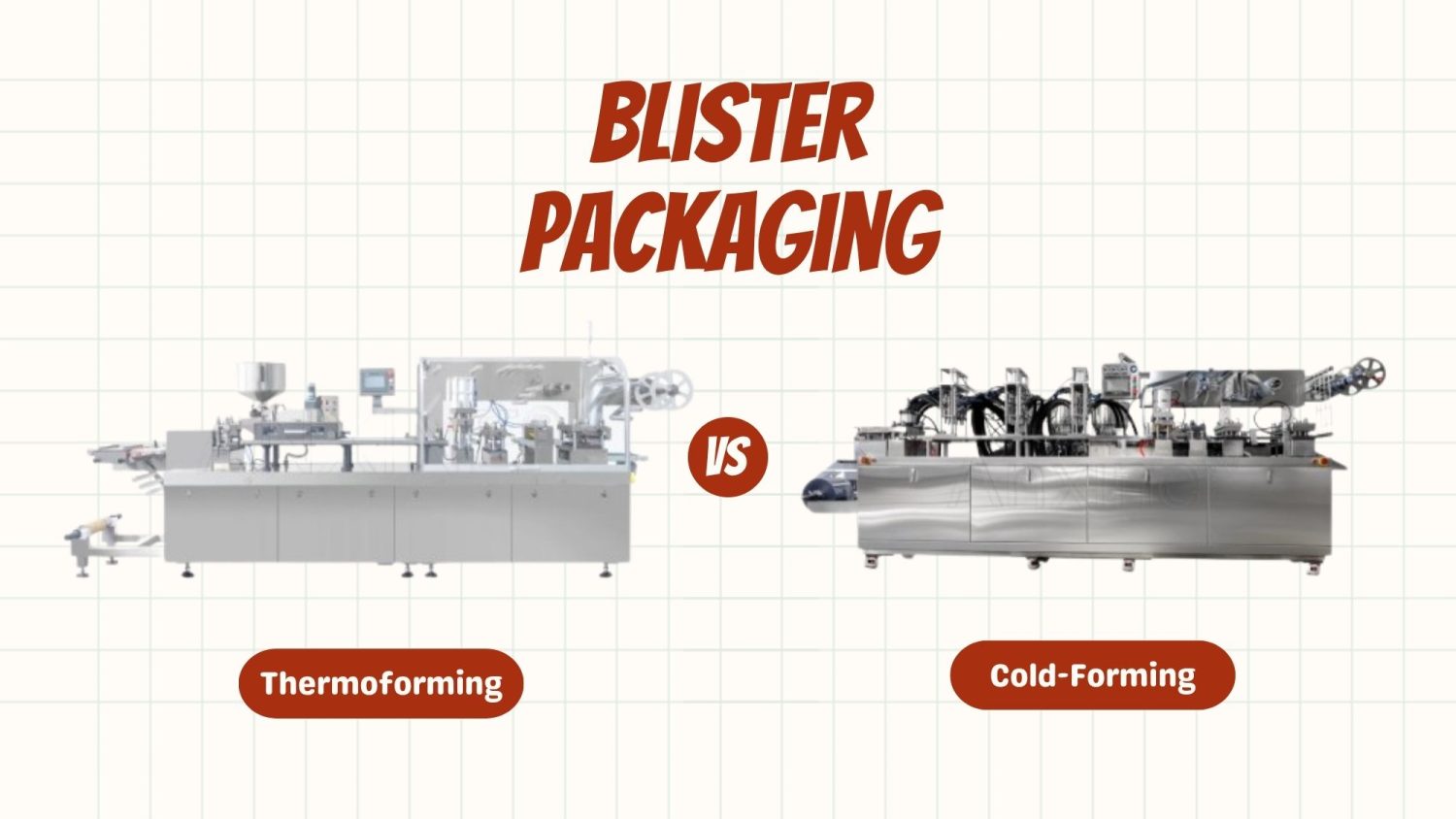
Blister packs are widely used in many products, such as tablets, capsules, batteries, etc. They could be made by thermoforming or cold forming blister packaging machines. Each method has its advantages and disadvantages. If you want to use blister packs for your packaging, a clear understanding of these two methods is important.
What is Thermoforming Blister Packaging?

Thermoforming blister packaging is a process that needs heat to shape a plastic film into cavities. After forming, the product is filled into the cavity, and a backing material such as aluminum foil is sealed on top to close the pack. This method features simple manufacturing and stable operation. It produces blister packs with transparent cavities. Because of the easy manufacturing, thermoforming blister packaging equipment is widely used in the pharma, supplement and consumer goods industries.
What is Cold-Forming Blister Packaging?

Cold-forming blister packaging is a process that uses mechanical pressure to create cavities. So the material does not soften through heating. It is pressed into shape by a forming mold. The material is usually a multi-layer aluminum laminate, like Alu-Alu. It is combined with plastic layers to improve strength and sealing quality. During the forming stage, the laminate is stretched and pressed into cavities that match the product size and shape. This method is always used for pills that are highly sensitive to moisture or air.
There are many differences between thermoforming and cold-forming blister packaging. A thorough understanding helps you make a wise choice when choosing a blister packaging machine.
Different Materials
For thermoforming, it mainly uses plastic films. These materials can soften under heat and they are easy to shape into cavities of different sizes. Common plastic materials include
- PVC. This is the most widely used material in thermoforming blister packaging. It provides basic protection against moisture and oxygen. The cost is also low.
- PET. PET offers better strength and rigidity than PVC. It is often used when sustainability is required.
- PVC/PVDC. This is a coated material. A thin PVDC layer is applied to PVC. It offers the strongest protection compared to other materials.
For cold forming, it uses aluminum-based materials. These materials do not rely on heat for shaping and provide much higher barrier protection. Common types include
- Alu-Alu. It includes aluminum foil on both the forming side and the lidding side. It blocks light, moisture, and oxygen almost completely. The aluminum layer also prevents the customers from seeing from the outside.
- Multi-layer laminate structure. It commonly includes an aluminum layer, nylon and PVC layer for strength and protection. This material is always used for pharma products that are highly sensitive to environmental factors.
Different Forming Process
During the thermoforming process, heat is applied to shape plastic film into cavities. The film first passes through a heating station. When it reaches a set temperature, the material becomes soft and flexible. Next, it moves into the forming station to be formed into cavity shapes. After forming, the film is cooled to keep the cavity structure.
Cold forming shapes the materials with mechanical force. The aluminum laminate is pressed by a forming mold under high pressure. The material stretches and takes the shape of the cavity directly. Because aluminum has limited flexibility, the forming depth and shape must be controlled carefully to avoid cracks or damage. It produces opaque blister packs with strong barrier protection. Because there is no heating stage, the process structure is simpler in terms of temperature control. However, it requires a higher forming force and more precise material handling.
Cost
It includes machine and material costs. Because of the different materials and processes, thermoforming and cold-forming also require different manufacturing machines.
Thermoforming Blister Packaging Machine
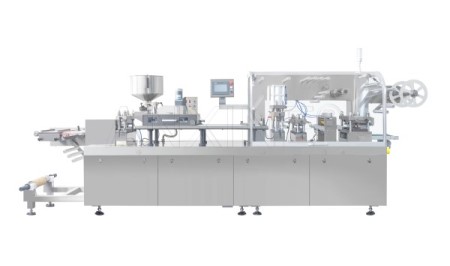
Thermoforming blister packaging machines have a wide price range in the market. Basic models can start from around $10,000–$20,000, like a semi-automatic model. Most fully automatic standard machines require $20,000–$50,000, while high-speed or fully customized systems can go above $60,000. Because the forming process needs heat and plastic film, the structure is simple, and the tooling cost is also lower. This keeps the overall investment more flexible for different business scales.
Cold-Form Blister Packaging Machine
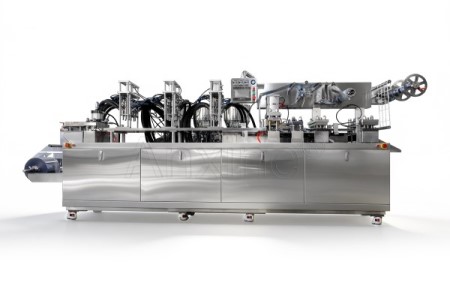
Cold-forming blister machines also have a wide price range. It generally starts from around $15,000–$30,000 for basic semi-automatic models, and $30,000–$70,000+ for fully automatic production lines. In some high-speed machines, the price can be even higher.
Compared to the thermoforming equipment, cold-forming blister equipment costs more at the same specification level. This is because it needs a stronger mechanical structure for forming pressure, higher precision tooling to avoid material cracking, and extra systems to handle Alu-Alu laminate. These factors increase both manufacturing complexity and cost. In addition, this machine requires more staff training and a maintenance fee.
Application Differences
Thermoforming blister packaging is widely used for products that require stability and high production efficiency. It is common in OTC products, such as tablets, capsules, and medicines that are not highly sensitive to moisture or light. This method is also used for food supplements. They include vitamins, minerals, and herbal products. For many supplement brands, transparent appearance and cost control are important, so thermoforming becomes a good choice.
On the other hand, cold-forming blister packaging is used for products that need high protection against moisture and oxygen. It is popular in pharmaceuticals, such as drugs that degrade easily when exposed to humidity. The aluminum-based structure provides excellent barrier protection and maintains its effectiveness well.
You may check the following chart to know their differences.
| Item | Thermoforming | Cold Forming |
|---|---|---|
| Material | PVC/PET, PVDC coated | Alu-Alu |
| Barrier protection | Moderate | Excellent |
| Cost | Lower | Slightly higher at the same level |
| Forming process | Heat + vacuum/pressure | Mechanical pressing only |
| Application | OTC, supplements | Sensitive drugs |
| Product visibility | Transparent | Opaque |
| Machine efficiency | High | Medium to low |
How to Choose the Right Blister Packaging Machine?
As you know the differences between thermoforming and cold forming, you must have a basic knowledge of how to choose one. Here are some selection tips for your reference.
Product Sensitivity
Product sensitivity is one of the most important factors. Some tablets and capsules are stable under normal conditions. These products can be packed with thermoforming with PVC or PET. However, thermoforming may not provide enough protection for products that are sensitive to the environment, even if coated materials are used. Cold-forming is better because it offers a much higher barrier.
Shelf Life Requirement
Shelf life is closely related to packaging performance. If the product is stored in normal conditions, thermoforming is enough. If the product needs long-term use or may face unstable storage conditions, cold-forming packaging could be considered. When shelf life is strict, packaging should match the stability requirement, not only the cost.
Forming Ability
Thermoforming can handle deeper cavities and complex shapes because the plastic softens easily when applied with heat. This makes it a good choice for big tablets, softgels, or special shapes. Cold forming depends on aluminum stretching. The material has a limit. If the cavity is too deep or the shape is complex, it may cause cracks or pinholes.
Production Type
Production style affects machine choice more than you expect. Thermoforming is better for large-volume and stable production. It runs faster and it is easier to operate continuously. Cold forming is often used for high-value products with lower volume. If you want to pack many different products, quick changeover is a key factor. Thermoforming usually allows faster mold change and easier adjustment. Cold forming takes more time because of higher requirements.
Machine Type
Some buyers want one machine for both thermoforming and cold forming. This is possible in some designs, but there is usually a trade-off. A combined machine may not work as well as a dedicated machine in efficiency or stability. If production is stable, a dedicated machine is ideal. If product types change often, flexibility may be more important.


