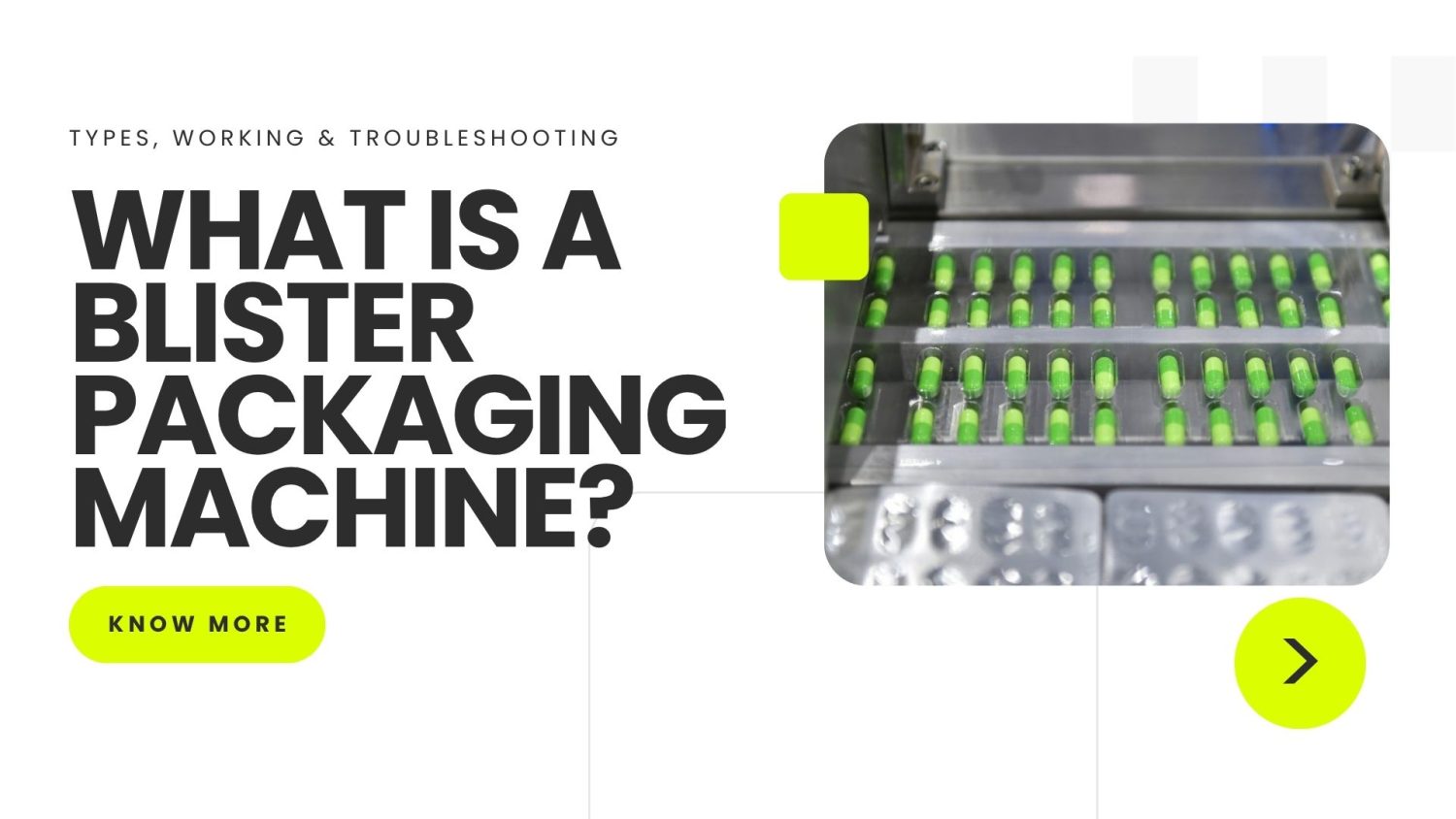
Blister packaging equipment is widely applied in industries such as pharmaceuticals, nutraceuticals, and consumer goods. They produce different types of blister packaging to pack pills. This packaging offers good protection and appearance. As demand grows, blister packaging equipment is increasingly popular. So, a clear understanding is important if you want to use the machine.
What is Blister Packaging Equipment?
A blister packaging machine is used to pack products in different blister packs. It shapes a plastic film into pockets, places the product
inside, and then seals it with materials such as aluminum foil or paperboard. Blister packaging equipment supports producing blister packs of different sizes efficiently and correctly.
Advantages of Blister Packaging Machine
Blister packing equipment is widely used because they offer many advantages in daily production.
- Strong protection. Each product is sealed inside its own cavity. It protects the product against moisture, air, light, and dust.
- Accurate unit dosing. Blister packaging makes unit dosing simple and clear. Each cavity holds one product, so users can easily count and take the correct amount.
- Good presentation. Blister packs offer a clean and transparent appearance.Users can see the product directly.
Applications of Blister Packaging Equipment
Because of the various uses, blister packaging equipment is applied in many productions. They include
- Pharma industries. They are used to pack tablets, capsules, softgels, and lozenges. It supports accurate dose control for easy daily use.
- The nutraceutical industry. Vitamins and dietary supplements are packed in blister packs. These products are sensitive to humidity and oxidation. Sealed cavities could keep them stable.
- Consumer goods. The equipment is widely used for small consumer items, such as batteries, electronic accessories, screws, etc.
- Medical devices. Small medical tools, such as test kits, and diagnostic components, are often packed in blister packs. The sealed structure could keep hygiene and reduce contamination risk.
- Food area. Some food products are packed with blister packaging, such as chewing gum, candy, and portioned snacks.
What are the Common Types of Blister Packaging Equipment?
These machines could be classified based on different automation levels and how the cavities are formed. Each type has unique features, ideal for different product packaging.
Semi-automatic Blister Packaging Machine
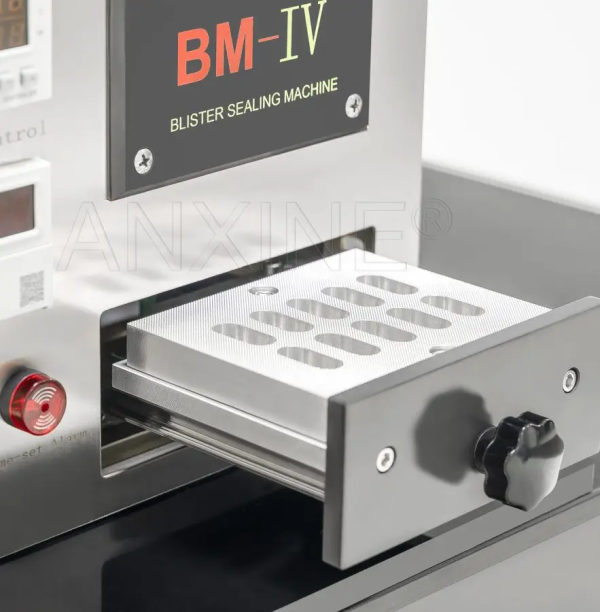
A semi-automatic blister packaging machine combines manual work with automated functions. The machine usually handles forming and sealing, while the operator needs to feed the product into the cavities, and take the finished blister packs out. This type features good price and efficiency. It also improves accuracy compared to manual machines. Semi-automatic machines are usually bought by small to medium manufacturers.
Fully Automatic Blister Packaging Equipment
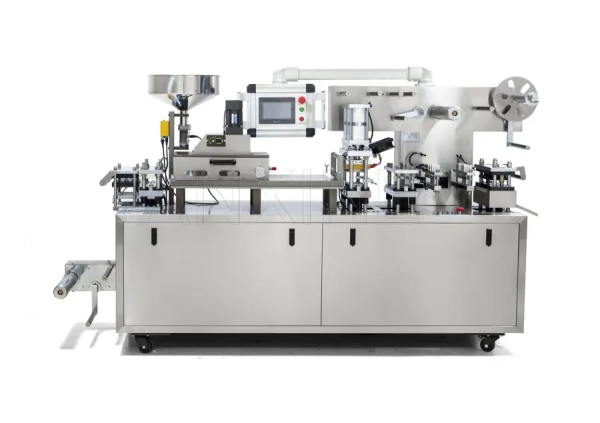
A fully automatic blister packaging machine completes the entire process by itself. The machine forms the cavities, feeds the product, seals the backing material, and cuts the finished packs in one continuous process. This type is suitable for large-scale production that has needs high speed and quality. It reduces labor costs and minimizes human error. But it costs much more than the other two models.
Thermoforming Blister Machines
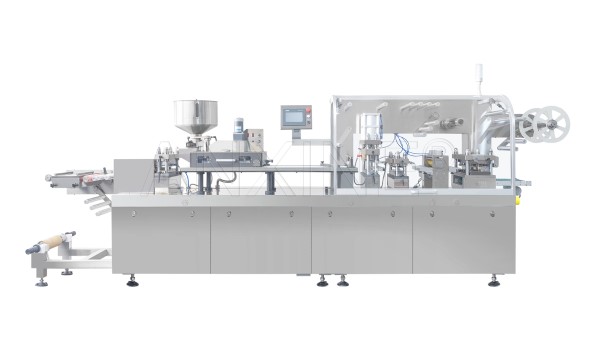
A thermoforming blister machine uses heat to shape plastic film into cavities. The film passes through a heating station and then it becomes soft. Vacuum or pressure is applied to form the film into the required shape. After forming, the product is placed into the cavities, and a backing material such as aluminum foil is sealed on top.
This type of machine is suitable for plastic materials like PVC, PVDC-coated PVC, PET, and PP. These materials are easy to form and feature clear visibility of the product. Thermoforming blister machines are widely used for tablets, capsules, and consumer goods. They are ideal for products that do not require high barrier protection. This type is popular in most of pharmaceutical packaging, nutraceutical products, and retail items.
Cold Forming Blister Machines
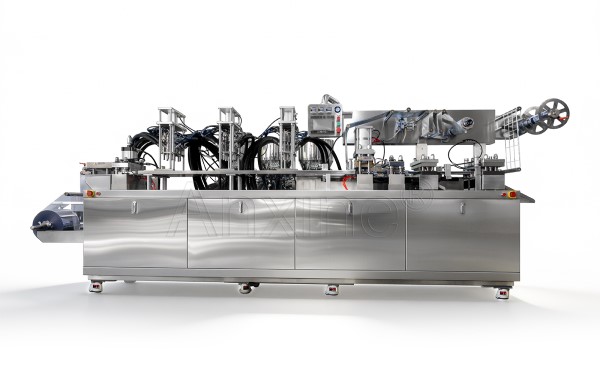
A cold forming blister machine uses aluminum-based laminate to create cavities without heat. The material is pressed into shape with mechanical force. It creates deeper and more rigid cavities compared to thermoforming. The main advantage of cold forming is its strong barrier performance. The aluminum laminate offers good protection from environmental factors like moisture.
Cold forming blister machines are used when you have a strict requirement for product stability. This type is used when plastic materials cannot provide enough protection. The pack is not transparent and usually has a larger size to contain the product.
How Does a Blister Packaging Machine Work?
A blister packaging machine completes the whole process from blister forming to strip cutting continuously. Take the working process of automatic blister packaging equipment for example.
Step 1: Cavity Forming
This is the first step to make blister packs after placing the materials and films. The machines uses thermoforming or cold forming to form the cavities with the required shapes and sizes. Thermoforming is suitable for products that need visible packaging. The other is often used for pharmaceutical products that are sensitive to air.
Step 2: Material Feeding
After forming, the machine moves the cavities to the filling area. Products are then placed into each cavity. Different feeding systems are used based on the product type. For pills like tablets, a vibratory feeder is common. For irregular or fragile products, a brush feeder may be used. They help that each cavity contains the products correctly.
Step 3: Sealing
Once the products are in place, the machine puts a backing material over the formed cavities. This backing is usually aluminum foil, paperboard, or plastic film. Heat and pressure are applied to seal the backing to the formed material.
The sealing step is important for product protection. A strong and uniform seal prevents air, moisture, and contaminants. Meanwhile, the product would be more stable during storage and transport.
Step 4: Discharge
Finally, the continuous strip moves to the cutting station. The machine cuts it into an individual blister pack. The finished packs are then discharged from the machine. They can be collected directly or transferred to the next stage, such as cartoning or labeling.
You can check the video to see how it works.
How to Choose an Ideal Blister Packaging Machine for Your Products?
If you want to buy a blister packaging machine, there are many factors that need to be considered. Each factor affects efficiency and accuracy.
Product Type and Size
Product type and size are the first considerations. Different goods have different shapes and hardness. These differences affect cavity design and feeding method. Small and regular goods like capsules are easier to handle with common feeders and cavity designs. Irregular or fragile products may need special molds or gentler feeding methods.
Product size also affects the cavity depth and design. Larger products need deeper cavities and wider spaces. It reduces the number of cavities per sheet compared to others. This may lead to a lower output if you don’t choose the equipment without suitable product dimensions.
Packaging Material
Packaging material directly influences machine type and product protection. Common types include PVC, PVDC-coated PVC, and aluminum-based laminates. PVC is widely used because it is easy to form and has a low cost. It is suitable for products that do not require high barrier protection. PVDC-coated PVC provides better resistance to oxygen, so it is used for products that are sensitive to environmental factors.
Alu-Alu material is used in cold forming machines. It offers strong protection. This is ideal for highly sensitive or high-value pharmaceutical products. However, it increases material cost and the final pack is not transparent.
Production Capacity
This is usually measured in blisters or strips per minute produced. For small factory or new product trials, a manual or semi-automatic machine may be enough. For large-scale production, a fully automatic model is better. It is also important to match machine capacity with your daily output. A machine that runs too close to its maximum limit may not operate steadily over time. So, you’d better choose a machine that can handle your production in the middle of its output range.
Machine Size
Machine size and layout should fit the factory space. Blister packaging machines include compact tabletop models and large production equipment. You need to consider not only the machine size but also space for operation, maintenance, and material handling. There should be enough room to load materials, collect finished packs, and replace key components.
In addition, you need to consider if the blister packaging machine could be integrated with your other equipment, such as capsule fillers and cartoning machines. It is important to build a complete production line for smooth and efficient output.
What Are Common Blister Packing Machine Problems and How to Troubleshoot Them?
When you use the blister packaging equipment, some problems may occur. Actually, most of them can be solved by yourself. Here are common issues and solutions for your reference.
| Fault | Cause | Solution |
|---|---|---|
| The heating plate fails to heat materials. | The set temperature value is incorrect. | Set the temperature value correctly. |
| The heating plate is damaged. | Replace it. | |
| The wire is loose or falls off. | Check and tighten the connector lug. | |
| The main motor doesn’t work. | The contactor is damaged. | Replace it. |
| There is a hole in the bottom of the blister. | It is because of the insufficient thickness or poor quality of PVC. | Replace it with thicker PVC or PVC with high quality. |
| The temperature of the heating area is too high. | Lower the temperature of the heating plate. | |
| Blister forming is incomplete. | The forming temperature is too low. | Increase the temperature of the heating plate. |
| The filter element of the pressure reducing valve is blocked. | Clean or replace the filter element. | |
| The silicon ring of the upper forming mold is damaged. | Replace it with a new one. | |
| The aluminum foil is crushed. | The temperature of the heat-sealing plate is too high. | Reduce the temperature of the heating plate. |
| Sheets break. | There is too much pressure. | Adjust the four adjusting nuts upward to reduce the pressure. |
| Adhesion is not firm. | The temperature is too low. | Increase heat sealing temperature. |
| The coating layer of aluminum foil is uneven. | Replace it with qualified the aluminum foil. |


