Pouch packaging is one of the most common packaging methods in modern production. It is used in many industries, such as food, pharmaceuticals, and cosmetics. They are lightweight and easy to store, suitable for different product fillings. As market demand continues to grow, more manufacturers are looking for good packaging machines for good production efficiency. If you also want to choose a pouch packaging machine for your business, a clear understanding is necessary.
What is a Pouch Packaging Machine?
A pouch packaging machine is a type of packaging equipment used to fill and seal products into different pouches. The machine can pack powders, granules, liquids and pastes in different pouch styles and sizes. It supports fast operation and stable sealing quality. Some pouch packaging machines use premade pouches that are already formed for product packaging. Other machines create the pouch directly from roll film during the packaging process. After the pouch is prepared, the machine fills the product into the pouch and seals it automatically.
Modern pouch packaging machines can be designed to include additional functions, such as vacuum sealing, zipper opening and closing, date printing, etc. You can confirm these customizations with your supplier.
Advantages of Pouch Packaging Equipment
Pouch packaging equipment helps manufacturers improve packaging efficiency and reduce manual work. The machine can automatically complete the process from filling to sealing. Compared with manual packaging, pouch packaging machines provide more stable filling accuracy and quality. Flexible pouches also make transportation and storage easier. They won’t break easily like glass containers and save transportation costs.
Moreover, the machine could make different pouch styles and sizes for various market needs. It can also work with other machines such as conveyors, check weighers, and cartoners to support automatic production lines.
Applications of Pouch Packaging Equipment
Because of the flexible packaging format, pouches are used in many areas.
- The pharmaceutical industry. Pouches are used for powders, granules, tablets, and small medical devices.
- Supplement area. Examples include protein powder, collagen powder, dietary supplements, probiotics, vitamins, herbal products, and health drink mixes.
- The food industry. Flexible pouches are commonly used for snacks, coffee, spices, sauces, candy, sugar, and rice.
- Cosmetic application. Pouch packaging is used for cream, gel, lotion, facial mask products, shampoo, and liquid soap.
- Chemical industry. Pouches are used for detergents, cleaning powder, industrial chemicals, and agricultural products.
What Are the Common Types of Pouch Packaging Machines?
Pouches could be made with many types of packaging equipment. Here are the main 3 types for your reference.
VFFS Packaging Machine
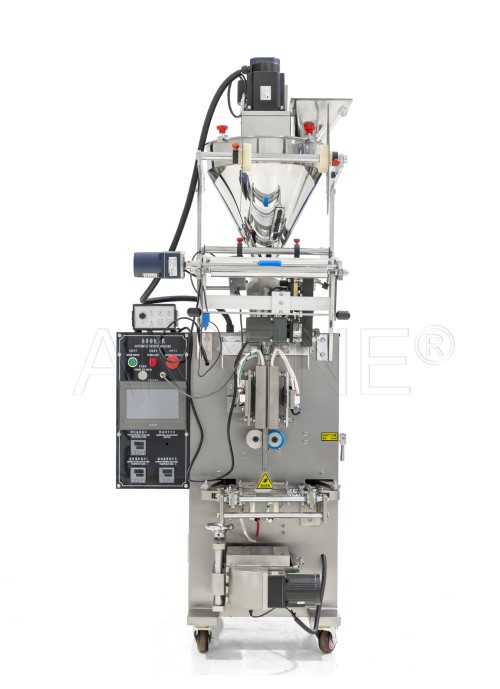
VFFS machine stands for vertical form fill sealing machine. They are packaging equipment that forms pouches from roll film, fills the product into the pouch, and seals the pouch efficiently. “Vertical” means the film moves downward for forming and cutting during packaging production. VFFS packaging machines feature high production efficiency and low material cost. They mainly use PE, PET, and aluminum foil film to form pouches. Different materials provide different barrier protection against moisture and oxygen. VFFS packaging machines could make pillow pouches, gusseted pouches, stick packs, sachets, etc.
How VFFS Packaging Equipment Works
At first, the operator needs to put a roll of packaging film around the roller. Then, start the machine, and the film moves through rollers and passes over a forming tube. The forming collar shapes the flat film into a tube shape around the forming tube. Next, the machine creates a vertical seal along the film edge to form the pouch body. After the bottom seal is completed, the filling part fills the product into the pouch. Once the filling amount is achieved to your requirement, the sealing jaws seal the top of the filled pouch. This is also the bottom of the next pouch. The machine then cuts the pouch apart, and the finished pouch moves out of the machine. This process repeats continuously during production until the number of pouches is what you need.
In addition, there are many filling methods available for VFFS pouch packaging equipment. They include
- Auger fillers for powder.
- Multihead weighers for snacks and granules.
- Piston fillers for liquids and pastes.
- Volumetric cup fillers for small granules.
You may select the most suitable method based on your specific requirements. Here is a video to show you how the VFFS machine works.
HFFS Packaging Equipment
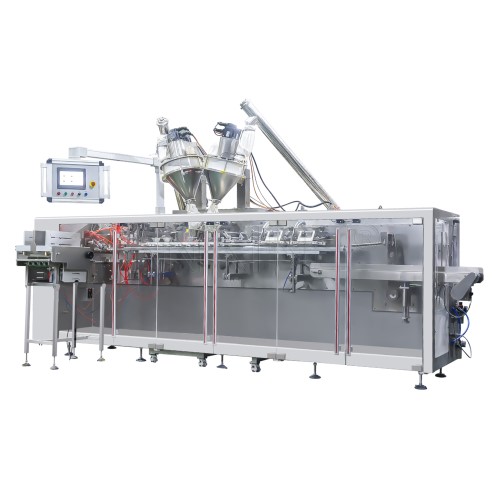
An HFFS pouch packaging machine is also called a horizontal form fill seal machine. It forms, fills, and seals pouches in a horizontal direction. This is the big difference compared to VFFS packaging machines. The HFFS packaging equipment can produce many pouch styles. They include stand-up pouches, zipper pouches, and pouches with spouts. Horizontal filling is also suitable for fragile or irregular products. Because the product enters the pouch more gently than in some vertical filling systems. This also reduces product breakage.
However, HFFS machines are usually larger and more complex than VFFS machines. They often require more factory space and a higher budget. Maintenance can also be more complicated because the machine contains more forming and sealing systems. Therefore, for simple bags, VFFS machines are often more cost-effective.
How an HFFS Pouch Packaging Machine Works
An HFFS machine starts working with a roll of packaging film. The film moves horizontally through different stations for processing. The machine folds or forms the film into pouch shapes during operation. The sealing part then creates the bottom and side seals of the pouch. After pouch forming, the product enters the pouch through the filling station. Different filling systems are used depending on product type. After filling, the machine seals the pouch opening and cuts the finished pouch from the film.
Here is a video to show you how it works.
Premade Pouch Packaging Machine
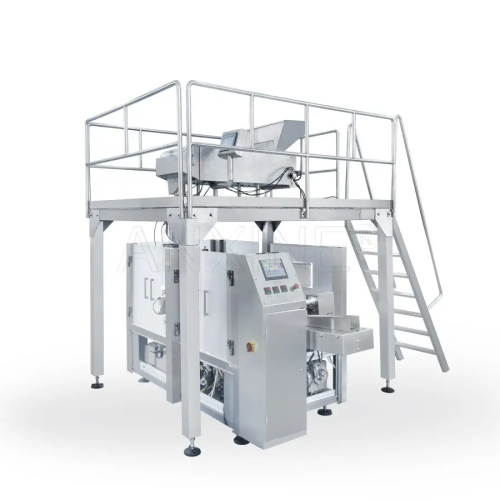
A premade pouch filling machine is a type of packaging equipment that fills and seals ready-made pouches. The pouches are produced in advance and fed to the machine in stacks. The machine completes the feeding, bag opening, filling, sealing, and discharge. Premade pouch packaging machines support many pouch types. They include stand-up pouches, flat pouches, zipper pouches, vacuum pouches, etc. The machine can also handle different pouch materials such as laminated film, aluminum foil pouches, and recyclable pouch materials. You can adjust the machine to fit different pouch sizes. However, compared with roll film packaging, premade pouches may increase packaging material expenses. Moreover, the machine requires high pouch quality and pouch dimension consistency. Poor pouch quality can cause pouch opening problems, sealing issues, or machine stoppage during production.
How It Works
A premade pouch packaging machine works through several steps. First, the machine picks up an empty pouch from the pouch stack. Mechanical grippers hold and move the pouch through different stations for processing. The pouch mouth is opened with vacuum suction or air blowing. Then, the product is filled into the pouch accurately. Different filling methods are used based on your product type. For example, auger fillers are used for powders, while piston fillers are suitable for liquids and pastes.
After filling, pouches could be sealed tightly with heat or pressure. Finally, the finished pouches are discharged from the machine. Most premade pouch packaging machines are designed with rotary or linear systems. Rotary machines are common for high production speeds. They support multiple pouches to move through different stations at the same time.
You can check the video to see the working process.
What Components of Pouch Packaging Equipment Should You Know?
Though there are many different types of pouch packaging machines, they have some common parts. These parts are used for pouch feeding, filling, sealing, and product discharge during packaging production.
Filling System
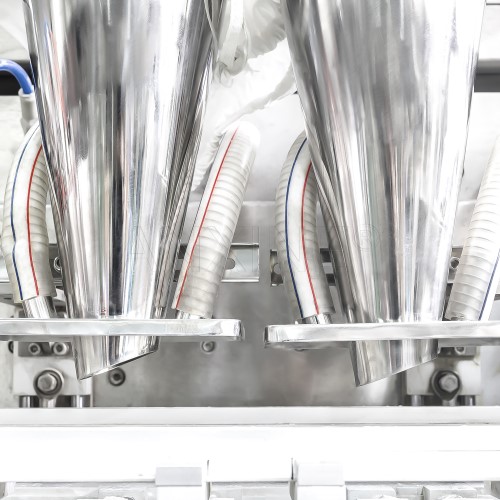
The filling system adds the product into the pouch accurately and stably. Different filling machines are used for different materials. Powder products often require servo auger fillers with screws inside the hopper. Liquids may need gravity fillers or piston pump fillers with pipes, valves, and nozzles. Granule products are often filled by measuring cups or weighing systems. The filling nozzle is positioned directly above the pouch opening. So, the product can enter the pouch smoothly. Some filling systems also include sensors, agitators, or vacuum feeding devices for more continuous filling.
Sealing Part
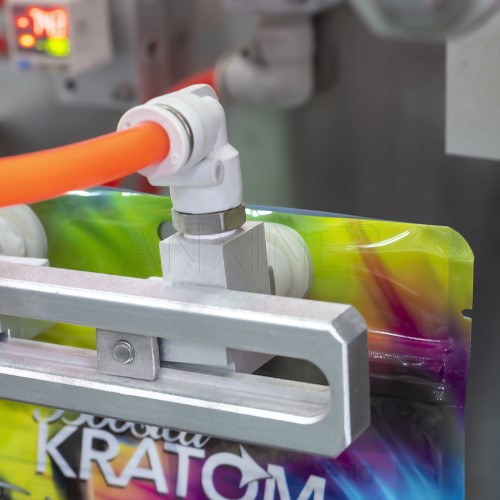
Its function is to seal the pouch tightly after filling. The sealing blocks always depend on heat and pressure to seal the material together. For heat sealing models, the sealing system normally includes heating rods, sealing blocks, guide plates, shafts, and temperature controllers. Proper sealing temperature and pressure are important. If not, it may lead to poor sealing and cause leakage or a weak seal. Some machines also include easy-tear devices and round-corner devices near the sealing area.
Conveyor
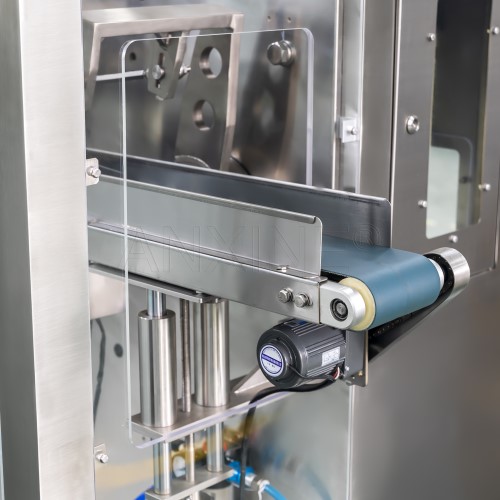
The conveyor system is located along the production path of the machine. It moves pouches from one station to another during the packaging process. In premade pouch machines, the conveyor system often uses clamps or grippers to hold the pouch. Some conveyor systems also include guide rails, chains, and support blocks to maintain stable pouch positioning. A stable conveyor part prevents pouch misalignment during operation.
PLC Control
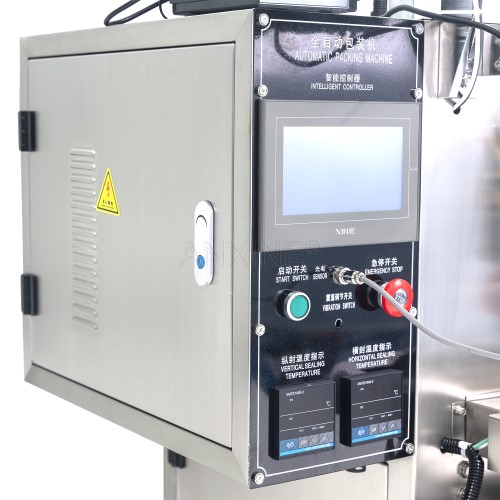
The PLC control includes a touch screen for the operator to use easily. It could control machine operation and monitor machine status. Operators can adjust settings such as sealing temperature, filling volume, pouch length, servo timing, and production speed for flexible packaging. The PLC system also receives signals from sensors, photocells, temperature controllers, and servo drives. It makes the operation more accurate and improves fault detection.
Material Hopper
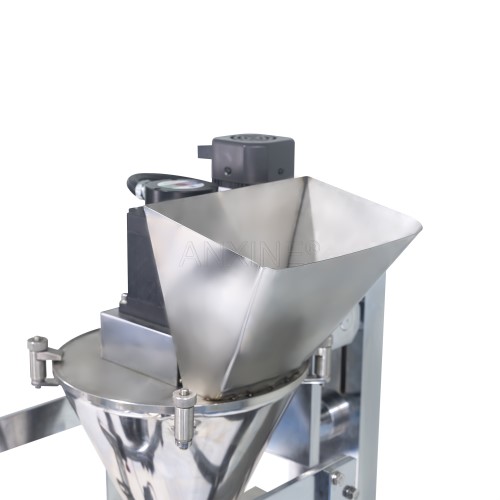
The hopper is usually located above the filling part. It stores materials temporarily before filling. Different hopper designs are used for different materials. Powder hoppers often include agitators or stirring blades inside to prevent material blockage and maintain stable feeding. Liquid hoppers may connect with pipes, valves, and level sensors to control liquid flow. Some hoppers also include material level detectors that automatically stop or start the feeding system when the material level changes. In many pouch packaging machines, the hopper is made of stainless steel for easy cleaning and hygienic production.
Coding and Printing Unit
This is an optional part to meet specific needs. It could print information on the pouch during packaging production. Common includes production date, batch number, expiration date, barcode, and product code. This part is usually installed near the sealing or cutting area for quick printing.
How to Choose a Suitable Pouch Packaging Machine?
To get a good pouch packaging machine for your business, the following factors need to be considered.
Product Type
Product type is one of the most important factors when you select a pouch packaging machine. Different products require different filling systems and machine designs. Powder products such as protein powder often require auger filling packaging equipment. Granule products such as rice and coffee beans usually need pouch packaging machines with weighing systems. Liquid and paste products may require piston pumps or liquid filling devices. Fragile products may also need gentle conveying and filling systems to reduce product damage during packaging.
Production Capacity
It influences which automation level suits you better. If you run a small factory, semi-automatic models can be considered. If you have a large factory, it usually requires fully automatic high-speed machines to support continuous production. If the selected machine speed is too low, it may limit future production output. However, machines with very high speeds may increase machine cost and maintenance requirements.
Pouch Size
Different machines support different pouch widths and pouch lengths. So, you should confirm the required pouch size range for your products. Some machines only support small sachets, while others can handle large stand-up pouches or heavy bags. If many pouch sizes are used in production, the machine should allow easy size adjustment and stable pouch positioning during operation. For example, the Anxine NPP-280H model can handle the minimum bag size 90 mm x 110 mm and the maximum size 140 mm x 250 mm. If the size you want to make is not in the range, other models should be considered.
Filling Accuracy
This is important for products with strict weight or dosage requirements. Pharmaceutical and nutraceutical products usually require high filling accuracy to maintain product consistency. Different filling devices provide different accuracy levels. Servo-controlled filling systems often provide more stable filling performance. Poor filling accuracy may cause product waste, packaging inconsistency, or customer complaints.
Packaging Material
The packaging machine should also match the pouch material during production. Different materials require different sealing temperatures, sealing pressures, and film handling systems. Common materials include PE film, laminated film, aluminum foil film, and recyclable packaging materials. They have different properties. Some materials are softer, while others are thicker or less flexible. If the machine is not suitable for the packaging material, sealing defects or film tracking problems may occur. It would heavily influence the production efficiency.


